Museums Beyond Limits: Imagining Repair Across Cultures, Ecologies and Knowledges
CIMAM 2026 Annual Conference
20-22 November, Harare, Zimbabwe
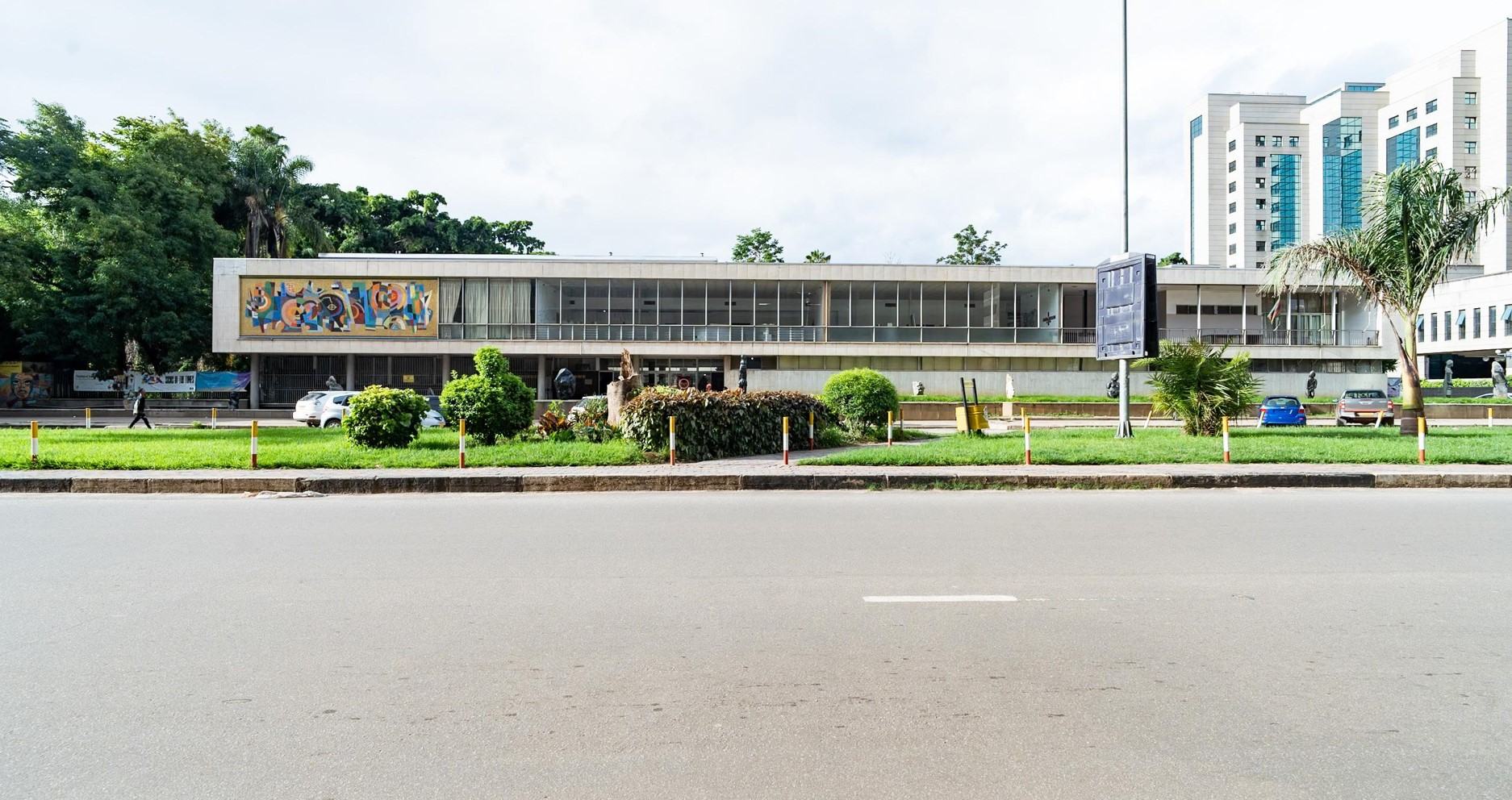
The 58th CIMAM Annual Conference will be held from November 20 to 22 2026 in Harare, hosted by the National Gallery of Zimbabwe under the auspices of the Government of the Republic of Zimbabwe, with the Higherlife Foundation as the Lead Sponsor, the support from Mercedes Vilardell as CIMAM's 2026 Conference Visionary, Benefactor and Travel Grant Funder, and the Bouckaert Family Trust as Hosting Sponsor.
Conference Abstract
Museums Beyond Limits: Imagining Repair Across Cultures, Ecologies and Knowledges
In an era marked by planetary precarity, political volatility, and intensifying epistemic contestation, museums are being called to operate beyond inherited limits: of nation, discipline, and authority. Museums Beyond Limits: Imagining Repair Across Cultures, Ecologies and Knowledges proposes repair as a radical, plural, and ongoing practice grounded in relationality, care, and accountability.
As institutions historically shaped by colonial extraction and classificatory regimes, museums now face urgent demands to repair fractured relationships: between communities and institutions, between human and more-than-human worlds, and between dominant and marginalized ways of knowing. This conference invites participants to consider how museum practice might exceed its conventional boundaries to engage these entangled crises.
Situated in Harare; a city whose histories of colonial dispossession and decolonial resurgence offer a powerful lens on cultural resilience, the 2026 CIMAM conference foregrounds contexts where limits have long been contested, negotiated, and reimagined.
Here, repair is not singular or universal, but situated, dialogic, and often incomplete. What does it mean for museums to move beyond limits in order to enact repair? How might institutions cultivate ethical forms of co-existence in contexts marked by historical rupture? In what ways can museum practices contribute to ecological and epistemic justice, while remaining accountable to diverse communities and knowledge systems? And how might we imagine repair when the boundaries between cultures, ecologies, and knowledges are porous, unstable, and in flux?
Bringing together practitioners, scholars, and cultural workers, this gathering seeks to open new conversations on how museums can act as sites of critical reflection, collective care, and transformative possibility in a world that demands new ways of relating, knowing, and repairing.
Conference Program
Each day of the conference will begin with a keynote address that establishes the thematic framework and sets the direction for both the day’s discussions and the conference as a whole.
On Days 1 and 2, participants will engage in breakout sessions exploring a range of subjects related to the daily theme. The same matters will then be taken up by invited speakers in the subsequent plenary sessions. On Day 3, guest speakers will address the day’s themes directly, without preceding breakout sessions.
The program will also introduce the role of the Chronist. Inspired by the Latin American and Iberian tradition of the crónica—a form of literary journalism that combines observation, interpretation, and narrative—the Chronist will provide an interpretive reading of the ideas, debates, and questions that emerge each day, weaving together contributions from keynote speakers, breakout sessions, panel discussions, and participants, while also capturing the informal exchanges and unexpected moments that often shape the most meaningful conversations.
DAY 1 - Friday, 20 November 2026
Good Museum Practice
"Best practices" has long been defined by Western institutional norms, but in a world of asymmetrical power and cultural plurality, what does “best” mean, and for whom? Might “good practices” – implying effectiveness, adaptability, and context specificity – offer a better ethical framework? This session reconsiders the foundations of museum ethics and governance from multiple perspectives: Indigenous and community-based museologies, African and diasporic models of stewardship, and frameworks that prioritize care, reciprocity, and sustainability over ownership and authority. We will reflect on what it means to build institutions that do not merely preserve culture but genuinely embody cultural care as practice – in conservation, interpretation, and collaboration.
Keynote Speaker: Gabi Ngcobo, Director, Kunstinstituut Melly, Rotterdam, Netherlands.
Key Themes of the Day to be addressed during the Breakout Sessions:
- The Museum as Ecosystem: Interdependence, Maintenance, and Mutual Aid
- Museums and Policy: Negotiating National, Regional, and Global Responsibilities
- The Economics of Ethics: Funding, Transparency, and the Political Will
- Collections in Motion: Repatriation, Restitution, and Rebuilding Trust
Chronist: Meleko Mokgosi, Contemporary Artist and Yale Associate Professor, Yale University, Wellesley, United States.
DAY 2 - Saturday, 21 November 2026
Tools of Transformation
Museums are not only custodians of the past; they are laboratories for social and ecological transformation. This session foregrounds the tools, technologies, and strategies that enable museums to act as catalysts for change. From digital innovation to participatory co-creation, from new material practices to curatorial activism, we ask: how can museums operate transformation rather than simply represent it? By centering African and Global South methodologies of making, storytelling, and adaptation, this day explores transformation as both process and practice, rooted in the local but resonant across the globe.
Keynote Speaker: David Teh, Associate Professor, National University of Singapore, Singapore.
Key Themes of the Day to be addressed during the Breakout Sessions and by the invited Speakers:
- Theme 1: Ethics of Machine Knowledge and Cultural Memory: Whose Data Shapes Our Heritage?
- Theme 2: Museum Partnerships, Community and Pedagogies
- Theme 3: Designing for Tomorrow’s Audiences: New Languages for the Future
Invited Speakers will address the themes from the breakout sessions.
- Neema Githere, Writer, Artist, Relational Architect, Studio Nkisi, Nairobi, Kenya, will address Theme 1.
- Inga Lāce, Curator, Almaty Museum of Arts, Almaty, Kazakhstan, will address Theme 2.
- Hamza Walker, Director, The Brick, Los Angeles, USA, will address Theme 3.
Co-Moderators: Stephanie Rosenthal & Suzana Sousa, members of the 2026 Content Steering Committee.
Chronist: Esther Chipashu, Curator of Ethnography, National Museums and Monuments of Zimbabwe, Harare, Zimbabwe.
DAY 3 - Sunday, 22 November 2026
Radical Hospitality
In African philosophical traditions, hospitality is a condition for collective flourishing. The principle of Ubuntu/Unhu, that one becomes human through others, expands land, memory, time, and the more-than-human world. Against ongoing histories of extraction and colonial violence in cultural institutions, radical hospitality positions relationality as both an ethic of being and a strategy of doing. This day asks how museums might practice openness amid exclusion, generosity within scarcity; and what it would mean to inhabit them not as sites of authority, but as shared dwellings for contested histories and possible futures.
Keynote Speaker: Dr. Thembinkosi Goniwe, Art Historian, Curator, and Writer, Rhodes University Grahamstown, South Africa.
Key Themes of the Day to be addressed by the invited Speakers:
- Theme 1: Radical Welcome: Rethinking Access, Belonging, and the Politics of Invitation
- Theme 2: Emotional Infrastructure: Caring for Audiences and Museum Workers Alike
- Theme 3: More than Human: Hospitality in Times of Crisis
Invited Speakers will address the themes from the breakout sessions:
- Prof Mandivamba (Mandi) Rukuni, Director, Professor Mandivamba Rukuni Consultancy, Harare, Zimbabwe, will address Theme 1.
- Anawana Haloba, Artist, Livingstone Office for Contemporary Art (LoCA), Livingstone, Zambia, will address Theme 2.
- Eva Lin, Director, mt.project, Taipei, Taiwan, will address Theme 3.
Co-Moderators: Renée Akitelek Mboya & Smooth Nzewi, members of the 2026 Content Steering Committee.
Chronist: Dr. Memory Biwa, Historian and Artist, Bravebird Research, Pungwe Listening, Berlin, Germany.
CIMAM Contents Committee
The CIMAM 2026 Annual Conference contents are conceived and designed by a Content Steering Committee of 11 professionals, whose collective expertise guides the development of the conference’s themes, formats, and program.
- Raphael Chikukwa, Executive Director, National Gallery of Zimbabwe, Harare, Zimbabwe, and CIMAM Board member.
- Elvira Dyangani Ose (Chair), Artistic Director, Zeitz MOCAA; Curator and Artistic Director of the Public Art Abu Dhabi Biennial 2026-27, and CIMAM Board member.
- Sunjung Kim, Artistic Director, Art Sonje Center, Seoul, South Korea, and CIMAM Board member.
- Renée Akitelek Mboya, Collaborative Editor, Wali Chafu Collective, Nairobi, Kenya / Kigali, Rwanda.
- Fadzai Muchemwa, Curator/Researcher, and Former Deputy Director and Curator of Contemporary Art, National Gallery of Zimbabwe, Harare, Zimbabwe.
- Paula Nascimento, Independent Curator, Luanda, Angola.
- Smooth Nzewi, The Steven and Lisa Tananbaum Curator in Painting and Sculpture, The Museum of Modern Art (MoMA), New York, United States.
- Marie Hélène Pereira, Senior Curator (Performative Practices), Haus der Kulturen der Welt, Berlin, Germany / Dakar, Senegal.
- Stephanie Rosenthal, Director, Guggenheim Abu Dhabi Project, Abu Dhabi, United Arab Emirates, and CIMAM Board member.
- Suzana Sousa, Independent Curator, Luanda, Angola.
- Jochen Volz, Director, Pinacoteca de São Paulo, São Paulo, Brazil, and CIMAM Board member.
The conference is also pleased to announce Zimpapers as its Official Media Partner.