"We must build transnational networks of solidarity"
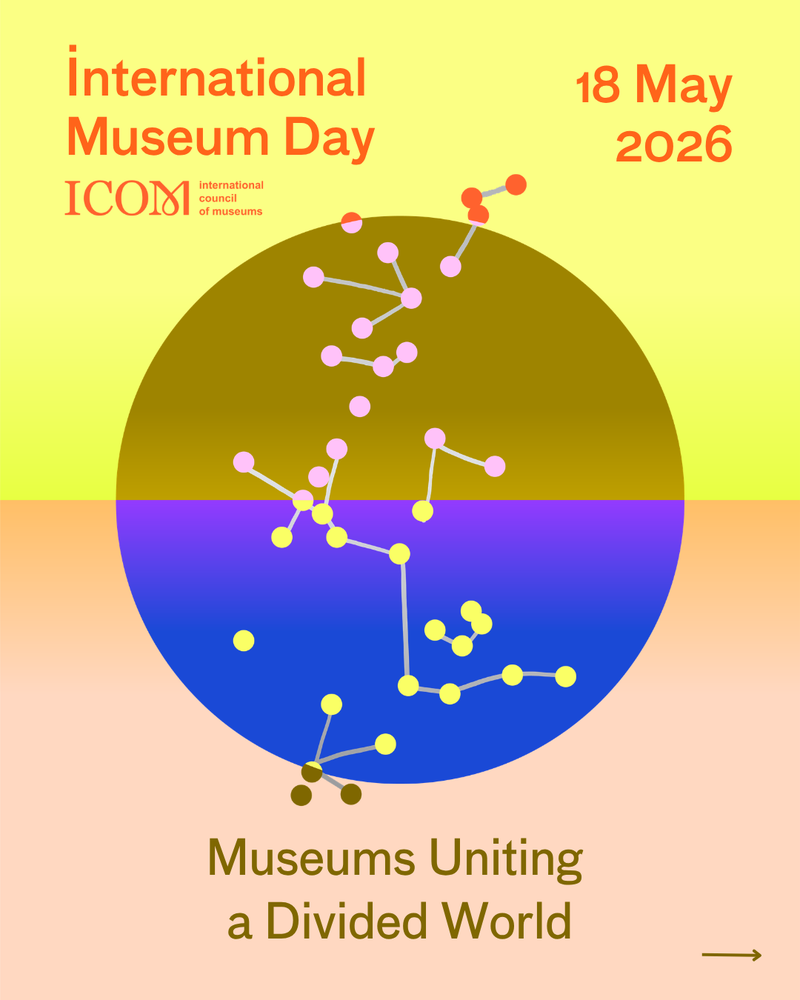
Today, Monday, May 18th, is International Museum Day! This year's theme, Museums Uniting a Divided World, highlights the potential of museums to act as bridges across cultural, social, and geopolitical divides, fostering dialogue, understanding, and peace within and between communities worldwide. Museums do not erase differences but create conditions in which differences can be understood and handled with respect: by safeguarding heritage and memory, offering learning and reflection, and providing welcoming spaces where diverse voices can be heard. Open and accessible, museums foster diversity and sustainability.
Each year since 1977, ICOM has organised International Museum Day, which represents a unique moment for the international museum community.
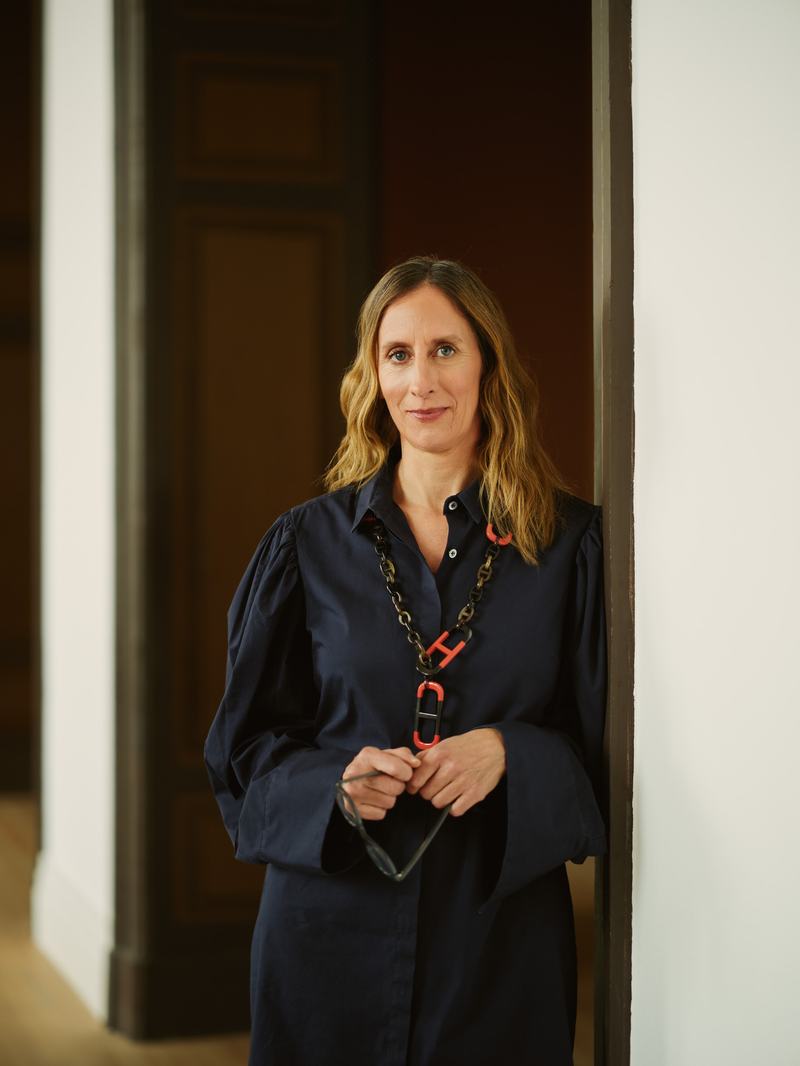
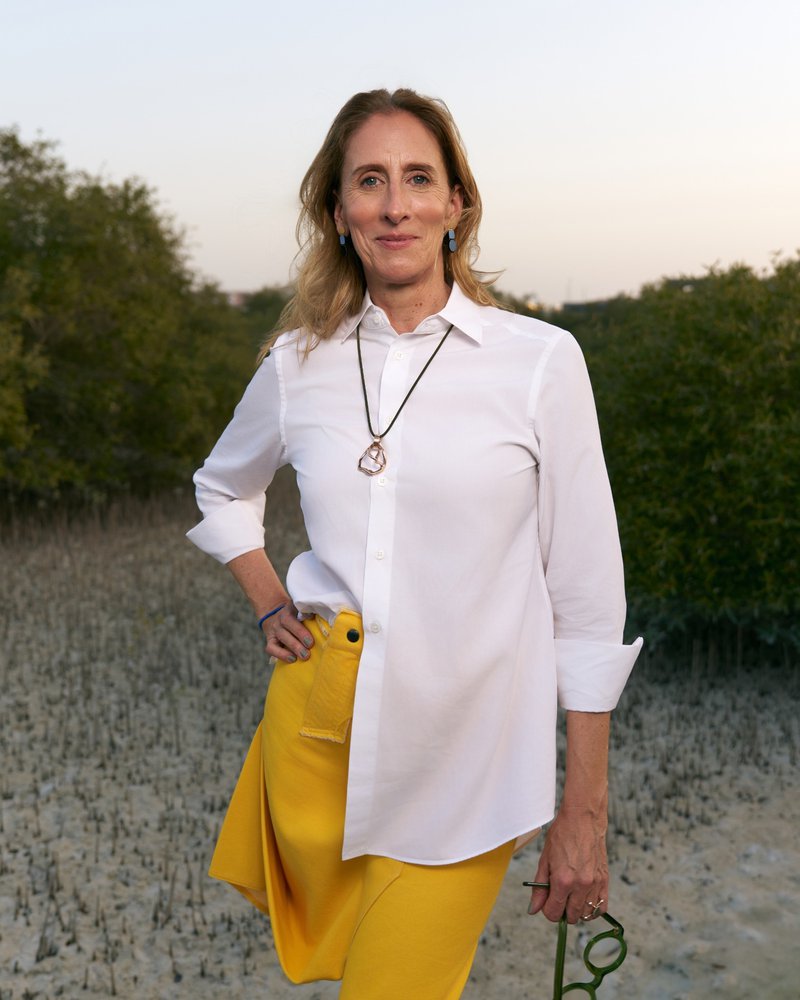
To mark International Museum Day, CIMAM shares an interview with Stephanie Rosenthal, CIMAM Board Member and Director of the Guggenheim Abu Dhabi Project (Abu Dhabi, United Arab Emirates), originally published in the March 2026 issue of Coleccionar Arte Contemporáneo (Spain), written by Vanessa Garcia-Osuna.
What motivated you to join the CIMAM Board, and what did you hope to achieve? What ideas do you want to spread?
I see CIMAM as both convener and conscience of the international museum community. With my background in visitor-oriented exhibitions, participatory practices, performance, and institutional strategy, I believe CIMAM can help strengthen platforms for peer-to-peer exchange and advancing ethical frameworks for both curatorial practice and governance.
In a moment marked by geopolitical tension, climate urgency, and shifting cultural paradigms, CIMAM’s role in building resilient, transnational networks of solidarity is essential. Museums must remain rooted in local contexts while engaging rigorously with global discourses. For me, this means valuing the practices of smaller institutions alongside larger ones and learning from diverse knowledge systems.
You were Director at the Gropius Bau in Berlin, the first woman to direct the German institution, and have also been Chief Curator at the Hayward Gallery in London and Curator at the Haus der Kunst in Munich. Which ideas have dominated your practice?
My PhD on American painting of the 1950s–60s provided rigorous training in research and curatorial methodology. Over time, my practice has expanded to transcultural approaches, performance, dance, and participatory formats—fields that now define my exhibition-making. I believe every visitor journey should be a carefully choreographed, multisensory experience that connects artistic content with the wider institution.
More recently, it is the very nature of Abu Dhabi that has shaped my practice: the city’s system of islands, its mangroves, the museum's position between land and sea; they are living systems that shape how the Guggenheim Abu Dhabi understands itself.
The museum operates like a mangrove ecosystem, connecting with its audiences in a similarly supportive and interconnected way. We can thrive as a cohesive ecosystem, like a mangrove forest, only when we recognize and value each part of the organism — each team member — as essential and equally important. Each connection within the system is essential; the strength of each part supports the health of the entire ecosystem.
And now, as director of Guggenheim Abu Dhabi, what are your wishes and expectations for the museum?
The ambition was to build an institution from its place—Guggenheim Abu Dhabi emerges as a museum deeply rooted in its local context while also focusing on building connections to the world. Édouard Glissant’s idea of archipelagic thinking has been foundational, as it offers a way of understanding cultures as formed through connection and exchange rather than hierarchy or linear inheritance.
That thinking is reflected in how the museum has developed: the collection has been built over more than twenty years with a global perspective, but with deep attention to West Asia, North Africa, and South Asia. The curatorial team is also intentionally diverse, both locally and internationally grounded, forming a constellation of perspectives that continues to reshape the institution.
Attending to the “Guggenheim effect” that transformed Bilbao, how do you envision the impact of Guggenheim Abu Dhabi?
While Abu Dhabi and Bilbao exist within very different contexts and histories, the idea of a “Guggenheim effect” remains a useful reference point. Rather than replicating Bilbao’s trajectory, Guggenheim Abu Dhabi has the opportunity to redefine what such an impact can look like today. I see our work as a catalyst for long-term cultural transformation: a platform that reshapes artistic ecosystems, expands global conversations, and generates new possibilities for artists and practitioners. Its most profound impact, I hope, will be felt both internationally and, crucially, within the wider region: fostering visibility, confidence, and sustained exchange in ways that extend far beyond the institution itself.
What would be the key attributes of an art museum director?
A strong director should be able to leverage their learned experience while remaining open to experimentation and new modes of thinking. Cultural institutions should be places where established structures are questioned, and where meaningful risk is encouraged. A strong director’s responsibility is to create conditions fostering this environment, empowering teams to challenge, question, and innovate, while ensuring that this process remains productive, responsible, and generative rather than disruptive for its own sake.
Museums are living ecosystems of ideas
The traditional functions of the museum are being expanded very rapidly. In addition to collecting and preserving, now museums are expected to be community-facing, inclusive, and engaged in the debates of our time. What aspects do you pay more attention to, and which ones are essential in your opinion?
Museums are living ecosystems of ideas, encounters, and mutual learning. I share the conviction that museums can shape conversations that transcend borders. Having worked in Europe, Asia, Latin America, the US, and Australia, I believe that cross-regional perspective can amplify underrepresented voices.
It is important to create visitor-centered institutions and exhibitions shaped by participatory practices, performance, and dance, enriched by learning from First Nations knowledge systems. Museums must create platforms where diverse knowledge systems and institutional scales can connect.
I also see an importance in exploring how museums can contribute to health, well-being, and social care through art and communal space. My career has focused, and will continue to focus, on creating platforms for dialogue that enable institutions of different scales to learn from one another while ensuring experimental, performative, and community-based practices remain integral to our shared future.
Museums are also confronting the ways in which digital technologies and AI are reshaping our field. CIMAM can play a crucial role in helping the sector critically integrate AI—leveraging its potential for access, preservation, and exchange, while addressing ethical risks such as bias and cultural sovereignty. We need to ensure that institutions engage with and embrace technological advancements, recognizing that failing to do so risks their relevance.
As museums worldwide confront challenges around decolonization, governance, and public trust, CIMAM can lead by fostering exchange across scales and practices. I am committed to advancing this work from within, supporting museums not only to adapt but to thrive through shared learning and collaboration.
Contemporary museums try to diversify their voices and perspectives and redefine conventional narratives. What new narratives are at play -which ones do you consider most relevant nowadays?
As I’ve mentioned, a great purpose of mine is to stray away from rigid conceptions of art institutions, often perceived as static and authoritative. Instead, conceiving of museums as living organisms allows for a total re-thinking of their role in society, offering dynamic arenas that can adapt to different audiences and contexts. I am compelled by narratives built on reciprocity, two-way roads where audiences are not passive bystanders but active participants with real agency who actively contribute to how stories are shaped, told, and understood.
Over the past two decades, what are the biggest changes you’ve noticed in the museum world?
One of the most significant changes has been a growing commitment to global equity and capacity building, particularly through exchange between smaller and larger institutions. Increasingly, innovation is not flowing in a single direction. Going back to the idea of reciprocity, we are witnessing smaller museums generate critical, experimental practices that are reshaping international conversations around research, care, and engagement.
Museums have also expanded their role as centers of research and knowledge production, embracing experimentation and interdisciplinary collaboration as core functions. This includes rethinking collection care and access — from open storage models to radically expanded accessibility — and understanding collections not as static holdings, but as active sites of inquiry.
Of course, the rise of AI and digital futures is an unavoidable reality. Museums are now actively grappling with how digital tools can support new forms of audience engagement, performance preservation, and access, while also confronting the ethical challenges these technologies introduce.
Performance has moved from the margins to the center of museum practices, not only in terms of programming, but as something to be collected and theorized. Performance challenges traditional models of ownership, authorship, and preservation, and tackling these questions is essential to the future of museums.
These developments point toward a museum field that is more experimental, more self-reflexive, and more collaborative. They also highlight the importance of platforms like CIMAM as spaces where diverse institutional models, marginalized perspectives, and emerging practices can shape the future of our field rather than simply respond to it.
In a world in constant flux, museums serve as dynamic storytellers. How do they discover us new ways of seeing?
We have been fortunate to witness the rise of new museum models across the world, as well as biennales and triennials. I am personally curious to see how these platforms will offer counterpoints to established narratives and further expand the cartography of global contemporary art, and how this will influence how we think about exhibition-making in museums.
What do you predict will be the most significant developments in art in the next few years, and why?
This year will mark the launch, or return, of numerous art events and institutions in the region and beyond. Biennales and triennials across West Asia and the Arab world — Diriyah, which was just inaugurated, and the long-anticipated return of the Alexandria Biennial after 12 years — will be very much in focus.
Perhaps because our world feels increasingly fragile, and our communities more fractured, the past year has reminded us how much joy and grounding we find in art. A beautiful artwork is still a place for rescue, kinship, and for conversation. I think we will need this even more in 2026.