Museums Are No Longer Regarded As The Sole Authorities On Truth
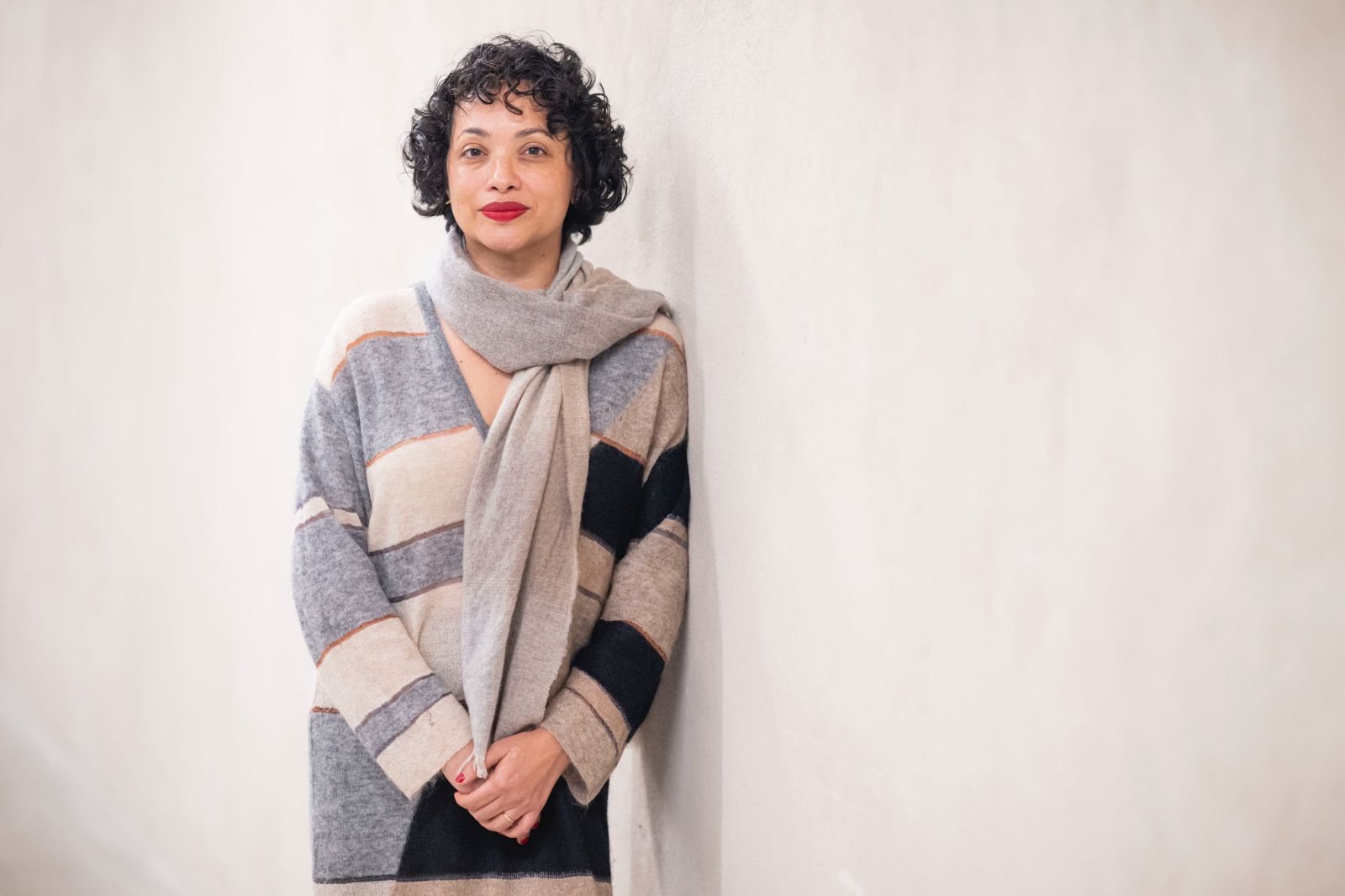
Interview with Amanda de la Garza, President of CIMAM, conducted by Álvaro Benito for Arte al Día. Originally published on 5 November 2026.
The Mexican cultural practitioner and president of CIMAM discusses the principal challenges facing museums—from diversity and funding to ethics and independence—ahead of the Annual Conference of an organization seeking to broaden the voices participating within it.
Amanda de la Garza (Monclova, Mexico, 1981) is completing her first year as president of CIMAM – International Committee for Museums and Collections of Modern Art, at a critical moment when museums and cultural institutions are undergoing profound transformations. In this context, diversity, independence, and ethics emerge as essential values for articulating shared policies or, at the very least, guidelines that safeguard their fulfillment. In this conversation, she addresses the challenges of an organization seeking to expand its perspective and examines the tensions that the institutional ecosystem both endures and generates. Hegemony, funding, ethics, and independence, alongside the challenges of working across vastly different cultural and political contexts, will be objects of urgent debate this month in Harare at CIMAM's Annual Conference.
Álvaro de Benito [Á.B.]: I would like to begin with the institutional framework, as there is a major effort within CIMAM's policies to reinforce issues revolving around diversity, representation, and representativeness. Within this discrepancy between the global and the globalized, how is all this diversity condensed into specific policies or guidelines without certain perspectives being excluded?
Amanda de la Garza [A.G.]: It is important to emphasize that CIMAM brings together modern and contemporary art museums, which distinguishes us from ICOM, an organization dedicated to museums in general. Furthermore, our institution has also evolved over time. It originated through the initiative of European and North American directors, and over the last ten years, we have expanded its geographical spectrum. Although the membership remains predominantly from those regions, significant efforts have been made to include entities and professionals from Latin America, Asia, and Africa. Consider that the institutional reality of contemporary art has also expanded; there are contexts, such as Latin America, with a very robust museum culture, whereas in Africa, institutionalization processes are just beginning. All of this makes it necessary to broaden the voices participating in the organization.
Á.B.: One might question to what extent this diversity should be understood as a real necessity for the organization and its decision-making spaces, rather than merely a cosmetic matter or a gesture of representation.
A.G.: We, as members of the Board of Directors, play an important role in reflecting this commitment to diversity within CIMAM's decision-making bodies. The current composition of the Board is a clear example of this, as we have professionals from Africa, Asia, and Latin America alongside European and North American members. Above all, however, what must be highlighted is not so much that it was initially one of the core objectives of the organization per se, but that the growth of the international contemporary art circuit has led CIMAM to commit, in an organic manner, to this greater diversity.
Á.B.: I also believe it is relevant to consider the inequalities that exist between regions with differing levels of infrastructure and resources, and how a more balanced participation within the association itself can be facilitated, almost as an extension of the international contemporary art circuit.
A.G.: One of the most important actions is our Annual Conference. It is a space where members gather to discuss issues directly affecting museums: sustainability, collections, the social role of institutions, and so forth. For this reason, there is a grant program targeted specifically at professionals from regions with fewer resources or infrastructure. Their participation in the meeting is funded so that they can build networks and exchange experiences with professionals from other parts of the world. This is particularly crucial for young professionals, who often work independently or in small institutions that cannot finance their attendance at international gatherings.
Á.B.: In a few days, CIMAM's annual meeting will take place in Harare—a decision that seems consistent with what you have outlined regarding how to make this inclusion and diversity a reality, at least in terms of opportunities.
A.G.: Yes. Moving the conference to different contexts contributes to guaranteeing geographical diversity and allows for the incorporation of new voices. Now it will be held in Zimbabwe, for the first time on the African continent, at a particularly significant moment given the emergence of new institutional initiatives in Africa.
Á.B.: In this attempt to incorporate such distinct perspectives, I assume the difficulty arises of reaching agreements when highly divergent cultural and institutional visions coexist, especially at a time when there appears to be a growing dispute over the hegemony of cultural policies and discourses that seek to assert dominance.
A.G.: There is a wide diversity of opinions. Modern and contemporary art museums have been, and continue to be, spaces where critical debates take place: decolonial discourses, historiographical revisions, and discussions surrounding Indigenous art have been very present internationally. This creates a fertile ground for these social debates to permeate the art world. However, there are also museums with far more traditional perspectives on art history. Furthermore, relationships with governments vary among institutions, as does the balance between the public and private spheres; for these reasons, it is impossible to have a homogeneous view of what modern and contemporary art museums represent today.
Á.B.: Nevertheless, certain practices surrounding critical revision aim to construct a new historiography and, in a sense, a new hegemony tied to de facto powers and cultural policies. That is where I see a problem regarding the boundaries being treated as absolute.
A.G.: What is fundamental is the existence of professional standards—the idea that the work of museums must be grounded in professional and independent criteria. This is why a selection process exists to become part of CIMAM. It is not simply a matter of paying a membership fee, because ultimately it is the Board that decides which individuals and institutions affiliate, based on specific criteria. One of the most crucial criteria is that professionals must not engage in commercial activities. Curators who also participate in commercial activities cannot be part of the organization. Nor can institutions dedicated to the buying and selling of artworks become institutional members. Professionals affiliated with private foundations may join individually, but not at an institutional level. These controls are designed to maintain a professional standard that is unconditioned by commercial interests.
Á.B.: Yet, there is an increasing presence of private funding in public institutions, driven both by the institutional model or the need for increased revenue to offset declining public investment, and by corporate artwashing activities. I see a clear potential conflict here, because it is real, and because it begs the question of whether it is preferable to refrain from exhibiting rather than compromise ethical integrity.
A.G.: It is a subject of intense debate within museums. There have been public protests regarding funding sources, for instance, in relation to pharmaceutical companies or the arms trade. There is an open discussion about where the boundaries lie, but these boundaries are set by a community that is not homogeneous. On one hand, there are museums and their professional standards; on the other, there is a broader cultural community demanding that institutions also abide by ethical standards.
Á.B.: Consequently, we also dangerously approach narratives and discourses that control social frameworks, reinforced at the expense of minimizing factual reality. This raises the question of the extent to which CIMAM's recommendations might become an ethical obligation when necessary.
A.G.: One of the most important programs we have at CIMAM is Museum Watch, which reviews cases of conflict or bad practice. Cases can arise on the initiative of the association itself or at the request of individual members. An investigation is conducted, interviews are held with the parties involved, and available information is reviewed before the committee issues a statement. It functions as an observatory of best practices designed to address situations that threaten museum autonomy, freedom of expression, or independence from political interference.
Á.B.: When defining that professional ethics, we return to the perspectives held by the involved agents and a certain halo of relativism that can influence its interpretation. How can this perception or concern be translated into the work conducted with and by institutions?
A.G.: CIMAM understands that ethics is integral to institutional conduct and defends values such as artistic independence, freedom of expression, and diversity. We have worked on various cases of political interference and institutional conflicts, striving to do so from a balanced standpoint while positioning ourselves around these core values. I believe it is clearer today that ethics is inextricably linked to professionalism; being professional means not only possessing expertise and knowledge, but also acting within a deontological framework. For this reason, we are working on a long-term project concerning a code of best practices for working with living artists.
Á.B.: I find that point particularly interesting because, ultimately, the artist as the subject of practice and of the relationship with their ecosystem seems to have lost a degree of creative freedom—a freedom that, consciously or unconsciously, often remains bound to market or societal demands. This also questions whether the artist must adhere to an ethics, because if they do not, it might prompt institutions to practice self-censorship in their role as legitimizers.
A.G.: I think it depends on the case. All of us who have worked in institutions have faced such situations, and context is fundamental to understanding them. Sometimes the issue does not emerge beforehand as self-censorship, but rather after an exhibition, when criticism or demands arise from a community. It is evident that this has gained prominence in how institutions curate their programming. Museums are no longer regarded as the sole authorities on truth regarding art history, and other agents legitimately challenge these institutions. Therefore, a political space for negotiation exists concerning what should or should not be presented in a museum.
Á.B.: The only issue is that this dynamic can become perpetual. Ultimately, I observe that it must be extraordinarily complex for the recommendations or values advocated by CIMAM to be applied uniformly across such vastly different cultural and political contexts.
A.G.: Indeed, context is everything in this regard. The North American environment, for example, is experiencing highly complex situations with policies affecting even inclusion programs and funding in universities, whereas the Middle East operates in a manner very different from what we see in the West. Concepts of the public sphere and liberty vary greatly from one context to another. Only when you become acquainted with different realities do you realize that there is no single way to manage these issues. Nevertheless, we believe there are a series of shared values that we can propose.
Á.B.: Given such a vast, highly polarized, and challenging landscape, prioritizing must be exceptionally difficult; yet, I am convinced there are pressing contemporary and near-future urgencies that require immediate attention.
A.G.: There are many critical discussions, but one of the primary ones concerns the sustainability of collections. We are currently conducting a survey on how museums can develop appropriate, long-term collection policies that are also environmentally sustainable. Another fundamental axis is ethics, as we have been discussing—a broad field encompassing representation, relations with communities, and new social demands. Lastly, political interference: I believe this will be one of the major topics, as we will likely witness further instances of self-censorship. To the extent that certain far-right policies advance in cultural terms, museums may increasingly become a cultural and ideological battlefield. Safeguarding institutional independence will therefore stand as one of the greatest challenges.