“Of all the senses, smell is the least trained, yet it is the one that endures most in memory”
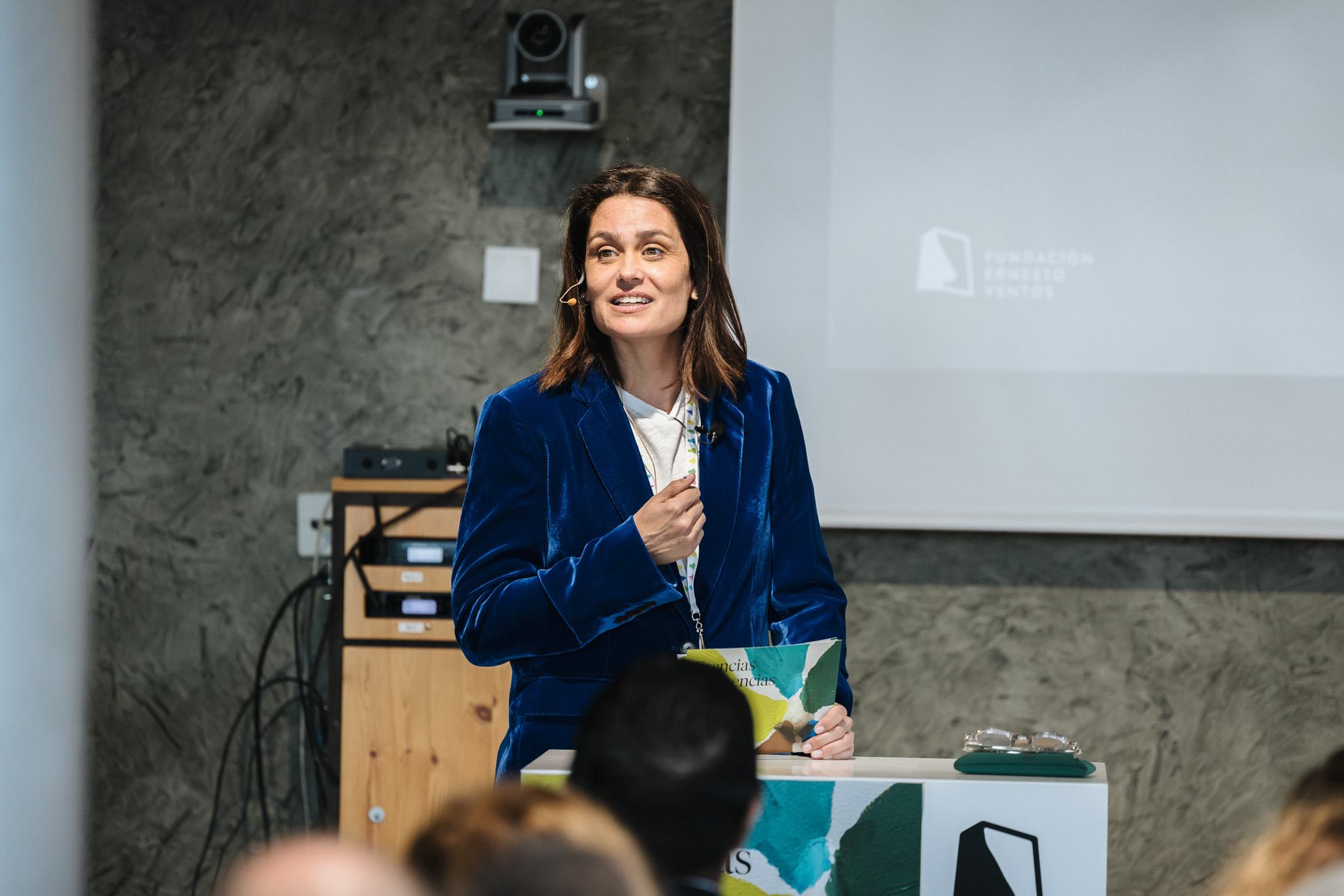
Interview with Georgina Ventós, President of the Ernesto Ventós Foundation (Barcelona, Spain) and Major Patron of CIMAM since 2025
In a previous conversation, we spoke with Georgina Ventós about the origins of the Ernesto Ventós Foundation and the legacy of its founder, her father, a chemist, perfumer, collector, and artist. This time, we focus on the foundation’s current lines of work, the development of olfaction consulting within artistic and cultural contexts, its educational programs with diverse communities, and how scent can open new ways of engaging with art.
How is the work of the Ernesto Ventós Foundation currently structured, and what are its main areas of activity?
The foundation’s work is structured around three main areas: artistic practice, education, and—since 2023—olfaction consulting.
Within the artistic field, we promote two key collections. On the one hand, olorVISUAL, created by Ernesto Ventós, is based on his olfactory perception of artworks. When encountering a piece, he would say: “this work has a smell.” It was not only an aesthetic response; the work would evoke a scent in his olfactory memory. The collection includes photography, sculpture, drawing, collage, installation, and video, and grew to encompass 835 works by artists from around the world. Notably, artists contributed texts describing what the smell of their work meant to them, and Ernesto would complete the process by assigning a scent.
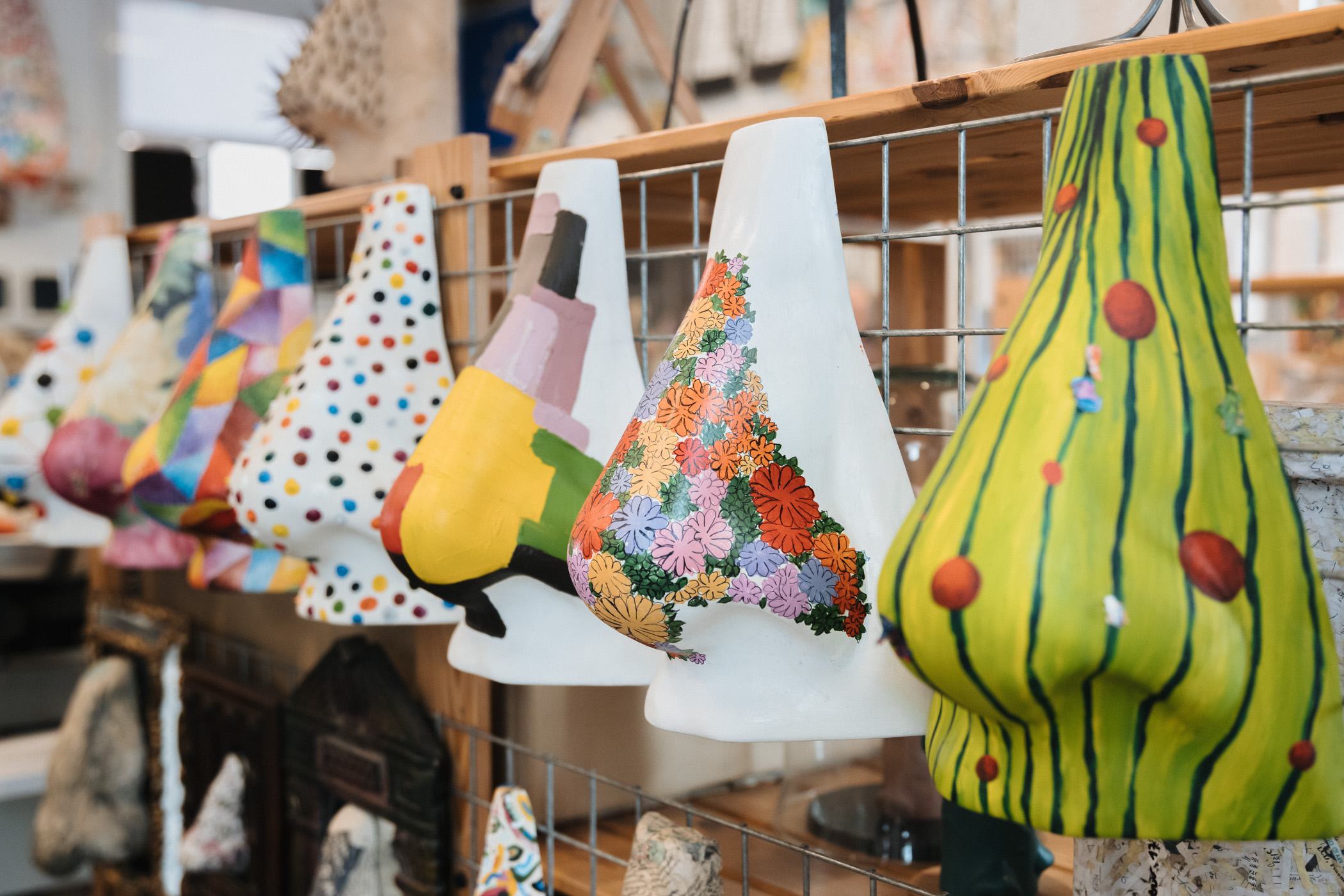
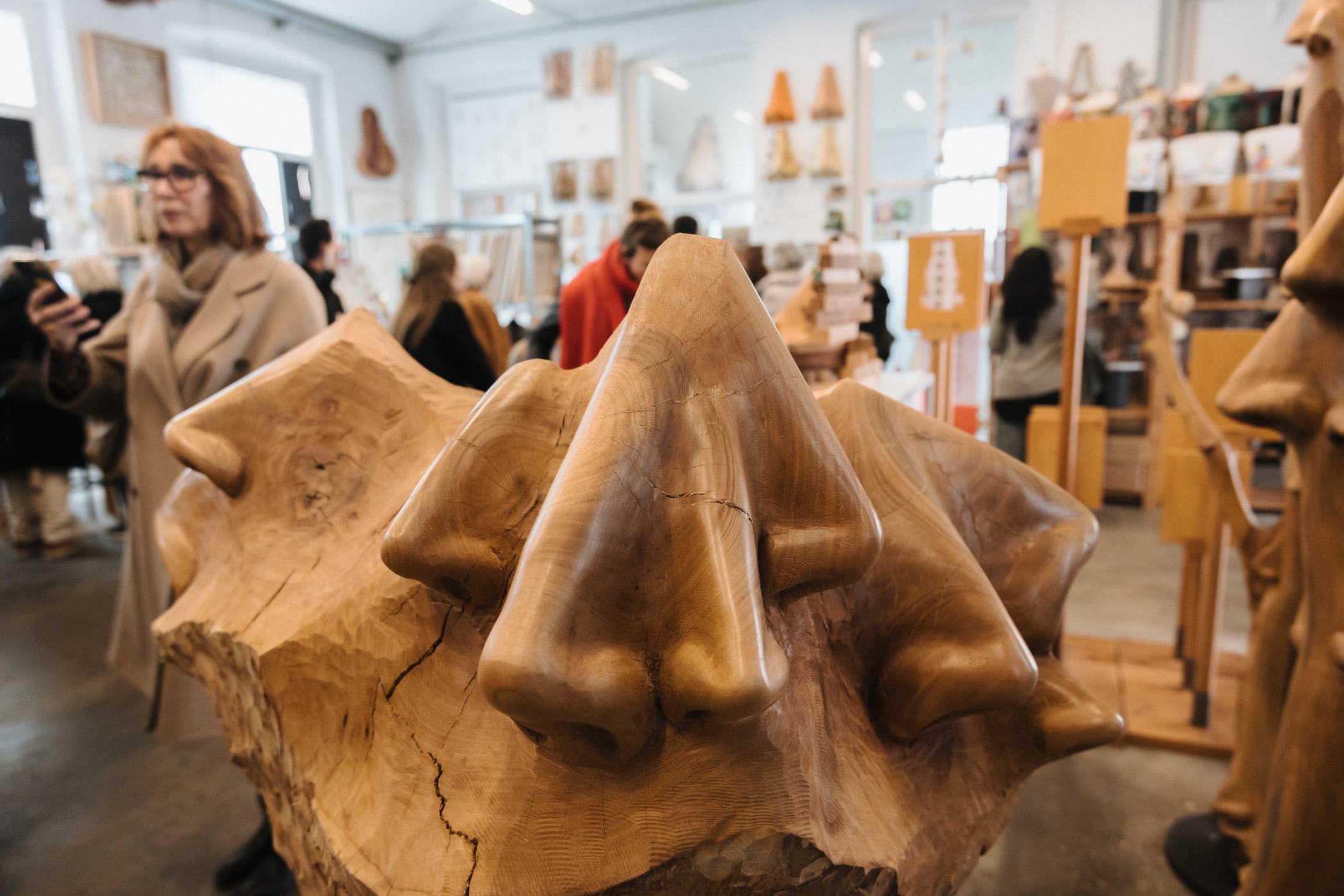
On the other hand, the Nasevo collection represents his most personal and educational body of work. Through it, he sought to teach children, adults, and diverse audiences about the relationship between art and smell. Many works incorporate the prefix “nas” (nouse in the Catalan language) in their titles, his own language, his way of expressing this connection.
These artistic activities are complemented by an educational programme, with workshops designed for primary and secondary schools, universities, and diverse groups with different abilities or specific needs.
How is this educational dimension developed?
We work with schools, universities, and also with social institutions and foundations. Our workshops engage not only students, but also deaf, blind, and deafblind communities, as well as people with diverse abilities or mental health conditions, in collaboration with institutions such as Sant Joan de Déu Hospital or organisations like Casal del Raval, both in Barcelona, among others.
We have also worked with ONCE (Spanish National Organisation of the Blind), initially through workshops with management teams and later expanding to families and deaf and deafblind communities. We are currently exploring the possibility of developing an exhibition with ONCE and of incorporating olfactory elements into Ilunion Hotels, the hotel division of the ONCE Social Group, so that spaces can be recognised through a distinct scent identity.
What is particularly interesting is the lasting impact of smell. In workshops with children, for instance, the experience does not end at school. They take an olfactory memory home and share it there. This extends the learning process. I remember a beautiful experience in which children studied Picasso, Miró, and Ernesto Ventós. It was remarkable to see a five-year-old explaining who Ernesto was: a perfumer, collector, and artist. That’s when you realise something has truly stayed with them.
What does smell bring to these educational processes?
Smell is probably the least educated sense, yet it has the strongest impact and leaves the deepest memory. It can transport you instantly to a lived experience. Introducing it into art education opens up another way of engaging with both the artwork and knowledge itself.
Art creates connections, and so does smell. For Ernesto, this connection was entirely natural. He understood art through scent. If you begin to explore these dimensions from an early age—what art is, what smell is, and how they relate—you expand the ways in which we perceive and remember.
Since 2023, olfaction consulting has become a key area of your work. What does it involve?
Olfactory consultancy builds on Ernesto’s legacy as a perfumer. We develop it in collaboration with Lucta, a Barcelona-based company specialising in fragrances and scent applications for a wide range of environments.
We have worked with artistic institutions such as MACBA (Barcelona Museum of Contemporary Art), Foto Colectania, Museu Tàpies, and events like La Nit dels Museus (Museum Night). Sometimes this involves assigning a scent to a specific artwork; in other cases, creating an atmosphere for an entire space or accompanying an exhibition experience.
We have also worked in opera, for instance, at the Peralada Festival in Girona (Spain), in micro-operas at the Gran Teatre del Liceu in Barcelona, and even in a production in Berlin.
How does this consultancy process work?
It begins with an analysis of the space and context: where the scent will be introduced, when, why, and what the institution or artist aims to convey. From there, we develop a briefing. Often, institutions are not yet sure how to integrate scent, and this is where our advisory role begins.
We then propose different olfactory directions. Sometimes the institution has a clear vision; at other times, we suggest options based on the history or narrative of the project. Lucta then develops variations and tests. It is a collaborative process: options are presented, refined, and evaluated—considering intensity, medium, and material response.
We act as advisors: we do not produce fragrances or devices, but we shape the concept and its creative integration.
Do you also work directly with artists?
Yes, increasingly so. Previously, many artists worked directly with perfumers; now they approach the foundation as we have gained recognition in this field. Artists such as Claudia Pagès, Enric Pladevall, and Cristina Lucas have worked with us, often in connection with exhibitions.
In these cases, artists or institutions seek to introduce an olfactory dimension into a work, exhibition, or space. We then develop this additional layer together.
What does scent add to an artwork or exhibition?
It introduces an immersive dimension. It is not always easy to measure, but more and more institutions recognise its added value.
I recall a workshop with ONCE for management teams, where we worked with five scents. The final one was the smell of wet earth, which is very significant for the foundation and central to Ernesto’s universe. One participant was deeply moved, almost to tears. He explained that the scent reminded him of going mushroom picking with his father as a child. This illustrates how powerfully scent activates memory, emotion, and connection.
You mention the smell of wet earth as particularly evocative. Why do you think it resonates so strongly?
Because it is highly recognisable and closely tied to place, landscape, and lived experience. After rain, it appears in a very distinct way, and many people associate it with specific memories. It can vary between the countryside and the city, but it remains deeply identifiable.
It is a scent that people frequently request, perhaps because it is comforting, because it connects us to something familiar, something rooted in memory and nature.
The foundation also develops international exhibitions of Ernesto Ventós’s work. How is this programme evolving?
We are currently preparing two international exhibitions, one at the Perfume Museum in Mexico and another in Marrakech. These opportunities often arise through the international presence of Lucta and Ventós. We sometimes present Nasevo, sometimes olorVISUAL, and sometimes both.
You are also developing grants and a future artistic laboratory around scent. What is the vision behind this project?
This initiative responds, in part, to a need. Ernesto passed away just three months after the foundation was created, and with that, the natural continuation of his practice—creating works and assigning scents from his own perception—came to an end. We want to ensure that this impulse continues.
We are therefore interested in supporting emerging contemporary artists who wish to incorporate scent into their practice. We have already collaborated with various initiatives, and we are now working towards establishing a residency programme or artistic laboratory in Colònia Güell, near Barcelona. The idea is to offer artists a space to research, develop, and produce work with our support.
What remains most alive today from Ernesto Ventós’s legacy?
The idea that smell is not merely decorative, but a way of knowing, feeling, and connecting with artworks and with life itself. Ernesto was constantly smelling: pleasant and unpleasant scents, the countryside, the city, and art. He had an intense relationship with this sense and understood it as a way of reading the world.