The destiny of the Gelman Collection: on the responsibilities towards heritage
July 16, 2026
CIMAM’s Museum Watch group has followed with concern the controversy around the destiny of the Gelman collection, an important group of works by key Mexican modernist artists that will shortly leave the country to be exhibited in Spain. We have followed the declarations issued by Mexican public bodies, by the institution that will be receiving the works in Spain, Faro Santander, owned by the Fundación Banco Santander, and by art professionals in Mexico and elsewhere and by local and international news coverage. We consider this a crucial case because of the relevance of the works for Mexico’s heritage, and because of what it conveys about the current risks to artistic heritage and to the ability of institutions to protect it in today's globalized economy.
On the collection and its current situation
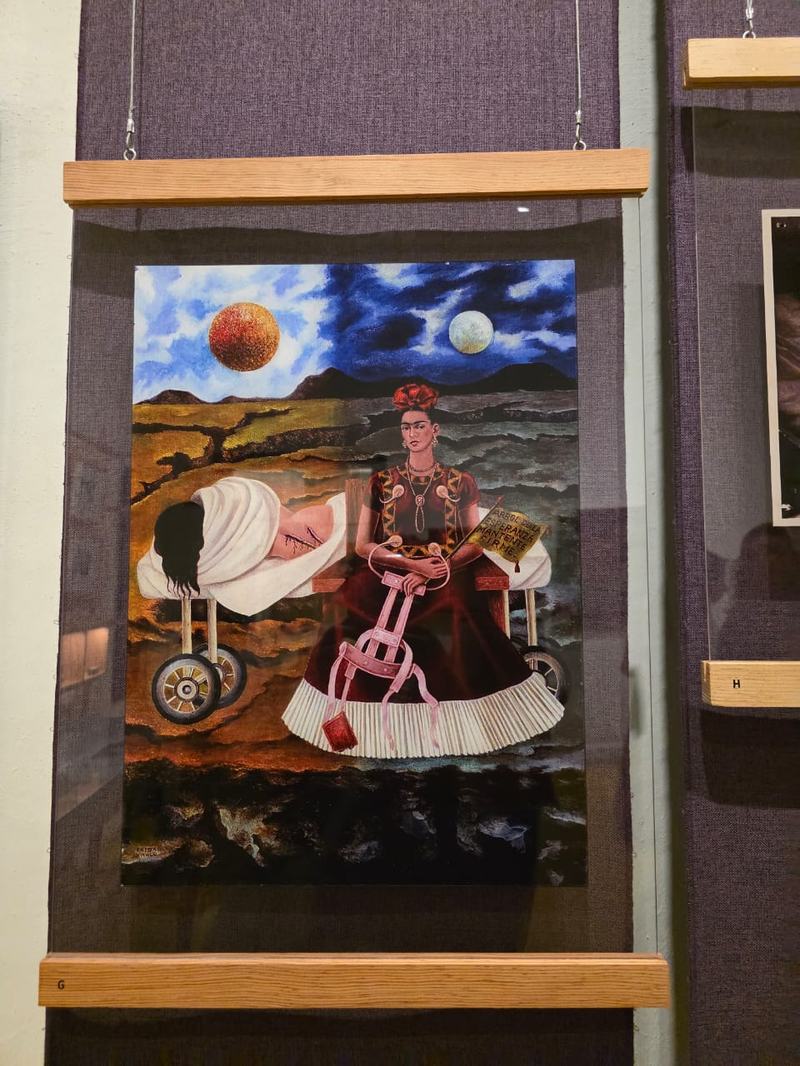
The collection, which includes works by María Izquierdo, Frida Kahlo, José Clemente Orozco, Diego Rivera, David Alfaro Siqueiros, and Rufino Tamayo among others, was originally assembled over decades by Jacques and Natasha Gelman, who were in close contact with several of these artists. The European part of the collection, 89 works by artists such as Kandinsky, Matisse, and Picasso, was donated by Natasha to the Metropolitan Museum in New York in 1998, the year she passed away, and twelve years after her husband’s death. The rightful ownership and whereabouts of the Mexican works in the collection have since been the subject of legal disputes, both in Mexico and the US. Following a five-year agreement signed in February 2026 between the current owners, the Zambrano family, the Fundación Banco Santander, and Mexico’s National Institute of Fine Arts and Literature (INBAL), a group of 68 works is on exhibition at the Museo de Arte Moderno de la Ciudad de México until the end of the World Cup. Once the exhibition ends, these works will head to Spain with the rest of the collection, which totals 161 works and is now referred to as the Gelman Santander Collection. They will be part of the opening program of Faro Santander this September, a new museum to be opened by the Fundación in the Spanish city of Santander, the site of its head office since its founding in 1857.
On the return of protected works
Works by María Izquierdo, Frida Kahlo, David Alfaro Sigueiros, Jose Clemente Orozco and Diego Rivera are declared by Mexican law as artistic and historical monuments, and may only leave the country temporarily, regardless of whether they are privately or publicly owned. INBAL is tasked with the responsibility to assess and monitor the works’ exit and return for a period of one year that can be extended to a maximum of two. There are 30 works by these artists in the Gelman Santander Collection.
The publication of the five-year agreement, which included no explicit commitment to the works return, led to a widespread public discussion about the instruments that the state has to protect cultural heritage, about the need for transparency and about what happens when artworks become collateral assets to financial operations, as it has been reported that is the case with the Gelman collection.
On March 26 INBAL confirmed, in response to a request by Mexico’s President Claudia Sheinbaum, that Mexican heritage laws would apply, and that the works would return in 2028 at the latest. On April 3, Fundación Banco Santander confirmed it will comply with Mexican law and on July 13, INBAL communicated the works will be exhibited at MARCO in Monterrey in 2028 “after the end of the first chapter of their international travels”. Such an announcement, after months of questioning and speculation, suggests a positive outcome, which results from a combination of factors: the existing legislation, the pressure of organized public action, and the dutiful response of the public and private institutions involved. Still, there is much to reflect on and learn from this situation. Especially after news from last week that Mexico’s Supreme Court has agreed to assess whether the law that protects Frida Kahlo’s work since 1984 and prevents it from permanently leaving the country infringes the right to private property.
On clarity and communication
The protests both in Mexico and internationally about the way the process has been conducted reveal serious doubts, among art professionals and media, about the state’s ability to guarantee the conservation and access to heritage, even if there are laws specially designed to safeguard it. This may be in part the result of insufficient communication regarding the rationale for the five-year agreement and the negotiations that have led to the current situation. Clarity is not just a responsibility of public bodies; it may also be demanded from private individuals and organizations who own and are therefore responsible for cultural heritage. In that respect, some moves have been confounding: if, as it has been said, the collection is expected to remain the property of the Zambrano family, the choice of renaming it with the bank’s name seems, at the least, counterintuitive.
When it comes down to heritage that is perceived to be at risk – especially in countries with a history of colonial occupation – clarity in relation to intentions and processes is of the utmost importance. This may mean demanding objective commitments from private institutions that claim to be contributing to the common good, or identifying the limitations of public institutions or legislation that was created in the past, and that may need updating or revision. Responsibility towards cultural heritage applies to both public and private owners, and guaranteeing its material preservation is not separable from respecting the immaterial and symbolic aspects of artworks that belong to the collective imagination and have special relevance in a specific context.
On artistic heritage and the global market
Cultural objects in colonized territories often became evidence or trophies to be relocated to the colonial centers. And while many of those are today being reclaimed by communities to whom they originally belonged, artworks are still being transferred along the old geographical lines. Because the market value of these specific works is so high, large-scale institutions in first-world countries, and the network of collectors who support them, are among the very few that are able to acquire them. As museums and individuals in those territories increase their interest in work from regions with institutions that cannot compete in purchasing power, the result is the mass dislocation of cultural items that are fundamental to understanding a place and a peoples’ history. Legislation may help here, and that is the responsibility of the state, but laws are not enough. Institutional and individual responsibility are also fundamental, and ethics cannot be separated from professionalism. Relocating artworks may have some cultural benefits, but it makes sense to always ask what, if anything, is left behind. In a globalized world, our actions as states, institutions and individuals have consequences well beyond our immediate vicinity, and our sense of responsibility must grow accordingly. Heritage and its preservation will always be a matter of public interest and we must have spaces to discuss its meanings, its relevance and its destiny.
For more information, please see:
Open letter, e-flux, March 18:
Note from Fundación Banco Santander, March 23:
https://www.santander.com.mx/ceb/2026/aclaraciones-sobre-la-coleccion-gelman-santander.html
Note from INBAL, March 26:
https://inba.gob.mx/prensa/23605/nota-informativa
Note from Fundación Banco Santander, April 3: https://www.fundacionbancosantander.com/es/prensa/2026/nota-sobre-el-convenio-para-la-gestion-de-la-coleccion-gelman-sa
Article from arteinformado, April 10:
Article from arteinformado, April 18:
Article from ArtNews, July 1:
Article from arteinformado, July 3:
Article from El País, July 9:
Article from The Art Newspaper, July 10:
Text from Mario García Torres, e-flux, July 13:
https://www.e-flux.com/notes/6783518/dear-natasha
Text from INBAL, July 13:
The instagram profile @defendamoslacolecciongelman gathers articles published on the case worldwide
The CIMAM Museum Watch Committee:
- Doryun Chong, (Chair of CIMAM Museum Watch 2026-28), Artistic Director and Chief Curator, M+, Hong Kong
- Elvira Dyangani Ose, Curator and Artistic Director of the Public Art Abu Dhabi Biennial 2026-2027, Barcelona, Spain
- Sunjung Kim, Artistic Director, Art Sonje Center, Seoul, South Korea
- Pablo Lafuente, Artistic Director, Museu de Arte Moderna do Rio de Janeiro (MAM), Rio de Janeiro, Brazil
- Shabbir Hussain Mustafa, Chief Curator, Singapore Art Museum, Singapore
- Kamini Sawhney, Artistic Director, Public Art Projects, BLR Hubba, Bangalore, India
CIMAM – International Committee for Museums and Collections of Modern Art – is an Affiliated Organization of ICOM.