Tatiana Cuevas
Academic and Professional Background
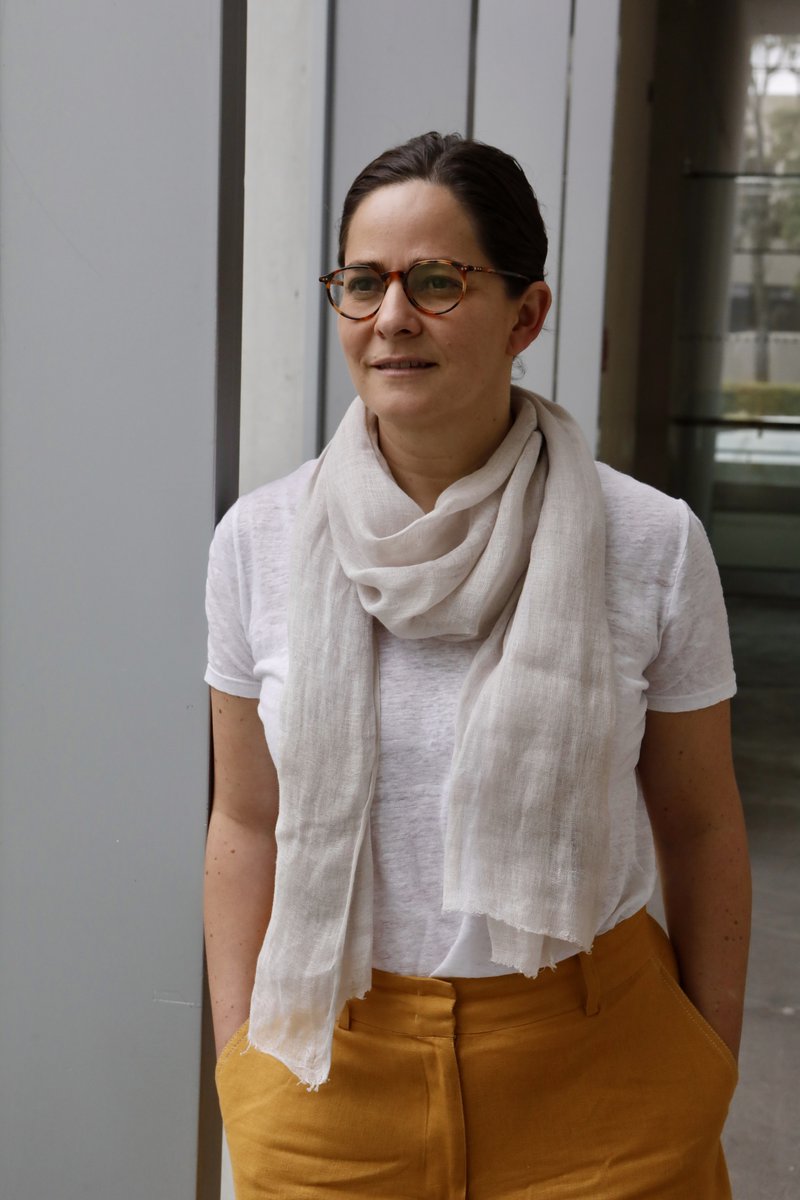
I am General Director of Visual Arts at the Universidad Nacional Autónoma de México (UNAM) and Director of the Museo Universitario Arte Contemporáneo (MUAC) in the same university, based in Mexico City (since 2024). From 2019 to 2024, I served as Director of the Museo de Arte Carrillo Gil, a modern and contemporary art museum in Mexico City. My curatorial experience includes roles at Museo Tamayo and Sala de Arte Público Siqueiros, both in Mexico City, as well as the Museo de Arte de Lima (MALI) in Lima, Peru.
I hold a BA in Art History from Universidad Iberoamericana (Mexico City, 1994–1999) and an MA in Curating Contemporary Art from the Royal College of Art in London (2001–2003). I served as a curatorial intern to the Latin American Acquisitions Committee at Tate (2003) and was awarded the Hilla Rebay Curatorial Fellowship from the Guggenheim Foundation (2004).
As an independent curator, I’ve developed exhibitions such as El tiempo en las cosas I, II, and III (Museo Amparo, 2021–2025), Erika Verzutti: Tantra (Museo Experimental El Eco, 2023), and Silvia Gruner: Hemisferios (Americas Society, New York; Museo Amparo, 2016), among others.
I have also served on various boards and committees, such as the Contemporary Art Acquisition Committee at MALI (2008–2013 and 2021–2025), the MUAC Acquisition Committee (2012–2016), the Academic Committee at Museo Experimental El Eco, and the Advisory Board of Museo Universitario del Chopo (2017–2019). Within MUAC, we develop our programs and acquisitions with the advice of specific collegiate bodies.
Motivation statement explaining what encourages you to join the Board of CIMAM
I have had the opportunity to attend CIMAM’s Annual Conferences in Ljubljana (2011) and Rio de Janeiro (2013) as a grant recipient, and most recently in Buenos Aires (2023), also with the support of a travel grant. Each of these meetings has been an important occasion to connect with colleagues from across the world, exchange strategies, and reflect on the urgent challenges that museums face today. Attending these gatherings has deepened my understanding of the diversity of institutional models and curatorial approaches and has allowed me to recognize both the specificity of our regional contexts and the shared concerns that museums navigate on a global scale.
Taking a more active role within CIMAM by joining the Board’s work represents an opportunity to contribute to an organization that has been a key reference in my career as a curator and museum director. I am eager to welcome the opportunity to collaborate with peers who are committed to rethinking institutional practices in ways that acknowledge museums’ deep social responsibilities and their capacity to perform and inspire transformation.
Explain how you see the role of CIMAM in advancing contemporary art museums globally
CIMAM plays a crucial role as a platform that connects art museums operating in vastly different local contexts. Its strength lies in its ability to acknowledge and analyze the specific challenges that institutions face around the world while hosting the development of shared frameworks and adaptable strategies to address them.
In this sense, CIMAM functions as both a vast network and a reflective intimate space: it offers tools and references for navigating global dynamics, such as funding models, political pressures, social polarization, sustainability, and ethical considerations, while also recognizing the importance of situated, context-responsive approaches.
For museums embedded in educational contexts, such as university museums like MUAC, the capacity to listen and respond to multiple audiences is of vital importance. CIMAM’s global network can help us share strategies for building trust, engaging in difficult conversations, and cultivating inclusive spaces for exchange, even in times of tension or disagreement.
I believe that rather than imposing a fixed model of museum development, CIMAM encourages the transversal exchange of practices and knowledge. It provides a collective space where the specificities of each museum—their communities, histories, and urgencies—can be brought into dialogue with broader institutional and global concerns. CIMAM supports its members in reimagining the role of contemporary art museums as flexible agents that continuously reflect on their own place in society, keeping questions open while still generating meaningful impact.
How would you help CIMAM advocate for museums in areas such as funding, membership engagement, and strategic initiatives to achieve its mission?
My contribution to CIMAM would focus on sharing and creating meaningful alliances and initiatives that can support museums in responding to the challenges of their specific contexts. I believe in the power of shared knowledge and collaboration across regions.
In recent years, MUAC has faced moments of social tension in which acts of vandalism against the museum can be interpreted as symptoms of broader social discontent. These situations highlight the delicate balance museums must sustain: defending cultural work and safeguarding collections, while also keeping our doors open to complex topics through dialogue. What I have learned from these experiences is that it is key to acknowledge these acts as symptoms of wider societal challenges and in using them as opportunities to model how cultural institutions can listen to demands, reject violence, and still remain spaces of encounter and reflection.
In that spirit, I would contribute to CIMAM’s strategic initiatives by creating spaces for exchange, experimentation, and mutual support, where advocacy is understood as inseparable from social responsibility. It is fundamental to understand not only how museums can impact society, but also how society can impact and transform our work.
While funding and membership engagement are vital aspects of CIMAM’s mission, I believe that strong networks and relevant programs can themselves become catalysts for resilience, participation, and renewed trust in museums. By articulating concrete case studies and successful collaborations, I can offer, along with my team's work, models that will resonate with museums across geographies.
If elected as a Board Member, what would be your main objectives or areas of action for the next three years for CIMAM to contribute to the sustainable development of the modern and contemporary art museum sector?
If I have the opportunity of being elected, I would focus on advancing CIMAM’s mission by promoting an integral vision of sustainability that is rooted in environmental concerns but also encompasses governance, community accountability, and institutional relevance. Aiming for the sustainable development of museums means taking into consideration the complexity of the contexts in which we operate. In this sense, I am particularly interested in advocating for a model of sustainability that sees the museum as an active agent within a larger ecosystem, developing mutually beneficial relationships with the different communities, institutions, and social actors it intersects with.
Drawing on my experience as Director of Visual Arts at UNAM and of the Museo Universitario Arte Contemporáneo (MUAC), I aim to exchange experiences with other museums in order to develop culturally meaningful practices within our specific contexts while remaining true to our mission as spaces for the preservation and exhibition of contemporary and/or modern art.