Who Tells The Story?
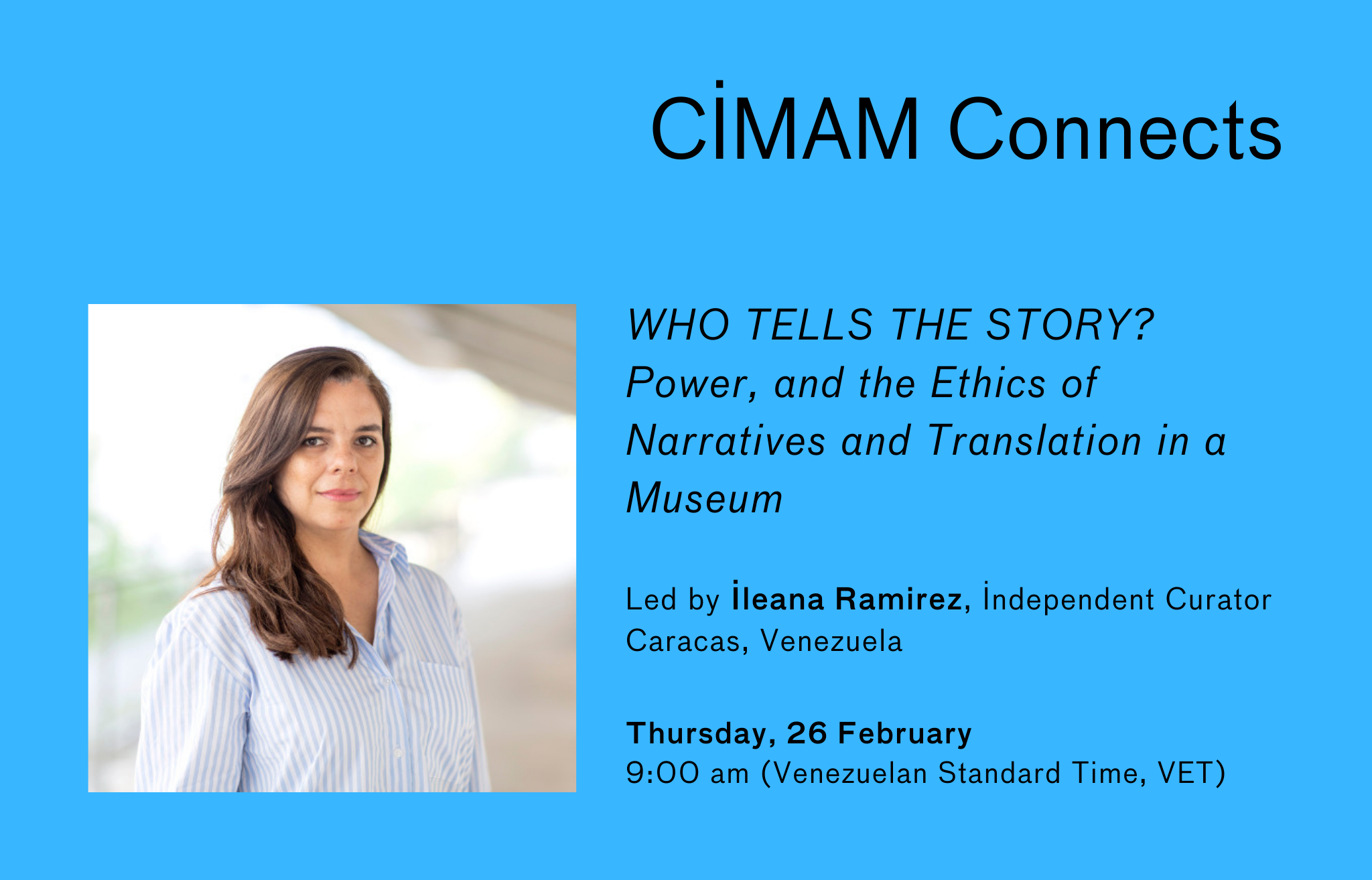
WHO TELLS THE STORY?
Power, and the Ethics of Narratives and Translation in a Museum
Led by Ileana Ramirez, Independent Curator
Thursday, 26 February
- 9 am Caracas
- 10 am Buenos Aires
- 2 pm Madrid
- 4 pm Doha
- 6.30 pm Delhi
- 9 pm Singapore
Go to the Members Only Section to Register for this CIMAM Connects Sessions
Abstract:
Contemporary museums are not neutral spaces: they function as cultural mediators, producers of discourse, and active agents in shaping narratives about history, memory, and identity. This role brings forward complex dilemmas around the ethics of representation, cultural appropriation, the authority to speak, and the fidelity involved in translating knowledge.
This online gathering invites to a conversation around key questions such as:
- How can cultural visibility be fostered with respect for the communities represented?
- Who is allowed to tell the story within the museum, and how is that permission shaped?
- What is lost or transformed when a cultural experience is translated into an exhibition?
Rather than seeking consensus, the aim is to activate a critical discussion, grounded in concrete experiences and examples about the ethical limits and institutional responsibilities of the contemporary museum.
Thematic Points and Guiding Questions
1 Representation or Appropriation
Every exhibition involves an ethical decision about visibility and cultural appropriation.
- When does cultural mediation become symbolic appropriation?
- Is it possible to present living cultural practices without decontextualizing or aestheticizing them?
2 Shaping Voices, Curating who’s heard
The museum produces discourse and legitimizes voices, but who is actually speaking?
- Can the museum speak with without speaking for?
- What happens when community narratives conflict with institutional frameworks?
3 Translation, Truth, and Responsibility
Every translation—linguistic, cultural, or museographic—transforms meaning and affects truth.
- What is lost when a worldview is translated into museographic language?
- Who bears responsibility for translation‑driven transformations, and how can collaboration with communities guide more faithful interpretations?
Cross‑cutting Closing
Final Question:
What ethical responsibilities should museums assume today when representing others?
Go to the Members Only Section to Register for this CIMAM Connects Sessions
Ileana Ramírez shares the following reading recommendations that have inspired her to propose this conversation.
I. Recognition & Dispossession
Cultural Appropriation and Social Recognition. https://onlinelibrary.wiley.com/doi/10.1111/papa.12261
Rivera Garza, Cristina. The Restless Dead: Necrowriting & Disappropriation. 2020. https://www.crolar.org/index.php/crolar/article/view/400
García Canclini, Néstor. Hybrid Cultures: Strategies for Entering and Leaving Modernity. chrome-extension://efaidnbmnnnibpcajpcglclefindmkaj/https://monoskop.org/images/0/0f/Canclini_Nestor_Garcia_Hybrid_Cultures_new_ed_2005.pdf
II. Museums and Power
Museums Are Not Neutral: Unpacking Bias, Power, and the Evolving Role of Cultural Institutions
https://www.wonderfulmuseums.com/museum/museums-are-not-neutral-13/
Ribeiro, Djamila. “Museums as Places of Memory and Spaces of Power and Dispute.” https://www.sdcelarbritishmuseum.org/news/djamilaribeiro/
McGuire, Kelly. “Developing Museological Methodologies for Unpacking Colonial Legacies in Barbados.” https://journals.openedition.org/iss/5985
Ariese, C. The Social Museum in the Caribbean. https://scholarlypublications.universiteitleiden.nl/access/item:2971370/view
III. Artistic Interventions & Counter-Visualities
Joiri Minaya: Unseeing the Tropics at the Museum. https://museum.syr.edu/exhibition/current/joiri-minaya-unseeing-the-tropics-at-the-museum/
Mati Diop — Dahomey (2024). https://www.youtube.com/watch?v=uUi718ZBH0c
Resnais, Marker & Cloquet — Statues Also Die (1953). https://www.youtube.com/watch?v=lXIkzGWIAfo
Moreno, Pilar & Ana Endara Mislov — For your peace of mind, Make your own museum.
(Para Su Tranquilidad, Haga Su Propio Museo) Panamá, 2021.
https://www.youtube.com/watch?v=NCHXlMo82XA
Biography
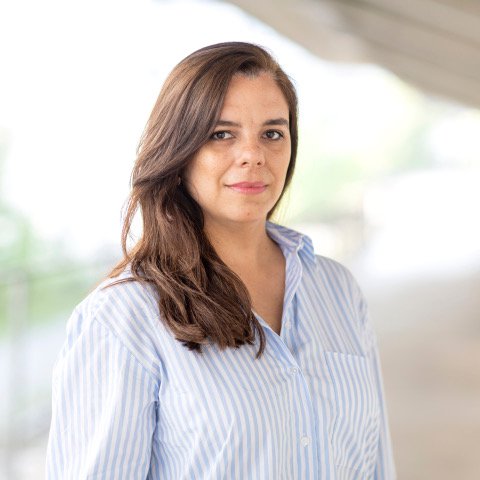
Ileana Ramírez Romero is an independent researcher and curator based in Caracas, Venezuela. She is the founder and director of Tráfico Visual, a cultural platform dedicated to contemporary artistic discourse. With an academic background in law, she brings a multidisciplinary perspective to her work, engaging the social, critical, and aesthetic dimensions of memory, history, gender, and diaspora. Her research focuses on collaborative artistic practices and experimental forms emerging across Latin America.
In 2025, Ramírez completed a research residency in Geneva, Switzerland, supported by Pro Helvetia South America, through Let’s Speak Up—an initiative that maps the community of immigrant artists and cultural practitioners who hold leadership roles and are established in Switzerland. She also recently curated the group exhibition Unbound Realm at FABRIKculture in Hégenheim, France, a project that extends her ongoing interest in the porous territories where imagination, memory, and collective experience converge.
Ileana Ramirez is a 2025 CIMAM Travel Grantee awarded by Colección Patricia Phelps de Cisneros (CPPC).