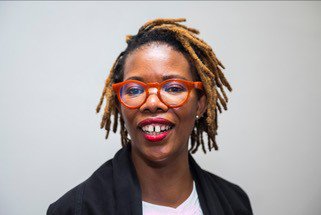
Thuli Mlambo-James
Conference Report. December 2025
Attending the CIMAM Annual Conference in Turin was both an intellectual provocation and a necessary pause. Supported by a Travel Grant from the Getty Foundation,a rare opportunity to step back from the urgencies of daily practice and enter a collective space of reflection with museum professionals, curators, artists, and thinkers from across the world. For those of us working from the Global South, often under conditions of scarcity, political pressure, and ecological precarity, this gathering was not a luxury, but a vital site of recalibration. In a time of accelerating crisis climate, political, ethical, the conference Day 1’s theme, Doing Less vs. Doing Differently, struck a deep chord. It asked us not to retreat from responsibility, but to question inherited models of productivity, growth, and institutional success.
The first morning of the conference opened not with words, but with the body and for me, this felt like an intentional and generous way to begin an intensive few days of thinking, listening, and unlearning. Alessandro Sciarroni’s DON’T BE FRIGHTENED OF TURNING THE PAGE, performance offered a moment of stillness through movement, and movement through repetition. It was an invitation to arrive fully physically, mentally, and emotionally before the weight of discussion began. Watching the performer spin and turn incessantly with such precision was, at first, disorienting. The body rotating around its own axis created a sense of dizziness. Yet as the duration unfolded, something shifted. The initial unease gave way to a quieter state of observation. One stopped trying to “understand” the work and instead began to inhabit it to breathe with it, to find one’s own balance within its rhythm. In this way, the performance functioned almost as a form of collective meditation, grounding us through repetition, endurance, and restraint.
This idea of “turning” operates on multiple levels, as a literal physical action, as an emotional and psychophysical journey, and as a metaphor for change, evolution, and return. What struck me most was how this simple gesture, turning carried such conceptual weight without ever becoming illustrative or didactic. It trusted duration. It trusted the body. It trusted the audience.
The fact that this work is conceived for non-theatrical spaces felt especially significant within a museum conference context. It subtly challenged the idea that meaning requires elaborate staging or institutional framing. Instead, it reminded us that transformation often happens through small, repeated acts, through patience, and through surrendering to process rather than outcome. For me, this performance resonated deeply with the broader themes of the conference, particularly the call to “do less” in order to “do differently.” In a world, and an art sector, obsessed with speed, production, and constant innovation, Sciarroni’s work insisted on slowness, focus, and commitment. It asked us to stay with discomfort long enough for it to become insight.
As someone working on ecological and community-rooted curatorial practice through Water for the Future, I experienced this performance as a metaphor for the kind of institutional and environmental work we are being called into. Repair, care, and transformation are not spectacular. They are repetitive, embodied, and often unseen. They require stamina, humility, and trust in the process.
Beginning the day and indeed the conference in this way felt deliberate and wise. It grounded us before the intensity of dialogue and debate, offering a shared embodied experience that reminded us that thinking does not only happen in the mind. Sometimes, it begins with turning again and again, until we are ready to face what comes next, which was followed by a keynote which resonated profoundly with me, by Dr. Françoise Vergès. She delivered a powerful address on Being Slow / Being Fast in Times of Counter-Revolution. Her framing cut through polite institutional language to name the reality many of us work within, a world shaped by racial capitalism, imperial extraction, permanent war, and ecological devastation. Vergès reminded us that museums are not insulated from these forces, they are deeply entangled within them.
What stood out was her insistence on time as a political tool. “Being slow” was not framed as inefficiency, but as care, time to reflect, to nurture, to build structures that can endure. “Being fast,” by contrast, was described as a survival tactic, learning when to move quickly to protect, to hide, to create refuge, to resist surveillance and violence. This dual temporality mirrors my work with Water for the Future along the Jukskei River, where ecological repair requires patience, while activism and protection often demand urgency.
Vergès’ critique of museums as total social structures, with embedded racial, gendered, and economic hierarchies, felt particularly relevant for those of us reimagining museums outside Western frameworks. Her call to prioritise qualitative depth over quantitative output offered language for what many practitioners intuitively feel but struggle to articulate within neoliberal systems of measurement.
Reflections on the Care, Memory, Reinvention, Listening and art institutional tours
On the day before the CIMAM conference formally began,a group of Travel Grantees visited several cultural spaces in Turin. Reflecting on the structure of the conference as a whole, I experienced the inclusion of these spaces in the CIMAM programme as deeply intentional, not incidental. They were not simply site visits, but living case studies that embodied the three mottos guiding the conference across its duration, Doing Less vs. Doing Differently, Mapping Desires, and Transaction and Transmission: Tactics of Togetherness. Each space translated these ideas from theory into lived institutional practice.
Day One’s theme - Doing Less vs. Doing Differently,
Spaces such as the Pinacoteca Giovanni e Marella Agnelli powerfully demonstrated how restraint can be a curatorial and ethical position. Built atop a former FIAT factory, the Pinacoteca does not erase industrial history but holds it with care, choosing adaptive reuse over erasure and quality over accumulation. Its modest yet exceptional collection, and its light architectural touch, offered a lesson in institutional recalibration, how doing less can, in fact, create deeper meaning. For me, this felt especially resonant in Turin, a post-industrial city whose history mirrors many cities across the Global South, where care, reuse, and repair are not abstract concepts but lived realities.
This theme also found a clear embodiment in ALMARE, a Turin-based artistic and curatorial collective dedicated to contemporary practices that use sound as an expressive medium. Working across curating, writing, music, podcasting, exhibitions, concerts, public talks, and performance programmes, the organisation operates fluidly between artistic and curatorial practice. What struck me most, however, was not the breadth of its output, but the ethics underpinning how that output is produced. In a moment where the cultural sector is under immense financial and structural pressure, ALMARE offered a quietly radical model rooted in collaboration, trust, and collective responsibility. Their way of working resonated very much with the conference’s themes, one of Doing Differently through its humility and collective ethics. Its collaborative funding model, shared resources, and refusal to work in silos offered a contemporary response to scarcity, one rooted in solidarity rather than competition. This approach echoes older, village-based systems of mutual care that I recognise from African contexts, reminding me that the future of institutions may well lie in relearning from the past. Within the context of CIMAM, ALMARE showed how smaller, nimble organisations can model sustainability not as branding, but as lived, ethical practice. For me, the inclusion of these institutions affirmed that CIMAM was not only asking participants to rethink museums conceptually, but was actively demonstrating how institutions can recalibrate, ethically, ecologically, and socially. These visits grounded the conference in real-world practice, showing that transformation is already underway for those willing to listen deeply, work together, and tend carefully to what already exists.
Learning from Ecology: Rustom Bharucha
Another defining moment was the presentation by Professor Rustom Bharucha. His lecture, Expanding the Museum-Making Imaginary: Learning to Learn from Ecology, articulated ideas that align closely with my current work and thinking.
Drawing from the traditional practice of floor drawings and from an experimental desert museum in Rajasthan, Bharucha proposed a museum model grounded in impermanence, humility, and attentiveness to place. Rather than accumulating resources, he asked: what might we learn from erasure? From absence? From what is already present but overlooked?
This resonated deeply with the eco-museum model we are developing along the Jukskei River, an environmental art corridor that exists outside four walls, embedded in community, ecology, and lived experience. Bharucha’s call for a “new aesthetics of care” affirmed that museums need not be monumental to be meaningful. They can be relational, fragile, provisional and still powerful.
Bringing It Home
What I carry forward from Turin is not a checklist of solutions, but a set of questions sharpened by collective thinking. How do we build institutions that are responsive rather than extractive? How do we honour locality while remaining globally connected? How do we slow down enough to care, while staying agile enough to protect what matters?
For Water for the Future, these reflections directly inform our work on the Environmental Art Corridor. They strengthen our positioning of the eco-museum as a legitimate, necessary, and future-facing cultural model, one rooted in ecology, community knowledge, and social justice. CIMAM offered a space to think otherwise. The task now is to translate that thinking into practice, patiently, collectively, and with courage.
Biography
Thuli Mlambo-James is a curator with over a decade of experience spanning contemporary art, institutional leadership, and environmental advocacy. Her curatorial practice centres on radical care and ecological urgency.
From 2017 to 2018, she became the first Black woman to direct Johannesburg’s historic Bag Factory Artist Studios. There, she implemented equity policies that boosted women-led residencies by 60% and significantly increased media visibility, while forging connections between South African artists and global peers. This role solidified her belief in the power of institutions to drive systemic change.
In 2022–2023, she completed academic training in Curatorial Practice and Visual Cultures at NODE Center in Berlin, focusing on transnational feminist curation. That same year, she led a collective that won the bid to represent South Africa at the 59th Venice Biennale, co-curating the national pavilion.
In 2024, her curatorial work with EIGEN + ART, which debuted at the Cape Town Art Fair, culminated in Berlin with a bold all-women South African exhibition. It explored pleasure and selfhood as radical acts amid climate precarity, challenging Eurocentric narratives and asserting bodily autonomy in the context of ecological crisis.
She serves as Curatorial Program Developer for Water for the Future, an environmental NGO working along Johannesburg’s Jukskei River. She curates projects that engage artists exploring feminism, environmentalism, urban ecology, and hybrid environments, interrogating the shifting boundaries between nature, artifice, and human impact.
Since 2022, she has served on the jury for Apexart Gallery in New York, evaluating international exhibition proposals. She is also a scholarship recipient of The Black Heart Foundation and Black Blossoms School of Art & Culture (UK), where she is completing a Certificate in Reframing Blackness – Reshaping Art History, focused on accessibility, representation, and the portrayal of Black figures in Western art.
Thuli Mlambo-James, Curatorial Program Developer at Water For The Future in Johannesburg, South Africa, has been awarded by the Getty Foundation.