Suzana Sousa
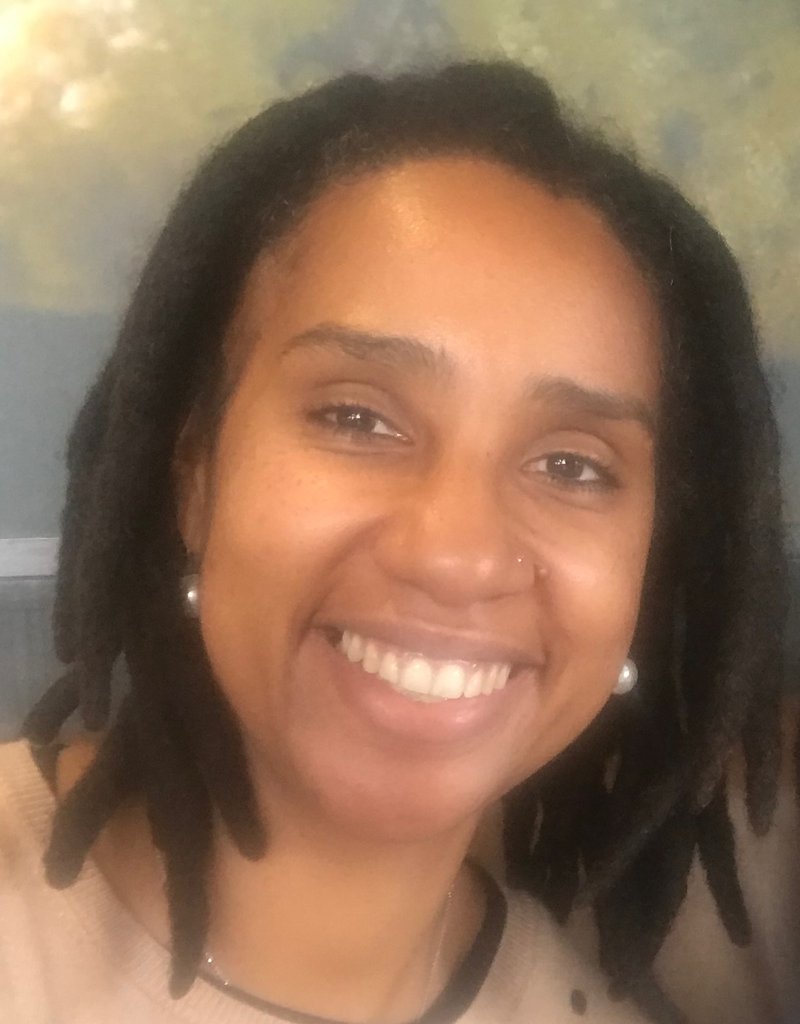
Conference Report. December 2025
The 2025 Annual Conference was my first experience at a CIMAM conference and as a travel grantee I felt the support of the organization throughout all the application and preparation process. I felt it started quite ahead of time as I got to know and research my fellow travel grantees, and I was already excited to meet them and know more about their projects and professional diverse engagements.
The introduction of the board and patrons served as an ideal launch for the grantees. It provided a valuable opportunity to connect with leadership and peers alike, serving as a welcoming segway into the broader networking aspect of the conference.
Summary
The CIMAM Annual Conference this year took place in Turin and was hosted by the Foundation Sandretto Re Rebaudengo and the Foundation CRT. The three days of the meeting had different venues and different themes. The venues: OGR Torino, Theatre Carignano and Centrale Nuvola Lavazza added to the experience of immersion into the arts and culture scene of the city. The themes: Doing less vs. Doing differently; Mapping desires and Transactions and Transmission. Tactics of togetherness, respectively, served as the anchor for the days’ organization.
This report will address the experience of the conference as a Grantee and reflect on its main takeaways through the proposed structure of the event.
The three keynote lectures addressed important issues for the current museums sector. Françoise Verges on the first day addressed colonialism and the need to decolonize ourselves and our institutions. It was quite a compelling presentation though I considered that it reflects a particular experience based on the West. Most countries from the geographic space called ‘global south’ are not that focused on the colonial experience, at least not in their everyday life and practices. A considerable exception would be the patronage relationships in the arts and culture sector, hugely dominated by Western institutions. I can only speak from my experience from Angola, formerly colonized by Portugal, our history goes back quite beyond the colonial experience and has since independence been marked by many remarkable events. The lecture made me think about all that is left outside of the conversation and how the need to decolonize removes our focus from other experiences and other centers, whether geographic, artistic or philosophical, that could help us to think and engage with these essential issues. A good example that came to my mind is the Museum of Ghana in Accra, that doesn’t engage colonization in the main exhibition because from a chronological point of view alone is not relevant. I’m necessarily simplifying such a complex issue in these few lines, but I believe that museums and cultural professionals would benefit from experiencing other thought axes and engaging with other perspectives that don’t necessarily have the Western world as its center.
The second day Lecture by Elizabeth Povinelli was an exciting creative experience. The anthropologist artist shared with us a capsule of her work dressed up with sparkles of theory and ended up in a question regarding the benefits of capitalism, addressing a hypothetical us that was quite confusing to me. I was not sure who could fit in that us. As an intellectual exercise it was interesting to travel the north-south dichotomy of thinking/ production vs subject/nature all encapsulated by Western theory.
The final lecture of Mariana Mazzucato was for me the highest not of all three. Her questions were fresh and she forced all of us to think outside of our boxes. What kind of work engagements do we want, are we holding into a feudal structure of patronage? Mazzucato’s lecture ‘The public value of arts and culture in reimagining and redirecting economic growth in the 21st century’ brought together the power of imagination and economic growth to the sector. Imagination, a practice most of us are familiar with, particularly in creating narratives. Narratives that might create worlds but that do create identities, institutions and so on. And economics, such an alien concept to the sector usually viewed as an expense. The author gave us a structure to engage with our institutions with an impetus for change and poked us to take a place in the politics table. Although most of us agree with the public value of culture many of us have a hard time articulating it in face of health, education or the military and Mazzucato brought to our attention the layers at stake from a perspective of governance.
I consider that central questions and challenges facing contemporary art museums were addressed at the conference via the lectures and in our conversation. The structure of the conference allowed for the breakout discussions, within smaller groups, and facilitated networking.
Report Methodology:
In the report I will look at all the days of the conference and reflect on the experience and the main takeaways of it.
- Day 1: "Doing Less vs. Doing Differently”
The day started with the performance “Don’t be frightened of turning the page” by the artist Alessandro Sciarroni performed by Marco Bertani. The concept of turning functioned as a sparkle with the theme of the day. It took us from the turning of the body to change in our institutions and filled the imagination with possibilities. Its duration allowed us to feel a number of emotions, wonder, fear, excitement and deep appreciation for artistry but also for the concepts that filled us with motivation for the start of the conference.
The groups Breakout Sessions in the first day allowed for a deeper discussion on the themes defined previously and a better engagement between peers through shared experience. It was an experience that showed us how our challenges are very similar regardless of the geographic distance or institutional specific settings. In group 22, where I was, we discussed censorship and political pressures and learned about each other’s context and specific pressures.
The OMPA award was another highlight of the day with a great set of institutions and professionals receiving the award. I was particularly inspired by the work of the Museum Barda del Desierto and the Palestinian Museum. Their work, dedication and perseverance towards their mission and communities regardless of the exterior conditions is a source of motivation.
- Day 2: "Mapping Desires"
The day started with the performance of Abdullah Miniawy bringing together poetry and music evoking translating as a process within us and with the exterior world. By this point translation was very present in our communication and to see it performed so beautifully in such an amazing theatre was a true gift.
The highlight of the day for me was the panel discussion where we learned of case studies and practical applications of the topics that had arisen during the discussions. I was particularly drawn to the lecture “Expanding the Museum-making Imaginary: Learning to Learn from Ecology” by Rustom Bharucha and “The Networked Museum: Lessons from Finding Nemo” by Onome Ekeh and Francesco Manacorda discussion of collaborative practices between museums in Turim. This lecture established collaboration and cooperation as a management mechanism with impact on resources but also programs and audiences.
- Day 3: "Transactions and Transmission. Tactics of Togetherness"
The day started with the performance “Pas moi” by Diana Anselmo. The performance used silence and sign language putting the audience to witness an interaction between a group of deaf youngsters and drawing attention onto the needs of the audiences. It followed the CIMAM General Assembly and the announcement of the new CIMAM Board 2026-28. And after, the presentation of the next host of the conference that will take place in Harare, Zimbabwe, in 2026.
The day continued in a great note with the keynote by Mariana Mazzucato, and the closing remarks were a moment of thinking about the three days of discussions where we also had the opportunity to hear thoughts and suggestions from the participants at the conference.
The day ended with visits to MAUTO, Pinacoteca Agnelli and Luci d’Artista. We saw art, a museum that brought together history, art and technology through the automobile and the final drive through the city to get to know a different and interesting museum that brings together the artists, the city and its architecture and its inhabitants.
Conclusion
I consider that the main achievement of the conference is the engagement between professionals from around the globe that have the opportunity to get to know each other, learn from each other and connect for future projects and collaboration. All this in an environment of discussion and intellectual engagement. I would like to recommend a better engagement with non-Western points of view, I don’t mean representation, as for that there is clearly a concerned being addressed by projects such as the Travel Grants. But rather to think outside of the box to include discussions from other points of view and other geographies such as during the panel discussion.
Exhibitions and visits in the conference program:
The exhibitions and visits were a great complement to the conference as it allowed the participants to get to know Turin better and its cultural scene. The city has great museums and artists and a network of stakeholders and patrons.
Biography
Suzana Sousa is an art curator and researcher focused on developing narratives and producing knowledge from the Global South through collaboration and experimentation. Over the past decade, her work has explored themes related to contemporary African art, cultural politics, and the construction of nationalisms and national discourses through culture and the visual arts.
More recently, she has engaged with feminist curatorial practices and conducted research on the works of African women artists. She is currently completing a PhD at the University of the Western Cape in South Africa, focusing on nation-building processes in Angola within the context of museums and the visual arts since 1975. She serves as a research fellow at the Centre for Humanities Research at the University of the Western Cape.
In 2022, Sousa was awarded the Next Generation Social Sciences for Africa Doctoral Scholarship and the Ivan Karp Research Award. She is currently working on the exhibition O poder de minhas mãos, which will open at SESC, São Paulo, Brazil, on August 23 of this year.
Suzana Sousa, Independent Curator in Luanda, Angola, has been awarded by Mercedes Vilardell.