Shreya Sharma
Conference Report. December 2025
Turin in December is cold, sparkling, and honestly just a little bit magical and being at CIMAM 2025 as a Getty Foundation Travel Grantee felt exactly like that. The conference was packed with learning, laughter, long debates, perfect tiramisu and more art than my phone storage could handle. Here’s everything I soaked in over those unforgettable days.
Pre-Conference Adventures: Food, Art, and New Friends
The first night dinner at Kipling was the perfect icebreaker. I landed at a table with people from Spain, Morocco, South Africa, basically a mini-UN, and within minutes we were joking, confessing our curatorial struggles, and comparing career detours like old friends. It set such a relaxed, candid tone for the days ahead. The next morning began at Almare, this dreamy space that could convince anyone they're living in a European indie film. The studio visit with Guglielmo Castelli felt like opening a secret door into his mind: unfinished works, raw thoughts and a surprising amount of humor. A Moroccan lunch later, we were off to Almanac Projects, where I actually spotted an Indian God hiding in a work. The show pushed technological discomfort to new levels and I loved that! Mucho Mas brought young, funky energy, while Cripta 747 hit me with performance, oral history and video work that made me wish the evening never ended. And then Fondazione Sandretto Re Rebaudengo. The Anish Kapoor installation? A moment. The bus ride back through Turin’s Christmas lights? Chef’s kiss.
Day 1: Big Thoughts, Bigger Conversations, and the Best Tiramisu of My Life
We kicked off the conference with a Welcome Coffee aka networking disguised as caffeine. I met other grantees, CIMAM Board members, Funders, all before 10 a.m.! Alessandro Sciarroni’s opening performance was like meditation meets movement therapy. It quietly whispered, “Maybe step out of your square for once?”
Then came the big shift: the idea of “doing less, but better.” A very Italian way to rethink museum work and surprisingly deep.
Françoise Vergès completely stole the day. My notes literally say:
“Breathing is a privilege. World is preset. Past is burned. Capitalism + patriarchy = disaster.” Hard-hitting, brilliant, unforgettable.
The breakout sessions were chaotic in the best way: we debated collaboration, censorship and audiences. I was the group’s unofficial secretary, which meant trying to summarize seven opinions at once. Survived it- Loved it! And now, the truth: The pizza and tiramisu that night changed my life. If I could write this entire report about that tiramisu, I would.
Day 2: 10,000 Steps, Deep Theory, and a Fairytale Dinner
Not sure what possessed me, but before the conference I went hunting for the Bench of the Lampposts in Love at Parco del Valentino. Found it. It was adorable. And I’d already hit 10k steps before breakfast.
At the gorgeous Carignano Theatre, Elizabeth Povinelli dropped the truth bomb that colonialism was never a conversation between equals. It hit differently when thinking of India.
Rustom Bharucha reminded us to stop pretending humans are the main characters of the planet, and honestly, he’s right.
Azu Nwagbogu’s line “land holds memory” went straight to my heart, connecting instantly to my work on 1947 Partition in India.
Castello di Rivoli was a visual treat, and the evening dinner venue looked straight out of a Disney film. I probably spent the first 10 minutes just staring at everything like a tourist.
Day 3: Goodbyes, Rooftops, and a DJ Night to Remember
Centrale Nuvola Lavazza was the final day’s venue: beautiful, warm and buzzing. The announcement of the new CIMAM Board genuinely felt like a family celebrating one of their own.
Then Mariana Mazzucato took the stage, being brilliant and hilarious. Her keynote made economics feel like entertainment—10/10 would attend again.
But my heart?
Stolen by Pinacoteca Agnelli.
The old factory-turned-art-space, the rooftop racetrack, the light: it was all magical. Easy my favorite visit of the whole trip.
The DJ night that wrapped up the conference was full of joy, dancing, and everyone pretending they weren’t sad it was ending.
Grateful Goodbye
I walked into this conference curious and a little nervous, and walked out feeling inspired, connected and genuinely re-energized in my practice.
Huge, heartfelt gratitude to the Getty Foundation for making this possible and to CIMAM for building a space that was rigorous and warm, academic and playful, thoughtful and human.
I’m leaving with new friendships, new questions and new ideas that will shape my curatorial work for years to come, and maybe a lifelong craving for Turin tiramisu!
Biography
Shreya Sharma is an oral historian, curator, and researcher working at the intersection of community memory, visual culture, and contemporary art. She holds a BA in History from Delhi University and a Master’s degree in Archaeology and Heritage Management. Her academic background has shaped a curatorial practice grounded in critical historiography and lived experience. She is particularly interested in how oral histories and indigenous knowledge systems can reframe institutional narratives and challenge colonial frameworks.
Since 2019, Shreya has served as the curator and archivist at Devi Art Foundation, where she has co-curated over a dozen public and private exhibitions. Her projects often bring together traditional craft, contemporary art, and social history to examine themes such as gender, displacement, and intergenerational memory. She is currently working on an exhibition titled Synthetic Needs, which reimagines Maslow’s Hierarchy of Needs through the lens of artificial intelligence and the posthuman condition. This exhibition explores what it means to be human in an algorithmic age.
Alongside her work in India, Shreya has actively engaged with international institutions and networks. In 2023, she was selected for the British Art Network Curatorial Forum, where she collaborated with a group of international curators to reflect on inclusive futures for British art. She has worked with various organizations such as the Cornwall Museums Partnership, where her input was instrumental in forming the Inclusive Collections Network, supporting small and rurally located museums to approach decolonization work pragmatically. She has also worked with The Space, Birmingham, in collaboration with artist Hew Locke as a consultant. She is currently developing an exhibition with the Migration Museum in the UK, which explores the concept of displacement through the lens of the 1947 Partition.
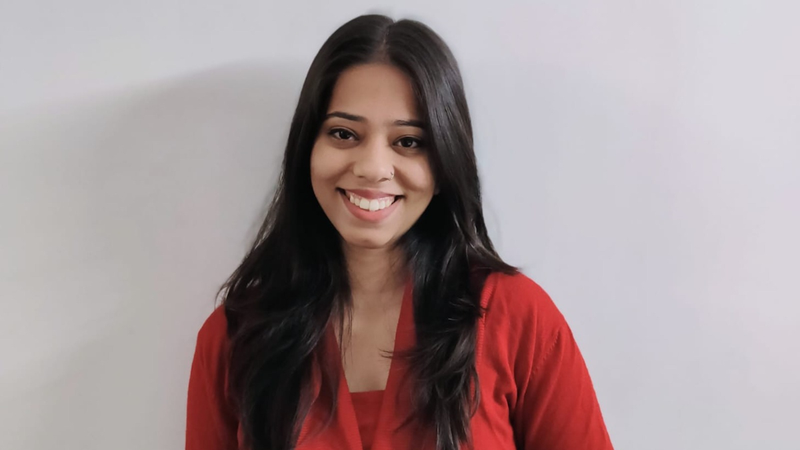
Shreya Sharma, Curator at Devi Art Foundation in New Delhi, India, has been awarded by the Getty Foundation.