Shaleen Wadhwana
Conference Report. December 2025
The one-word description I have for my experience at CIMAM is… “compelling”.
I start by stating that CIMAM made a compelling case - for expanding new models of museum making, for enduring game, for overarchingly ensuring that we think deeply about what we do through the lens of transmission-oriented future world-building.
I sit here on my laptop in India, with unlimited internet, typing in English, understanding that it in and of itself is a huge privilege coming from a country which consists of People of the Global Majority - a focal point of many grantees and delegates coming from dis/similar beginnings. It has shaped the way in which I understand intersectional histories and futures in my academic and professional practice of over 15 years. This is part of every museum tour I have attended or designed and conducted. This is part of every way in which I interact with the culture industry in my country and in other countries as well. This travel grant gave me the opportunity to meet with other 300+ professionals who cared just as much or more about their local and global culture industries. At a time when solidarity exists just as a word, this conference ensured it existed in practice.
From the hospitality showcased via email to book tickets, all the way to ensuring that we departed from the post-conference tour on time for all our individual commitments, all the organisers at the hotels, conference venues, restaurants, ushers for the buses, and at every pit stop, there was a friendly face to give a response to a question not yet formed - that made the engagement at this conference even more deeper and streamlined. Asking us beforehand about our reading lists and preferences was an insight into the rigour with which you all wanted us to be invested in this journey. The design of the conference days aligned with a performative art piece every day - be it Apertura by Alessandro Sciarroni, Abdullah Miniawy, and by Diana Anselmo, all three gave my eyes a place to rest and my mind some time to wonder. At first I couldn’t understand why these were included, but by the last day I realised that all three were conducted in silence, or languages that were not English - and that in and of itself emboldened me to give a feedback and remark on the last day, that we can lean into the local languages of the countries and cities that are hosting this conference in the years to come. It will deepen the commitment to the local communities, which are hugely responsible for the culture sector to keep going.
The range of the key-note speakers was unprecedented. In all the conferences I have attended, the key-note speaker/s rarely deviate from the disciplines under discussion or are from another industry entirely. Here, the three key-note speakers chosen were fields of knowledge of their own, from whom we could tap in and out, because the topics they spoke about were the need of the hour. It was brilliant listening to such minds and knowing that the ease of access to them is genuinely present in that moment. And whilst it is easy to assess the keynote of the day as the ‘hook’ of the day, for me, the tone-setting was done by the Apertura performances.
In no other conference has the food been this spectacular and the focal point of congregation - and it lived up to the ways in which one can imagine any part of Italy to embrace food [and wine]. From local mayors to legacy wineries, everyone really made us feel at home - and that is rare in a conference. It is even rarer than the post-conference Tour highlighted aspects of the cultural industry just as much as the Conference itself. My time in Milano, especially at MUDEC, led to an invite by the Museum Director to a close-door administrative session, as an observer.
I was also astounded by the range and experience of the Travel Grantees. With some, who were more senior to me and came with a range of experience equitable to those who delegates at the Conference, it did give me pause to think about the nomenclature - that why would we use the term travel grantee? - where sometimes the experiences’ of the Grantees are very similar to the rest of the delegates, except for the fact that there are financial support gaps in being able to attend such a conference. A term which includes ‘invitee’ could be a way to reflect on the fact that there is an element of being invited to this platform by virtue of the experience some of the grantees bring. The consistent social media and the immediate access to snippets of conversation online made this a very enriching experience. A wider access for those delegates and grantees who could not be present for any reason would be great to inculcate.
Another aspect I take back with me is the value of a break-out session, and the hope that what we discussed in it becomes a guiding spirit for the next conference. I do find that more dynamic discussions on how to address intersectional differences in audience engagement of cultural spaces can find more focus, where the break-out session’s conversations become part of a document that we access along with an open source version that allows the wider cultural community to engage. It is also crucial to note that topics such as decolonisation, indigenising existing models of culture, and moving through more deeply into tougher questions of the histories of the communities we represent remain even more important as we grow. I say this because there is a consistent disparity - hearing professionals from the “Global North” speak about administrative and funding challenges offers a useful point of comparison, particularly when considering how post-colonial contexts and regions where People of the Global Majority live often contend with deeper, historically rooted economic constraints that shape what is achievable. These problems being discussed on the same dinner tables - were not the same, and neither are our starting lines equitable - and it is a disheartening reality check to realise that it may never be the same because there is no immediate recourse to systemic colonial footprints on economy…. However, I remain hopeful and I want to contribute to this process. There is a space to address and redress this, which is exactly what CIMAM is doing and is able to do. It is also possible that the [emotional] resilience built in these very rooms can also handle more discomfiting topics to do with decolonising histories and embracing head-on the many kinds of ways in which museums can set the course of future history into a more aware, more realised, more conceptual history. Hosting the next Conference in Zimbabwe is a holistic step in that direction. My hat tip to the content committee which has worked rigorously over the past year to raise the bar of what we discuss and how we discuss it. More power to you as you proceed ahead. This is a curriculum in the making - which I hope is treated as such as we go along.
So, when I think of the CIMAM Conference, it showcased what can happen when a group of committed voices get together and unlearn, relearn and advocate for a world where museums showcase all the histories we possibly can - and in doing so, make a compelling case for it!
Biography
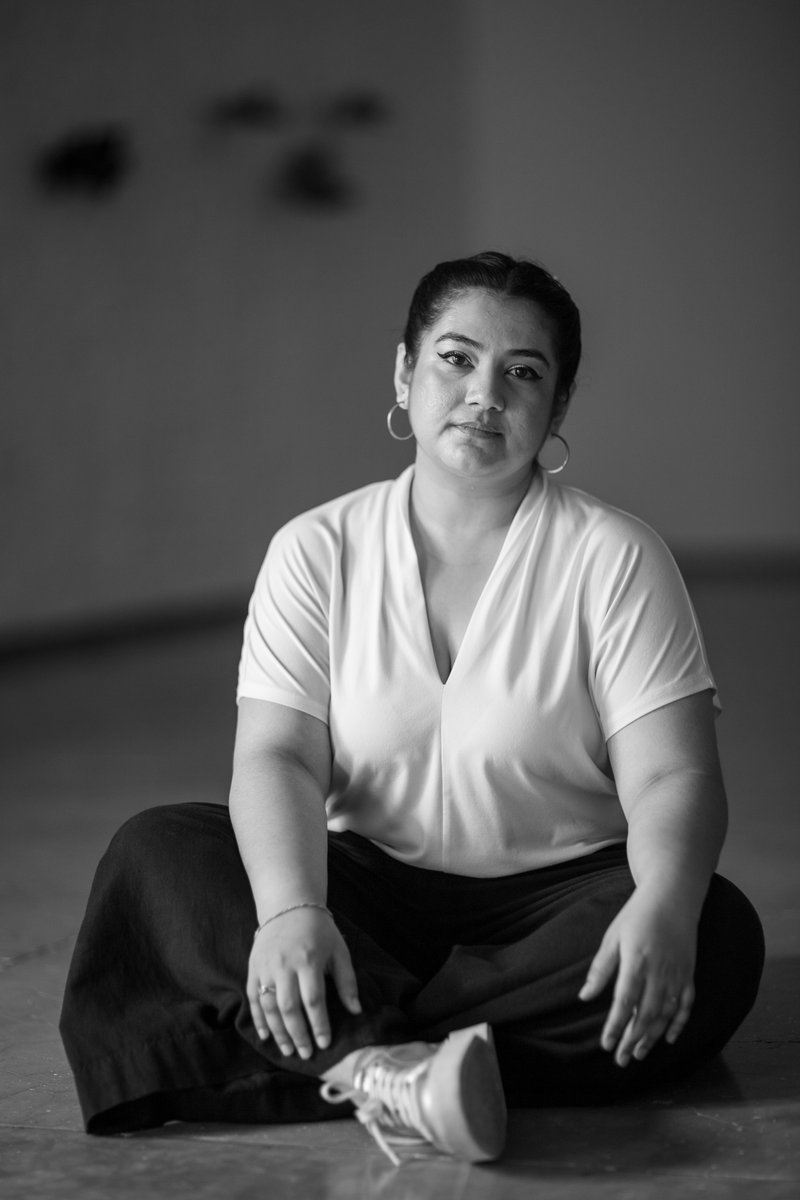
Shaleen Wadhwana is an independent arts educator, researcher, and curator who brings audiences closer to South Asian history, art, heritage, and culture through galleries, museums, and heritage sites. She is academically trained in Art History (SOAS, London), Cultural Heritage Law (University of Geneva–UNESCO), Arts Appreciation (National Museum, Delhi), and History (Delhi University). She represents South Asia at KADIST, a global non-profit contemporary art organization.
In 2022, her research on the cultural repatriation history of ten British Museum artifacts for The Unfiltered History Tour won India twelve Cannes Lions awards in France—marking a first-time-ever achievement for the country. Her earlier research on cultural repatriation was showcased at the Art and Antiquities Conference in Mumbai in 2019.
Her practice explores how historical object histories and contemporary art address intersectional social differences in, and of, South Asia. She is the co-creator of IMMERSE, one of India’s only artist+curator bilingual residencies supporting socially conscious emerging artists from lesser-known art schools, housed at Somaiya Vidyavihar University, Mumbai. She also co-founded two educational walking tour initiatives: The Chime Project and The Cities of Dehli. It has used the Musical Instruments Gallery at the National Museum, Delhi, and various Delhi heritage sites as teaching tools to explore musical history and archaeological trails, respectively. Her audiences have ranged from students and culture professionals to teachers, musicians, government officials, and international travelers. She has designed and conducted the India Art Fair Public Art Tour Guides Training Programme since 2022.
Shaleen is one of two curators representing India in the India–Australia Curatorial Exchange MAITRI Project, part of the Indian Ocean Craft Triennal (2025–2027) in Australia. Her research focuses on the craft histories of Aboriginal communities in Australia. The collaborative outcomes with Australian colleagues will include symposiums and exhibition-making.
She is currently researching her next institutional exhibition, which brings together narratives from Sri Lanka, Nepal, India, Pakistan, and Bangladesh into conversation, exploring intangible and tangible histories of objects, memories, textiles, and territories through the lenses of language and gender.
Shaleen Wadhwana, Independent Curator, Arts Educator and Researcher in New Delhi, India, has been awarded by Chitra Talwar.