Senka Ibrisimbegović
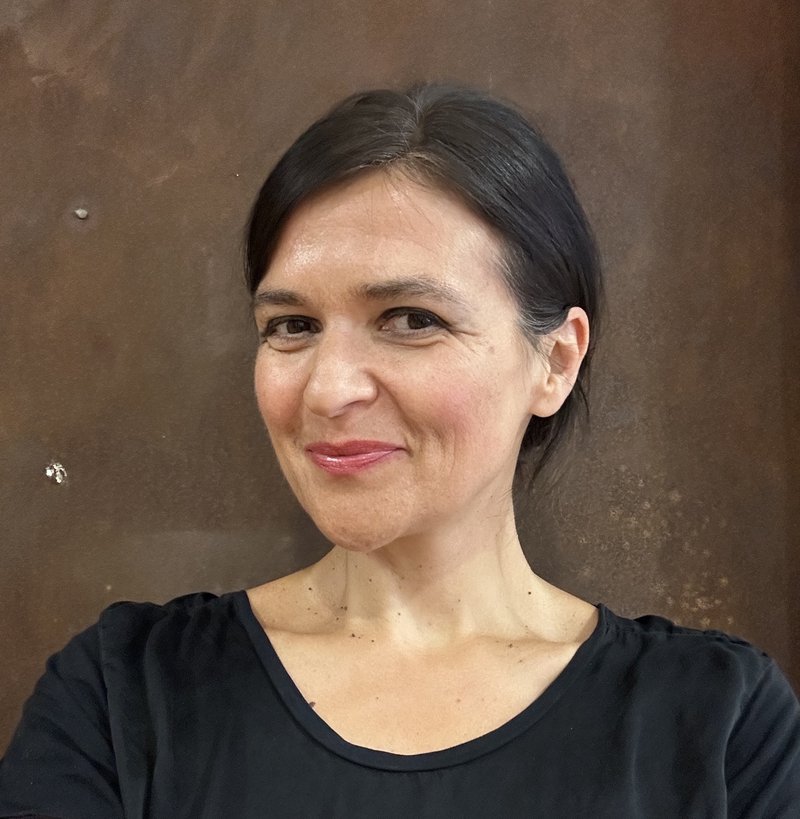
Conference Report. December 2025
Participating in the CIMAM Annual Conference in Turin as a Travel Grantee was an exceptionally enriching professional and intellectual experience. Over the course of the conference, I encountered not only a rigorous and well-curated program of lectures, panels, and exhibitions, but also a vibrant and generous international community of museum professionals, curators, researchers, and cultural leaders. The experience significantly expanded my understanding of contemporary institutional practices and reaffirmed the importance of international solidarity and exchange within the museum field.
One of the most striking aspects of the conference was the opportunity to become part of the wider “CIMAM family.” Meeting fellow Travel Grantees from diverse geographical, institutional, and cultural backgrounds created an immediate sense of shared purpose and mutual support. These exchanges were as valuable as the formal program itself, offering insight into how contemporary art institutions operate across very different political, economic, and social contexts. The openness of dialogue and willingness to share challenges, failures, and innovative approaches made the experience particularly meaningful.
The conference format stood out for its balance between theoretical reflection and institutional practice. The keynote lectures were intellectually strong and thoughtfully positioned, addressing urgent questions around the role of museums today, ethics of care, institutional responsibility, and the future of contemporary art institutions in times of crisis and transformation. Rather than offering fixed answers, the speakers opened spaces for critical reflection, encouraging participants to reconsider inherited models of governance, authorship, and public engagement. Equally impactful were the site visits and exhibitions in Turin, which demonstrated how local context, history, and contemporary artistic production can be meaningfully intertwined. These encounters highlighted the importance of situating institutional practice within specific urban, social, and cultural frameworks—an insight particularly relevant to my own work in Sarajevo, a city shaped by post-conflict realities and ongoing processes of cultural reconstruction.
What I found especially inspiring was the way CIMAM fosters a horizontal learning environment. Knowledge circulated not only from the podium but through conversations, informal gatherings, and shared experiences. This collective learning model reinforces the idea of museums not as isolated authorities, but as evolving, relational platforms embedded in wider social and cultural ecosystems. The insights gained during the conference will directly inform my academic research, curatorial practice, and institutional work —particularly in relation to contemporary art as a tool for resilience, public engagement, and urban regeneration. Beyond individual learning, the experience strengthened my sense of belonging to an international professional community committed to rethinking the role of museums in a rapidly changing world.
I am deeply grateful to CIMAM and Getty Foundation for the Travel Grant, which made this participation possible. The conference in Turin was not only a space of learning, but a catalyst for future collaborations, shared responsibility, and continued dialogue—values that lie at the core of CIMAM’s mission and that will resonate strongly in my work moving forward.
Biography
Senka Ibrisimbegovic is an architect, researcher, and associate professor at the Faculty of Architecture, University of Sarajevo. Her work explores the intersection of architecture, urban regeneration, contemporary art, and cultural institutions in post-conflict and transitional societies. She focuses on how public space, cultural infrastructure, and participatory planning can foster inclusive, resilient cities.
She graduated from the Faculty of Architecture in Sarajevo in 2003, earned a master’s degree in Italy (Impresa, cultura, arte – Distretti culturali) in collaboration with the universities of Siena, Milan, Venice, and Rome, and completed her Ph.D. in 2015 with the dissertation The Architecture of Contemporary Art Museums as a Time Capsule, advocating for the need for a contemporary art museum in Sarajevo. Her academic formation includes international experiences at MIT, TU Wien, Université Paris 8, Yildiz Technical University, and the University of Limerick.
Since 2004, she has been working with the Ars Aevi Museum of Contemporary Art Sarajevo, initially collaborating with the Renzo Piano Building Workshop on its architectural design. Appointed director in 2018, she revitalized the project, securing a building permit and leading a successful EU IPA fundraising effort, supported by the Italian Government, Canton Sarajevo, and the City of Sarajevo. Construction is expected to begin in 2025 under UNESCO patronage, with her as lead coordinator.
Her curatorial architectural work for exhibition setup and production management includes major exhibitions with artists such as Jannis Kounellis, Dean Jokanović Toumin, and Braco Dimitrijević, and roles at the Venice Biennale (2009, 2019, 2024), including projects with Ilya Kabakov, Šejla Kamerić, and participation in Kosuth’s 80th birthday celebration in 2025. She promotes the museum site as a future cultural district and integrates her research into academic teaching. In 2025, she was awarded the Order of the Star of Italy – Cavaliere by the President of the Italian Republic for her contribution to cultural cooperation.
Senka Ibrisimbegović, Director, Ars Aevi Museum of Contemporary Art Sarajevo (Public Institution City Museums of Sarajevo); Associate Professor, University of Sarajevo-Faculty of Architecture, Sarajevo, Bosnia and Herzegovina, has been awarded by The Getty Foundation.