Sairah Espinoza
Conference Report. December 2025
Introduction and Motivation
I participated in the CIMAM Annual Conference 2025 motivated by the desire to reflect on, share, and strengthen institutional practices that emerge from contexts of fragility, precarity, and ongoing transformation. The conference’s central question—how museums can manage systemic change while continuously reinventing their social mission—resonated deeply with my professional experience as Curator of Public Programs, Content, and Communities at the Museo de Arte de Lima – MALI.
Working in Lima, a city with an extremely fragile and structurally underdeveloped cultural ecosystem, has shaped my understanding of the museum not as a stable or neutral institution, but as a space that must constantly negotiate political pressure, limited resources, and urgent social demands. In this sense, CIMAM 2025 provided not only a platform for learning, but also a rare opportunity to situate my local experience within a broader international conversation on museum futures, ethics of care, and collective responsibility.
Early Program: Independent Spaces and Local Ecologies
Thanks to the generosity of the organizers, I was able to join the program early on Thursday, 27 November, with a tour kindly organized and led by Michele Bertolino, Curator and Coordinator of the Young Curators Residency Programme at Fondazione Sandretto Re Rebaudengo. This first day was fundamental in understanding Turin’s cultural ecosystem, particularly its funding structures and the role of artist-led and independent initiatives.
Our visit began with ALMARE, where we met with founders Giulia Mengozzi and Mattia Capelletti. The collective’s work—rooted in community engagement, sustainability, residencies, and concerts—strongly resonated with my own curatorial approach to public programs. ALMARE exemplifies how small-scale, situated practices can generate meaningful cultural impact while remaining responsive to local realities. This encounter also offered a valuable introduction to the funding models and institutional frameworks that support such initiatives in Turin, providing a useful lens through which to understand the sustainability of subsequent spaces we visited.
The tour continued with a visit to the studio of artist Guglielmo Castelli, followed by Mucho Mas gallery, where we met founders Luca Vianello and Silvia Mangosio, and Cripta 747, where we spoke with founders Alex Tripodi and Elisa Troiano. At Cripta 747, conversations with artists Davide Sgambaro, Valerie Tameu, and Sebastiano Impellizzeri—whose works we later encountered at the GAM – Galleria Civica d’Arte Moderna e Contemporanea di Torino—highlighted how performance, participatory practices, and reflections on migration and urban history can activate playful yet profound forms of public engagement. These projects demonstrated how experiential and ludic strategies can open space for dialogue around complex social issues.
Conference Day One: Power, Censorship, and the Non-Neutral Museum
The first day of conferences foregrounded critical reflections on power, politics, and the role of museums in times of global crisis. Françoise Vergès’ presentation was particularly impactful. Her analysis of racial capitalism and imperialism as systems that sustain a permanent state of war—disguised as peace—resonated strongly with my current institutional context. Vergès’ insistence that museums are not neutral spaces felt especially urgent in environments marked by political censorship, where cultural institutions are increasingly pressured to soften critical narratives or avoid conflict in order to survive.
Her argument illuminated how museums are embedded within a broader counter-revolution sustained by structural racism, patriarchy, neoliberalism, and militarization. In such contexts, rethinking museums requires moving beyond the rhetoric of diversity and inclusion toward a more direct confrontation with institutional complicity and the political economies that shape cultural production. For me, this raised pressing questions about how museums can sustain critical practices while developing strategies of care, resistance, and collective responsibility under restrictive political conditions.
Breakout Session I: Public Programs, Care, and Institutional Transformation
One of the most successful aspects of this CIMAM edition was the breakout session format, which enabled in-depth exchanges among participants. I took part in a session focused on public programs, led by Joanna Zielińska, Senior Curator at M HKA (Antwerp), and joined by colleagues from diverse institutional and geographic contexts.
A shared concern emerged around how museums can evolve under the pressures of capitalism, shifting audiences, and rapidly changing cultural landscapes. Discussions addressed sustainability, new organizational models, and the tension between financial realities and institutional care. We emphasized that institutional care must begin internally, by protecting teams from burnout, advocating for fair labor conditions, and recognizing mental health as a structural concern rather than an individual issue.
The conversation also explored the relationship between institutional discourse and operational realities. While many individuals within institutions are actively driving change, bureaucratic structures often remain a major obstacle. Decolonial, feminist, and queer practices were identified as key methodologies for rethinking both internal governance and external engagement. Central questions included: How can museums meaningfully address social class within cultural institutions? How can smaller organizations professionalize without losing flexibility and experimentation? What new financial and governance models might emerge, such as artist-led funding structures or non-hierarchical forms of organization? How can institutions remain sustainable under political constraints, limited budgets, or rural conditions?
I felt deeply identified with this discussion, particularly around the realities of reduced teams, exhaustion, and the need to prioritize mental health—issues that are further intensified in Peru’s current political climate.
Day Two: Mapping Desires and Expanding Museum Imaginaries
Under the motto “Mapping Desires,” the second day at the Carignano Theatre unfolded as a dense and stimulating sequence of lectures that invited me to reconsider some of the assumptions I bring to museum practice. Rustom Bharucha’s lecture, Expanding the Museum-making Imaginary: Learning to Learn from Ecology, was particularly resonant in this regard. His proposal of an alternative epistemology of museum-making—grounded in impermanence, humility, and learning from scarcity—challenged the dominant logic of accumulation that continues to shape many institutional models. Drawing on his experience with a desert museum in Rajasthan, Bharucha suggested that museums might learn from erasure, absence, and fragility, opening a way of thinking about care that is ecological rather than extractive.
Karen Archey’s reflection on pleasure within curatorial practice offered a complementary, yet equally provocative perspective. Through her account of curating an intuitively organized exhibition for a commercial gallery, Archey questioned the implicit opposition between ethics and pleasure in institutional work. Her insistence on pleasure as a valid and necessary dimension of curatorial decision-making felt especially refreshing in a field often framed through crisis, overwork, and managerial constraints, reminding us that affect, enjoyment, and curiosity can be powerful tools for engagement.
A particularly memorable intervention by Onome Ekeh reframed Pixar’s Finding Nemo as a metaphor for the networked museum. By imagining the museum not as a sovereign center but as a node within a broader cultural ecosystem, Ekeh emphasized connectivity, circulation, and relationality over scale and authority. This image of the museum as an infrastructure of care and narrative transmission, rather than a site of accumulation, offered a compelling framework for thinking about institutional responsibility in contemporary cultural landscapes.
Taken together, these reflections prompted me to think more critically about the current and future role of the Museo de Arte de Lima (MALI). Operating within a context marked by limited resources, MALI could draw from these ideas to further embrace sustainability over expansion, pleasure over austerity, and collaboration over centrality. Rather than aspiring to scale or completeness, the museum might continue to position itself as a responsive, relational institution—one that learns from scarcity, cultivates meaningful affective experiences, and understands its value as part of a wider cultural network in Lima and beyond.
Day Three: Transactions, Transmission, and Public Value
The third day focused on “Transactions and Transmission: Tactics of Togetherness,” examining how museums communicate with audiences and how transmission can evolve into more reciprocal, co-productive forms of engagement. These sessions reinforced the idea that communication is not merely informational, but relational, requiring time, trust, and mutual recognition. The conference concluded with a powerful keynote by Mariana Mazzucato on the public value of arts and culture. Her argument—that arts and culture must be understood not as a cost, but as an investment central to shaping more inclusive, sustainable societies—was particularly relevant to contexts like Peru, where cultural funding is minimal and often the first to be cut. By reframing culture as both a means and an end of economic policy, Mazzucato offered a compelling framework for advocating new social contracts between governments, institutions, and cultural ecosystems. Performances, Visits, and Embodied Knowledge The integration of performances into the conference program was another significant achievement. Works by Alessandro Sciarroni, Abdullah Miniawy, and especially Diana Anselmo expanded the field of discussion through embodied knowledge. Anselmo’s performance, addressing deafness and the technological histories rooted in rehabilitation centers, revealed how performance can transmit complex ideas through affect and experience. This has encouraged me to consider performance as a medium I would like to further explore within my own curatorial practice.
Institutional visits—to Fondazione Sandretto Re Rebaudengo, Fondazione Merz, GAM, MAO, Gallerie d’Italia, the Egyptian Museum, Castello di Rivoli, MAUTO, Pinacoteca Agnelli, and the city-wide Luci d’Artista—were fundamental in contextualizing the conference within Turin’s rich and multilayered cultural landscape. Experiencing these institutions firsthand revealed how sustained, long-term public and private investment in the arts has enabled Turin to develop a resilient cultural ecosystem, where contemporary art, historical collections, experimental practices, and urban-scale interventions coexist and reinforce one another. These visits not only complemented the conference’s theoretical discussions but also offered concrete examples of how institutional continuity, civic commitment, and strategic cultural policies can shape meaningful and lasting relationships between museums, their publics, and the city at large.
Reflections and Future Applications
CIMAM 2025 reaffirmed my conviction that museums must be imagined as flexible, porous, and deeply relational institutions—spaces capable of listening, adapting, and responding to the urgencies of their contexts. The breakout session format, in particular, stood out as a meaningful pedagogical and curatorial model, one that fosters horizontal exchange, collective reflection, and shared vulnerability. This is an approach I intend to adapt and implement within MALI’s public programs in 2026, in dialogue with more experimental and performative forms of knowledge production that privilege process over fixed outcomes.
Ultimately, the conference strengthened my commitment to a curatorial practice grounded in care, experimentation, and collective imagination. Beyond the conceptual frameworks and case studies presented, CIMAM 2025 offered a rare sense of solidarity among peers navigating similar institutional, political, and economic challenges across diverse geographies. From Lima — a city marked by structural precarity yet rich in cultural potential — these reflections will continue to inform my efforts to contribute to a museum that is not only a site of preservation and display, but also a living platform for dialogue, collaboration, and shared futures.
Biography
Sairah Espinoza is an art historian from the National University of San Marcos (UNMSM), with postgraduate studies in Visual Anthropology at the Pontifical Catholic University of Peru (PUCP). She has completed a diploma in Micro-Curatorships and Curating from the Margins from the SACO Contemporary Art Biennial in Antofagasta, Chile, and a diploma in Anthropology and Photography from the Centro de la Imagen. In early 2016, she participated in the international contemporary art residency HABEAS DATA III [Field Research] in São Paulo, Brazil. She has taken part in over twenty contemporary art exhibitions and has contributed to the editorial process of various publications on contemporary art.
She co-curated the exhibitions Hybrid Creations: Explorations and Exchanges in the Peruvian Audiovisual Medium (2021) and Lima Garden: Configurations around the Amazon (2020), both presented at the Ars Electronica Festival in Linz, Austria. In 2022, she received the Llama National Curating Award from the Association of Curators of Peru.
Her work has been presented at several art events, including the III Congress on Research in Art and Design at PUCP and the III Meeting of Young Art Researchers – CAIA at the University of Buenos Aires. She has written essays and critical texts for ICPNA and the Mario Testino Museum – MATE. In 2024, she served as a juror for the Public Engagement through Festivals and Gatherings Grant from the Directorate of Audiovisual, Phonography, and New Media at the Ministry of Culture of Peru, as well as for academic creation competitions.
She has taught courses on contemporary art curatorship at the Corriente Alterna School of Art and the Museo de Arte de Lima – MALI. She is currently the Associate Curator of Public Programs, Content, and Communities at MALI, and directs the Experimental Curatorial Laboratory project.
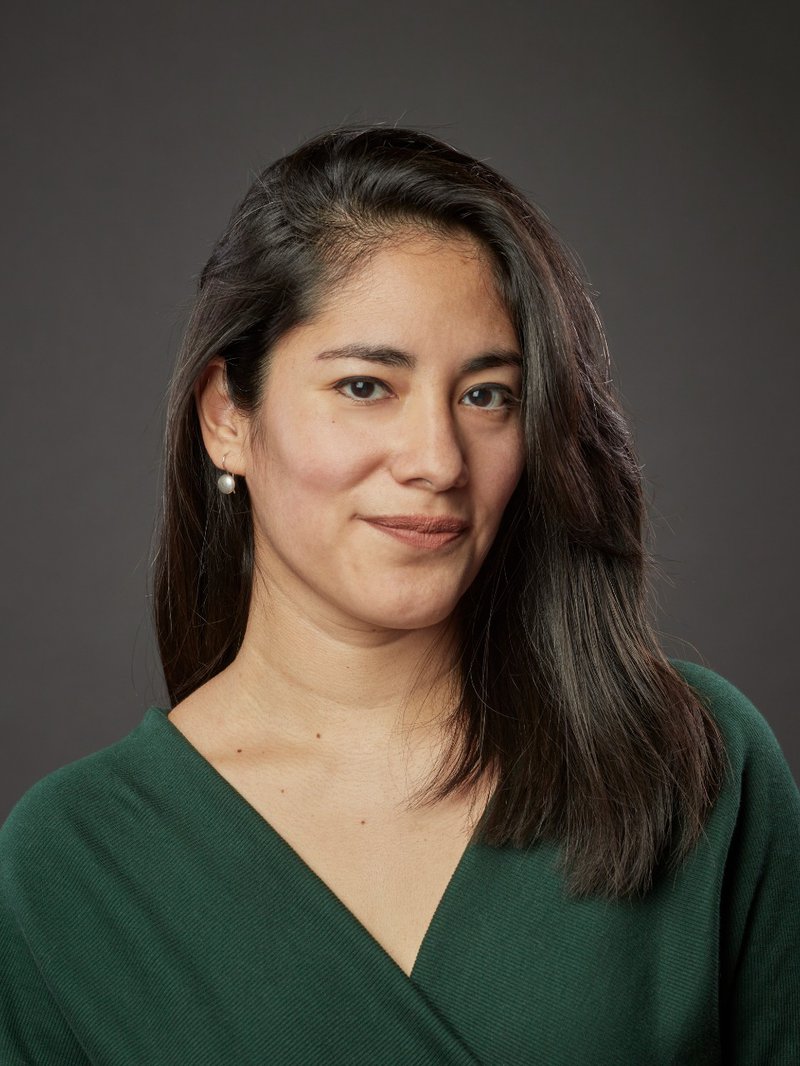
Sairah Espinoza, Curator of Public Programs at Museo de Arte de Lima - MALI in Lima, Peru, has been awarded by Teresa Bulgheroni.