Ruchika Jain
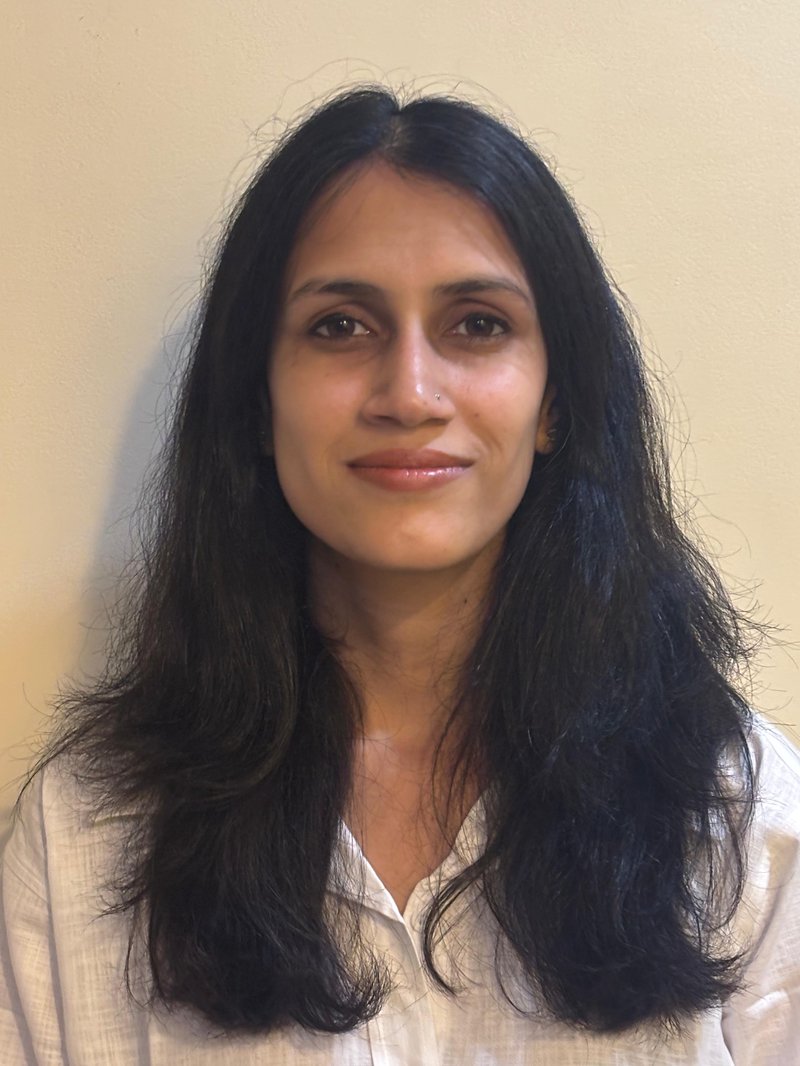
Conference Report. December 2025
Coming from a public museum, the day to day of my work involves negotiating the pressures of changing political and social turmoil of our time. While the work can be deeply rewarding, it can also be exhausting and, at times, leaves you feeling without hope. CIMAM came to me at precisely such a moment in my career.
The five days in Turin were filled with visits, talks, performances, interactions and, most importantly, conversations. It was this emphasis on open dialogue, often deeply reflective, that made the experience holistic and more solution oriented. The conference brought together museum professionals from across the world, and what immediately stood out was how many were facing familiar issues. The conversations extended beyond directors and curators to include professionals from management, operations, education, and other focus areas. This diversity of perspectives made the experience both grounded and practical. It may not have offered definitive solutions, but the range of case studies and strategies adopted by different cultural spaces, and the renewed sense of hope, grounded in what Elizabeth Povinelli described as depressive realism, is what I carry back with me.
Thanks to the support of the Getty Foundation, the first day, led by Michele Bertolino, included visits to several underground and experimental spaces in Turin. These visits were thoughtfully curated and offered an eye-opening look at alternative models that move away from traditional museum frameworks. The focus on quality of impact rather than quantity raised an important question for me: are smaller, community-focused spaces the future? Conversations with artists and founders about funding models and community engagement were particularly insightful. Among these, projects by Almare, especially the community-based festival Spellbound, left a lasting impression.
Over the next three days, I participated in two breakout sessions that enabled deeper engagement with directors and senior curators. Despite representing diverse institutional models, everyone shared a common commitment to making art spaces more inclusive, accessible, and community oriented. My first breakout group, led by Kamini Sawhney, explored ways to build new audiences while also fostering long-term, meaningful relationships by actively involving communities in decision-making processes. Over these sessions and conversation with peers we also discussed the welfare of museum employees. Chus Martínez’s call to look inward and critically reassess internal structures and human resources resonated strongly, especially now when major institutions are facing employee strikes driven by burnout and inadequate pay. Working within a public institution often involves operating within rigid constraints, and these breakout sessions helped imagine ways to think beyond them.
Running parallel to the talks and discussions were visits to contemporary art spaces and museums. One of the most impactful for me was Chiharu Shiota’s exhibition The Soul Trembles at the Museo d’Arte Orientale (MAO). The exhibition resonated strongly with many of the questions that surfaced throughout the conference: can contemporary art interventions open new interpretations to colonial collections, and is decolonization within such institutions truly possible? It also reminded me of Françoise Vergès’s keynote, particularly her assertion that decolonization may require the complete dismantling of existing hierarchies within these spaces.
It was equally insightful to learn about the Torino model through Francesco Manacorda’s reflections and to observe it in practice during the visits. Witnessing how cultural spaces in Turin leverage collaboration, trust, and mutual support to address challenges such as funding, audience engagement, and sustainability highlighted why the city has become a prominent incubator for contemporary art.
The talks offered insights from around the world rather than from a Western-centric perspective. Rustom Bharucha highlighted the critical issue of funding scarcity in the Global South, in contrast to the oversaturation in the West. The case study of the Broom Museum in Rajasthan, India, and its spillover on the surrounding ecosystem invited a rethinking of museum models defined by limited resources and minimal infrastructure.
The final day’s keynote by Mariana Mazzucato reinforced the importance of placing art and culture at the center of the economy, and I return from CIMAM holding onto her words: “The cost of inaction is greater than the cost of action.”
In a world increasingly marked by censorship, it was remarkable to participate in a space that genuinely fostered open dialogue. CIMAM provided a safe environment, even when we expressed conflicting views, an attribute we continually strive to cultivate for our own audiences in cultural institutions. Despite being its 57th edition, the conference demonstrated a commitment to critically reassess and adapt its structure to the needs of its participants, which was truly inspiring. It is particularly exciting that the next conference will be held in Zimbabwe, reflecting CIMAM’s commitment to equitable cultural dialogue and exchange, with Global South perspectives taking center stage.
Biography
Ruchika Jain holds an MSc in Cultural Industries and Entrepreneurship from the University of Nottingham, UK (2015–16), a cross-disciplinary program that offers a rich exploration of cultural policy, art history, innovation management, technology for arts and business, project management, and marketing. This program deepened her understanding of key cultural policy issues and provided critical insights into the processes of cultural production. Complementing this, her undergraduate degree in Visual Arts from The IIS University, Jaipur, India, has significantly shaped her curatorial approach, particularly in prioritizing visitor engagement and interpretation.
Over the past six and a half years at the BDL Museum, she has played an integral role in various facets of museum work, including exhibition, collection research, education, and outreach. She has worked on several contemporary and collection focused exhibitions at the Museum. Several of these contemporary exhibitions were curated as part of the Museum’s ongoing Engaging Traditions series, which invites contemporary artists to engage with the Museum’s history, collection, and archives. This series aims not only to decolonize the Museum space but also to offer visitors multiple readings of the collection, encouraging critical reflection on both historical narratives and contemporary realities. Currently, she is working on several upcoming exhibitions at the Museum.
She has also contributed entries in the Museum's publication 'Mumbai : A City Through Objects - 101 Stories from the Dr. Bhau Daji Lad Museum', edited by Tasneem Zakaria Mehta. The book was published in 2022 to commemorate the Museum's 150th anniversary. The book tells this story of the city Mumbai through the Museum's collection. Through in-depth research, the book aims to bring voices that were denied access in the past, giving long overdue recognition to the craftspeople and artists.
Ruchika Jain, Curator at Dr Bhau Daji Lad Museum in Mumbai, India, has been awarded by the Getty Foundation.