Roshan Mishra
Conference Report. December 2025
Three Days in Torino: My Experience at the CIMAM 2025 Annual Conference
I would like to sincerely thank the Fondazione Sandretto Re Rebaudengo and the Getty Foundation for awarding me the travel grant to attend the CIMAM 2025 Conference in Torino. I am deeply grateful for their generous support. Also, I would like to thank the executive team of CIMAM for their tremendous support, from the visa application process until my departure.
Attending the CIMAM 2025 Annual Conference in Torino felt like stepping into a global meeting ground of ideas, contemporary art, and museum futures. Over three days, the conference explored three powerful themes, Doing Less vs. Doing Differently, Mapping Desires, and Transactions & Transmission. Each day offered conversations, performances, and perspectives that reshaped how I think about museum practice and shared stewardship.
Day 1 – Doing Less vs. Doing Differently at OGR Torino
My first day started early as I joined the Travel Grantees for a special welcome coffee at OGR Torino. It was a warm and energizing beginning, meeting colleagues from across the world, many of us connecting for the first time, yet quickly finding common ground over the course of the three days.
The official opening set a beautiful tone. The Apertura by Alessandro Sciarroni was mesmerizing, simple yet powerful, reminding us how much meaning can be conveyed through minimal gestures. The welcome speeches that followed highlighted Torino’s cultural ecosystem and the shared ambition behind hosting this year’s CIMAM gathering.
Chus Martínez introduced the day’s motto, encouraging us to rethink what “doing less” might mean within our institutions. It wasn’t about scaling down, but about refocusing, re-listening, and making space for what truly matters.
The keynote by Françoise Vergès was one of the highlights for me. She challenged museums to confront extractive practices and imagine new ecologies of care and responsibility. Her ideas stayed with me throughout the breakout sessions.
In my breakout group, we discussed Davide Quadrio’s provocation about displaced objects from Asia. It was a refreshing and honest session, something rare at large conferences.
Lunch at OGR provided a moment to mingle informally, and I took the opportunity to walk through the ongoing exhibitions before the afternoon program resumed.
Later in the day, the announcement of the Outstanding Museum Practice Award winners and the introduction of the Travel Grant recipients created an atmosphere of celebration and recognition.
Our afternoon visits to Fondazione Sandretto Re Rebaudengo and Fondazione Merz offered a broad overview of Torino’s contemporary art scene. Each institution had its own rhythm and approach to engaging audiences.
We ended the day with dinner at Pizzeria Fratelli La Cozza, a lively atmosphere filled with laughter, introductions, and conversations that continued well into the bus ride back to the hotel.
Day 2 – Mapping Desires at the historic Teatro Carignano
Day 2 felt different the moment I stepped inside Teatro Carignano. The building seemed to hold decades of conversations about performance, culture, and public life.
After morning greetings, the Content Committee introduced the day’s guiding question: What do we desire for our institutions, and how do we make those desires real?
Abdullah Miniawy’s Apertura was striking, his voice, presence, and emotional intensity set the tone for deep listening. Elizabeth Povinelli’s keynote followed, pushing us to consider extractive systems, belonging, and the responsibility cultural institutions hold in shaping more just futures.
The “Mapping Desires” panel was among the richest parts of the conference. Hearing from Azu Nwagbogu, Karen Archey, Francesco Manacorda, Rustom Bharucha, Alessandra Ferrini, and Onome Ekeh offered a wide spectrum of perspectives, from decolonial strategies to new curatorial methodologies, from transmedia storytelling to community-driven frameworks. Their reflections helped articulate the futures many of us are striving toward.
A lively Q&A session moderated by Chus Martínez wrapped up the morning with thoughtful provocations.
In the afternoon, we split into two groups to visit MAO and Gallerie d’Italia. These visits grounded the day’s theoretical discussions in the practical realities of different institutional models. Later, we all reconvened at Castello di Rivoli, one of the most inspiring places for contemporary art dialogue.
The evening concluded with a memorable dinner at Venaria Reale. Surrounded by centuries-old architecture, it was the perfect backdrop for conversations about values, aspirations, and professional connections that felt both sincere and lasting.
Day 3 – Transactions & transmission at Nuvola Lavazza
The final day took place at Centrale Nuvola Lavazza, a contemporary and open space, ideal for conversations about collaboration and shared responsibility.
The day began with the CIMAM General Assembly, where the new Board for 2026–28 was announced. The new President of CIMAM, Amanda de la Garza Mata, the Artistic Deputy Director of the Museo Nacional Centro de Arte Reina Sofía in Madrid, will lead a board of 14 international museum professionals. She succeeds Suhanya Raffel and will focus on diversity, solidarity, and critical thinking in modern and contemporary art museums globally.
This was followed by a welcome from Francesca Lavazza and an introduction to the day’s theme by the Content Committee.
The Apertura by Diana Anselmo was inventive and moving, exploring embodiment, visibility, and modes of expression beyond spoken language. Mariana Mazzucato’s keynote followed with an energizing and timely reflection on public value, mission-driven systems, data, and the vital civic role museums can play.
Our breakout sessions explored these ideas more concretely, how we can build networks of support, design accessible museum practices, and work collaboratively rather than competitively.
The closing reflections by the Content Committee tied together the three-day journey, emphasizing shared stewardship, collective imagination, and institutional responsibility in a rapidly changing world.
In the afternoon, we visited MAUTO and Pinacoteca Agnelli before gathering under the light installations of Luci d’Artista, which cast a magical glow over the city.
The final dinner at Le Roi Music Hall was a lively farewell, filled with music, dancing, and joyful energy. It felt like the perfect way to end three days of intense dialogue and meaningful connection.
__
While CIMAM 2025 offered an impressive and thoughtfully curated intellectual program, it also prompted me to reflect critically on the distance that can sometimes exist between global discourse and local realities. Many of the conversations around care, decoloniality, extractive systems, and shared stewardship were powerful and necessary. Yet, from my position as a museum practitioner working in Nepal, where institutions often operate with limited resources, fragile infrastructures, and unresolved histories of loss and displacement, I was reminded that translating these ideas into practice remains uneven and deeply contextual.
At times, the language of “doing differently” and “mapping desires” felt aspirational, even utopian, particularly when contrasted with the structural constraints faced by institutions in the Global South. Questions of funding inequity, access to conservation expertise, archival precarity, and the continued imbalance in knowledge production were present but not always fully confronted. Discussions on displaced objects and extractive histories were encouraging, yet they also underscored how rarely source communities are positioned as equal agents rather than case studies within international forums.
I was also struck by how mobility who gets to travel, speak, and be visible, which continues to shape professional exchange. The Travel Grant program is a meaningful intervention, but it also highlighted how exceptional such access still is for many practitioners from regions like South Asia. This raised important questions for me about sustainability: how can institutions like CIMAM further decentralize knowledge-sharing so that critical conversations do not remain concentrated in biennial gatherings, but extend into long-term, reciprocal collaborations?
These reflections do not diminish the value of the conference; rather, they sharpen its urgency. CIMAM 2025 reminded me that the work ahead is not only about imagining ethical futures, but about confronting institutional comfort, redistributing power, and committing to slower, messier, and more accountable forms of engagement. For those of us working in contexts where museums are still fighting for basic recognition, resources, and public trust, the challenge is to adapt these global conversations into grounded, locally responsive practices without losing their critical edge.
A Journey of learning, sharing, and reimagining museums
My three days in Torino reaffirmed the strength of international exchange and the need to envision museums beyond their traditional boundaries. CIMAM 2025 offered not only fresh knowledge but also a profound sense of solidarity among practitioners, institutions, and communities working toward more ethical, empathetic, and courageous cultural futures. Bringing these insights back to my work in Nepal, I feel more dedicated than ever to shaping a museum landscape rooted in collaboration, care, and shared imagination. I returned from Torino with new ideas, potential partnerships, and a renewed sense of purpose. CIMAM 2025 was more than a conference, it was a reminder of why our work matters and how much more is possible when we imagine and act together.
Biography
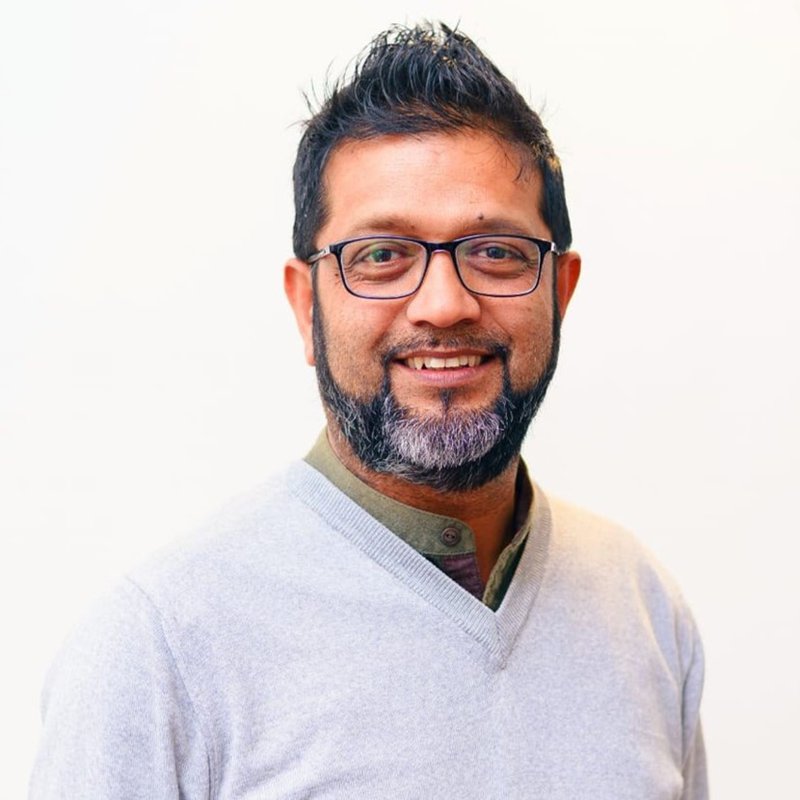
Roshan Mishra is a curator and art promoter committed to the preservation and advancement of Nepali art and heritage. He currently serves as the Director of Taragaon Next in Kathmandu and is also an active visual artist. Alongside his curatorial work, he oversees the Nepal Architecture Archive (NAA) and its library, both run under the Saraf Foundation for Himalayan Traditions and Culture, the patron organization of Taragaon Next.
His association with Taragaon Next spans over a decade. During this time, he has played a key role in curating the museum’s permanent collection, establishing the Contemporary Art Gallery, and developing the Nepal Architecture Archive, which serves as an important resource documenting Nepal’s architectural and urban history. He regularly collaborates with external curators and leads the development of exhibitions that reflect diverse artistic voices and cultural narratives.
His curatorial projects include contemporary art exhibitions such as Object in Focus, Nepali Art: Beyond the Border, and Artist Studio Shows, among others. He is also the founder of the Global Nepali Museum and Nepalian Art, Mishra Museum—platforms aimed at connecting Nepali artists and collections with audiences and institutions around the world. All of these initiatives are driven by his curatorial practice.
Academically, he holds a Master’s degree in Fine Arts, having studied in Nepal, Japan, and the United Kingdom. These cross-cultural experiences have shaped his interdisciplinary approach to curatorial practice and visual research.
Beyond institutional responsibilities, he is actively involved in the Nepal Heritage Repatriation Campaign (NHRC), an independent initiative dedicated to the restitution of lost and stolen cultural heritage. His work continues to focus on creating inclusive spaces that celebrate Nepali art while critically engaging with its history, context, and global relevance.
Roshan Mishra, Director and Curator at Taragaon Next / Saraf Foundation in Kathmandu, Nepal, has been awarded by the Saastamoinen Foundation & the Getty Foundation.