Riason Naidoo
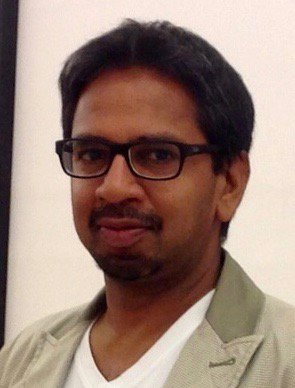
Conference Report. December 2025
Art and Automobiles in the Italian Alps
The CIMAM conferences are always memorable experiences. They are extraordinary in getting to know the modern and contemporary art scene, the heritage, and the people in the host city over three full days. It is also a unique opportunity to meet the regular CIMAM members from all over the globe, the travel grantees and the local art specialists. It was my first visit to Torino and what a wonderful surprise awaited us in the Piedmont region — a quaint, understated, picturesque city, surrounded by snowcapped mountains, and rich in history, museums and culture.
Françoise Vergès quickly brought us back to the global realities of the day and delivered an impressive and critical opening keynote, deconstructing power relations between the haves and the have-nots, between the conqueror and the conquered in recent modern history, with haunting consequences, and valuable reflections for all of us. Vergès also asks important questions that the role the museums itself occupies in the “economies of destruction,” where terror and bullying uphold old hegemonies, and where success is measured by double standards. Vergès describes museums as having “a seat at the table of the civilized,” reminding us that the institution is a Western construct, a model that has been unquestioningly accepted as universal. While chaos reigns around us, Vergès uses the analogy of the simple art of deep breathing, as the yogis have long been trying to teach us, as key to maintaining our sanity and balance in daily life—only as long as that breath is not turned into “fires of destruction” and nuclear power. At the same time, breath, or life for that matter, is also the ability to revolt against the injustices we face, according to Martinican psychiatrist Frantz Fanon.
Elizabeth Povinelli’s keynote presentation that headlined the program the next day left me feeling uncomfortable. Povinelli claims to critique extraction from Indigenous communities. But is her own practice itself not extractive? That is, as a professor from one of the world’s elites, generously funded academic institutions in the privileged North, whom is working with Australia’s Indigenous communities and then re-presenting the academic and creative outputs in the West. This recalls Beninese philosopher Paulin Hountondji’s critique of the unequal power relations between Western academics and Africa, where the theorizers are Westerners, while Africans provide the raw materials. Or as Martinican poet Aimé Césaire writes of Placide Tempels’ La Philosophie bantoue (1945) “Everyone wins: big corporations, colonial settlers, the government, excepting the Bantu, of course.” There is an element of the saviour complex in this relationship, which is, as we know, the history of colonial interactions: the colonizer knows better than you about your culture and decides for you what is in your best interests.
Rustom Bharucha’s presentation was profound in its simplicity. Through the common object of the domestic broom, he spoke about the interconnectedness of things, the need for active listening, the philosophy of karma, and of living in the present. “Making involves unmaking and remaking”—it is the process that is important, not necessarily the end result, he reminds us. We should be more concerned with the how, not the what. Some of the other presentations on Day 2 varied in their quality and content.
The visit to the Agnelli Foundation, previously the FIAT automobile factory and headquarters, left a lasting impression on me. The rooftop, which once housed the 1,5-kilometer testing track of the famed production car, is now a thoughtfully curated jogging path and garden with selectively commissioned artworks that is as different in the daytime as it is at night, when the neon artworks come alive against the dark sky. Surrounding the plant are apartment blocks that once housed the company’s workforce, a testament to the importance of the workers in the corporation's fabric. The makeover from auto assembly line to mixed-use heritage and commercial space carefully considers its specific context, its past, and its public. As the Mayor of Torino, Stefano Lo Russo, philosophically stated when opening the conference, “Museums are not only buildings. They are conversations about who we are.”
We all felt very regal to be hosted at the palatial Venaria Reale for the gala dinner, a contrast to the more casual pizzeria of the first evening, and the chic Le Roi Music Hall of the last, both of which held their own special charm. The hosts carefully curated a diverse experience of venues and contexts for the conference days, museum visits, and dinner settings. The splendid Carignano Theatre stood out for me as daytime host venue with its antiquity, artistic interior and coziness, transporting us back to a different era. Conversations between delegates flowed as easily as the Barolo and Barbaresco wines, and contacts were exchanged during mealtimes and coffee breaks and on the bus trips between venues.
The breakaway discussion groups provided an opportunity for sharing professional experiences and debate. While there are many common elements that we share in the art museum worlds —such as collections, exhibitions, acquisitions, audiences, personnel, and perhaps political interference too— we also realize that we ought, rather to celebrate the distinctions of our different contexts than trying to flatten them to fit the ‘universal’ factory mold. We ought also to be open to new models, which are more likely to be revealed from outside the existing Western canons, as the Outstanding Museum Practice Award (OMPA) signaled.
Biography
Riason Naidoo has curated numerous projects including: ‘neuf-3’, a public art project in the Parisian suburb of Saint-Denis (2021-23); ‘Any Given Sunday’ in Cape Town (2016); retrospective exhibitions on the work of Cape Town artist Peter Clarke in Paris, London and Dakar (2012-2013); ‘A Portrait of South Africa: George Hallett, Peter Clarke and Gerard Sekoto’ in Paris (2013) as part of the South African Season in France; the ambitious ‘1910-2010: From Pierneef to Gugulective’—that comprised 580 artworks from 49 collections and reflected on a century of South African art—at the South African National Gallery (2010); ‘The Indian in Drum magazine in the 1950s’ shown across South Africa (2006-2011); exhibitions on the work of Durban photographer Ranjith Kally in Johannesburg, Durban, Cape Town, Bamako, Barcelona, Vienna and Reunion Island (2004-2011). He worked with French activist artist Ernest Pignon-Ernest on ‘Soweto-Warwick’—a public art project that took place in Durban and Johannesburg (2002). In 2012, he was co-curator of the 10th edition of the Dak’art biennale in Senegal; he also curated exhibitions at the 2005 and 2019 Rencontres Africaines de la Photographie in Mali.
Naidoo directed the South African National Gallery (2009-2015); directed the ‘South Africa-Mali Project: Timbuktu Manuscripts’ (2003-2009); managed artistic projects for the French Institute of South Africa (2001-2003); lectured in drawing and painting at the University of the Witwatersrand (1999-2000); managed the art education programme at the Durban Art Gallery (1996-1999).
In 2016 the French Ministry of Culture decorated him with the title of Chevalier de l'Ordre des Arts et des Lettres (Knight of the Order of Arts and Letters). Living in Paris from 2018-2023, Naidoo was curator and writer in residence at the Cité Internationale des Arts from 2018-2020. He was Institut Français laureate (2018) and a Invited Fellow at the Institut National d’Histoire de l’Art (INHA) in 2020-21. Following this INHA invited him to convene a colloquium, which he themed ‘Pioneers of Contemporary African Art’, for which he invited 22 experts from 10 countries to Paris on April 11-12, 2022. He has also been on fellowships to the CAPC Musée d’art Contemporain de Bordeaux in France (2001) and to the Faculty of Fine Arts, M. S. University of Baroda in Gujarat, India (1997).
Naidoo has published widely on modern and contemporary South African and African art in diverse publications internationally. In addition he is editor of ‘Any Given Sunday: A Socially Engaged Public Art Project’ (Johannesburg: Mail & Guardian, 2022); editor of ‘A Portrait of South Africa: George Hallett, Peter Clarke and Gerard Sekoto’ (Cape Town: Iziko Museums, 2013); author of ‘The Indian in Drum magazine in the 1950s’ (Cape Town: Bell-Roberts Publishing, 2008). His feature length documentary ‘Legends of the Casbah’ was shown at the 33rd Durban International Film Festival and in Cape Town, Johannesburg, New York, Gothenburg, Paris and Dubai.
Naidoo held a solo exhibition of his paintings entitled ‘Bridging the Gap’ (1997) at the Natal Society of Arts (NSA) Gallery in Durban. Works from this exhibition are now in public collections in South Africa (including Durban Art Gallery and Pretoria Art Museum). He holds a B.A. (Painting) and an M.A. (Curating) in Fine Arts from the University of the Witwatersrand in Johannesburg and is currently a Mellon-HUMA Doctoral Research Fellow in Art History at the University of Cape Town.
Riason Naidoo, Independent Curator in Cape Town, South Africa, has been awarded by the Saastamoinen Foundation.