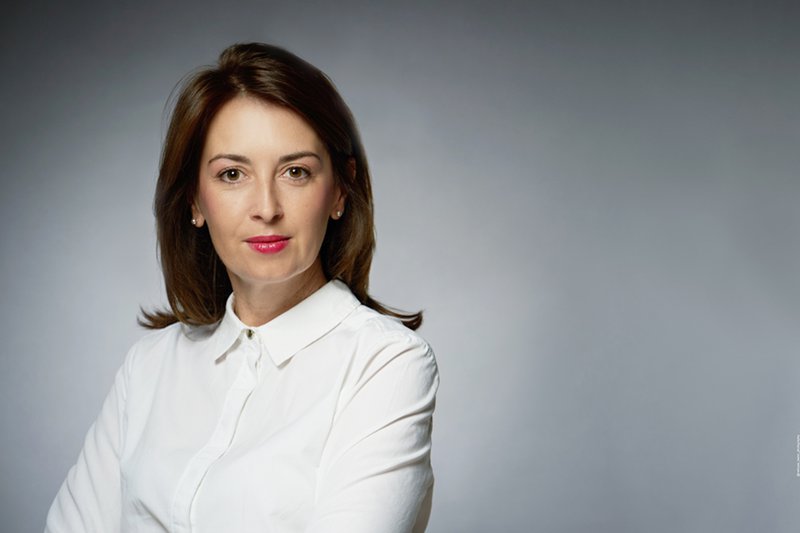
Milica Bezmarević
Conference Report. December 2025
INTRODUCTION AND PURPOSE OF THE REPORT
This report is produced as part of the obligations within the Travel Grant program, supported by the Getty Foundation. Its aim is to reflect on the knowledge, insights, and professional connections gained during the CIMAM 57th Annual Conference in Turin. The conference brought together directors, curators, researchers, and cultural workers from around the world, offering a space for critical reflection on the future of contemporary art museums in the context of political, economic, and ecological challenges.
The report is structured as an analytical article that brings together theoretical discussions, plenary sessions, institutional visits, and personal professional observations, with a particular focus on the value of the Travel Grant program and its role in the democratization of international professional dialogue.
STRUCTURE OF THE CONFERENCE AND THE SIGNIFICANCE OF PLENARY SESSIONS
One of the key qualities of the CIMAM conference in Turin was its emphasis on plenary sessions, which functioned not merely as a formal framework but as a genuine space for exchange between different geographic, institutional, and political contexts.
The plenary sessions enabled:
- the articulation of shared challenges (institutional crisis, financial insecurity, political pressure);
- the comparison of working models between large institutions and smaller, peripheral, or independent structures;
- the creation of a sense of collective responsibility of museums as public actors rather than isolated cultural entities.
This format was particularly significant for Travel Grant participants, as it allowed for equal participation in discussions that often remain limited to central institutions of the Global North.
KEY LECTURES AND PANELS
One of the most theoretically compelling moments of the conference was the lecture by Françoise Vergès, which offered a critical framework for rethinking institutional narratives within contemporary art museums. Vergès positioned museums as sites of knowledge production deeply entangled with colonial, racial, and class hierarchies, warning of the gap between discourses of inclusion and the actual redistribution of power and resources.
Her presentation strongly resonated with the conference theme, insisting that the necessity of change must not remain at the level of discursive or aesthetic gesture but must be understood as a political and ethical act. The lecture opened space for subsequent discussions on institutional responsibility and the limits of reform within existing systems.
Other Key Thematic Panel Focuses
Throughout the conference, the following themes consistently emerged:
- new models of museum practice, including hybrid forms of governance and long-term relationships with local communities;
- sustainability and resource ethics, with a focus on labor conditions, organizational structures, and temporal policies;
- digital and hybrid strategies, critically examined in relation to their reach and potential new forms of exclusion.
INSTITUTIONAL VISITS AND EXHIBITION PROGRAMME
Castello di Rivoli – Museo d’Arte Contemporanea
The visit to Castello di Rivoli offered insight into a long-term institutional strategy operating within a complex historical and spatial context. Particular emphasis was placed on curatorial methodologies that enable multilayered readings of the collection and on the museum’s role as a site of research rather than solely representation.
Pinacoteca Agnelli
The visit to Pinacoteca Agnelli highlighted a specific museum model that connects industrial heritage, a private collection, and contemporary exhibition practices. Discussions focused on issues of private ownership, public accessibility, and the relationship between corporate history and cultural production.
Fondazione Patrizia Sandretto Re Rebaudengo
The foundation was presented as an example of an agile institution that successfully connects the production of new works, educational programmes, and international networks, with a particular emphasis on supporting young artists and curators.
OGR Torino and Additional Site Visits
OGR Torino functioned as the central conference venue and as an example of the transformation of an industrial space into a contemporary cultural and social hub. Additional visits (MAO, Gallerie d’Italia, MAUTO, Luci d’Artista) expanded the perspective on different models of relationships between art, industry, public space, and audiences.
CONFERENCE FLOW BY DAYS
Day One: Doing Less vs. Doing Differently
The first day of the conference was conceived as a theoretical and methodological introduction. The theme Doing Less vs. Doing Differently raised the question of how museums can respond to multiple crises not through withdrawal, but through changes in priorities, rhythms, and working methods.
Breakout sessions in smaller groups played a crucial role in the exchange of experiences, the dismantling of hierarchies between speakers and audiences, and the development of a shared language of institutional transformation. The visual documentation by Norma Nardi further highlighted the value of slower and more reflective working formats.
Afternoon institutional visits (Fondazione Sandretto Re Rebaudengo, Fondazione Merz, and GAM) connected theoretical discussions with concrete examples of practice.
Day Two: Mapping Desires
The second day shifted the focus from critique of existing models towards the articulation of pragmatic desires for future museum practices. The program combined a keynote lecture by Elizabeth Povinelli, panel discussions, and extended dialogue with the audience.
The diversity of perspectives—from institutional to artistic-research positions—clearly demonstrated that mapping desires does not represent a single map, but rather a network of often contradictory yet productive positions. Institutional visits to MAO, Gallerie d’Italia, and the evening visit to Castello di Rivoli further linked theory and practice.
Day Three: Transactions and Transmission. Tactics of Togetherness
The third day offered a concluding conceptual framework focused on communication, audience relations, and collective working models. The morning CIMAM General Assembly emphasized the importance of institutional infrastructure and governance.
The keynote lecture by Mariana Mazzucato introduced an economic perspective on museums as actors of public value, highlighting the role of public institutions in creating social benefit through collaboration, long-term strategies, and responsible resource management. In this context, breakout sessions further explored knowledge transmission as a two-way and relational process. Final visits and informal programmes enabled synthesis and exchange of experiences.
THE TRAVEL GRANT PROGRAMME — REFLECTION AND SIGNIFICANCE
Participation in the conference, enabled through the Getty Foundation Travel Grant program, was of crucial importance for my attendance and active engagement. The program not only provides financial support but also contributes to the inclusion of professionals from underrepresented regions, the expansion of perspectives within the CIMAM community, and the development of long-term professional connections.
CONCLUSION
The CIMAM 57th Annual Conference in Turin reaffirmed the importance of this format as a space for collective reflection, exchange, and critical reassessment of contemporary museum practices. The knowledge, contacts, and experiences gained represent a valuable foundation for further professional work and for transferring insights into local and regional contexts, fully realizing the broader purpose of the Travel Grant program—active participation and knowledge sharing.
Biography
Milica Bezmarević (1977, Belgrade) is a curator at the Museum of Contemporary Art of Montenegro in Podgorica. She graduated in Art History from the Faculty of Philosophy, University of Belgrade, in 2005, and is currently a Ph.D. candidate at the Faculty of Philosophy, University of Zagreb, specializing in modern and contemporary art. From 2009 to 2014, she worked as a teaching assistant at the Faculty of Arts, University of Donja Gorica in Podgorica, for the course History of Modern and Contemporary Art.
Since 2008, she has been engaged as a curator at MoCA Podgorica, and in 2022, she was appointed museum advisor within the same institution. She has participated in the realization and organization of numerous projects, including inter-museum and international collaborations within the MoCA Montenegro program. She has authored professional texts in exhibition catalogues and edited volumes on numerous modern and contemporary artists, as well as articles in specialized journals. Her curatorial practice includes contemporary art projects at both the local and international levels.
From 2010 to 2015, she was a member of the editorial board of Art Central, a Montenegrin magazine dedicated to modern and contemporary art. Her essays have been published in monographs and publications across Montenegro and the broader region, including Zagreb, Novi Sad, and Belgrade. She is continuously engaged in documenting and critically reflecting on the practices of contemporary artists, both domestic and international.
Among the most significant projects in the past year are her curating of a solo exhibition by renowned Bosnian artist Šejla Kamerić and a solo exhibition by American artist Kiki Smith, both presented at MoCA Montenegro. She is currently curating an international exhibition titled Museum Yet to Be, which will bring together around 30 international artists and will be held at MoCA Montenegro. She lives and works in Podgorica.
Milica Bezmarević, Curator at Museum of Contemporary Art of Montenegro in Podgorica, Montenegro, has been awarded by the Getty Foundation.