Michelle Mlati
Conference Report. December 2025
The highlight of my CIMAM conference experience is marked by the 27th of November’s program for The Getty Foundation travel grantees. The day began with a visit to ALMARE Collective and ending with an unplanned tour to Sandretto Foundation Re Rebaudengo after Patrizia’s insistence that travel grantees be invited. This created a preconference opportunity for older and newer CIMAM members to meet and interact with various curators whose work I had encountered, read or written about which is quite rare in our fast-paced environments.
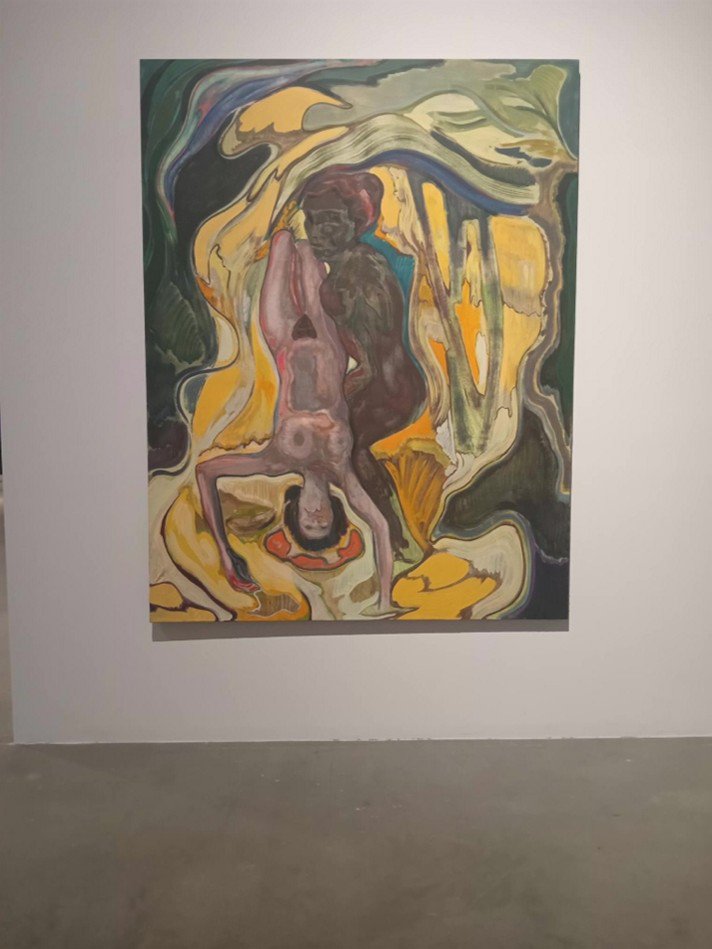
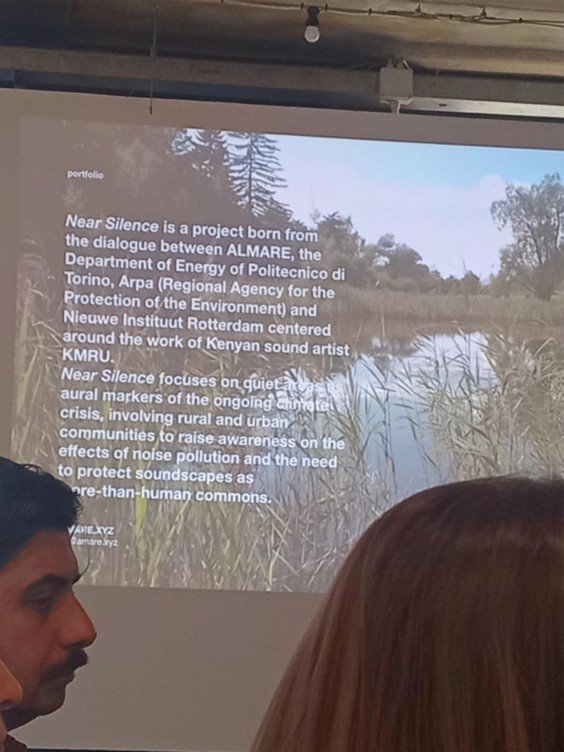
During Almare’s presentation we were introduced to Near Silence, a project centering the work of Kenyan sound artist KMRU focusing on quiet areas and the aurality of these areas as markers of the climate crisis encompassing rural and urban communities that raises alertness to noise pollution. It was enriching to have first experienced his sound work at Kamene in Kenya in the Life Between Ebb & Flow: Mangrove Ecologies residency output Radio Mikoko+ he did in Lamu, and how the project will continue to take form in the Turin landscape as site-specific work intersecting ecology, critical thought and sonic practices. The encounter of KMRU’s ongoing work continued to linger with me when I saw Michael Armitage’s Mangroves Dip (2025) in the group show News from the Near Future (2025) at Sandretto, an artist I currently work with for his major retrospective at Palazzo Grassi in 2026. Armitage’s painting explores sex tourism on the Kenyan coast performed by men known as the ‘beach boys’. Their services often historically used by Scandinavian women in the 90s seeking companionship (and today older Italian women particularly in Malindi populated by 1960s influx of Italian communities that came to be known as Little Italy for its pristine coast) that ties to the notion of sex ecologies. While separate from the Sex Ecologies (2021-22) exhibition at Kunsthall Trondheim and subsequent publication edited by Stefanie Hessler, the painting suggests ‘pleasure, affect, and the powers of the erotic in the human and more-than-human worlds’, which the work of KMRU concerns itself with protecting the soundscapes of commons also shared with more-than-humans’. Both works situated in mangroves ecosystems intertwine the politics of listening and pleasure.
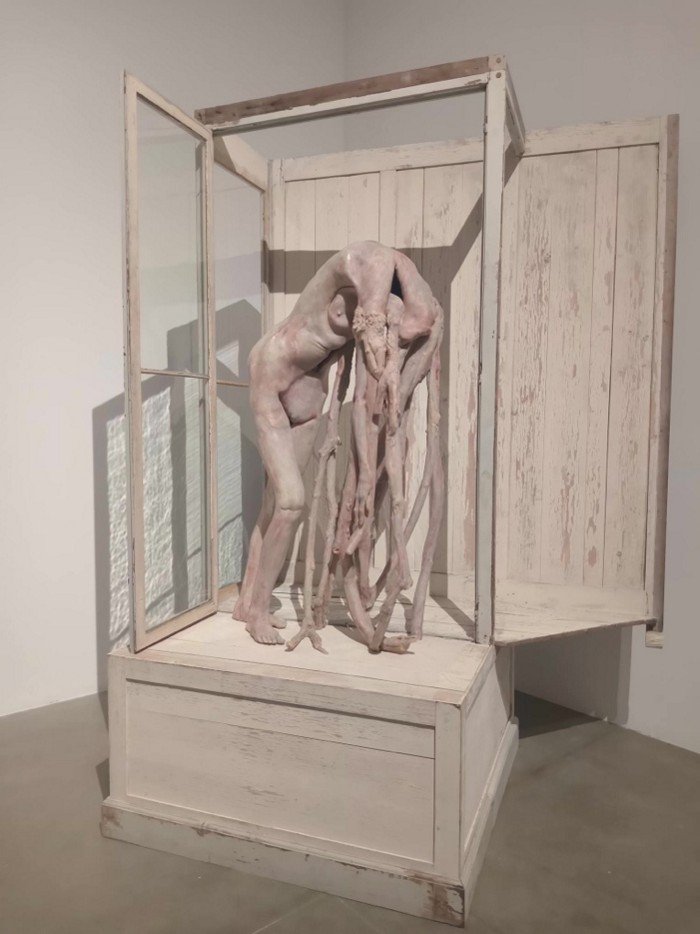
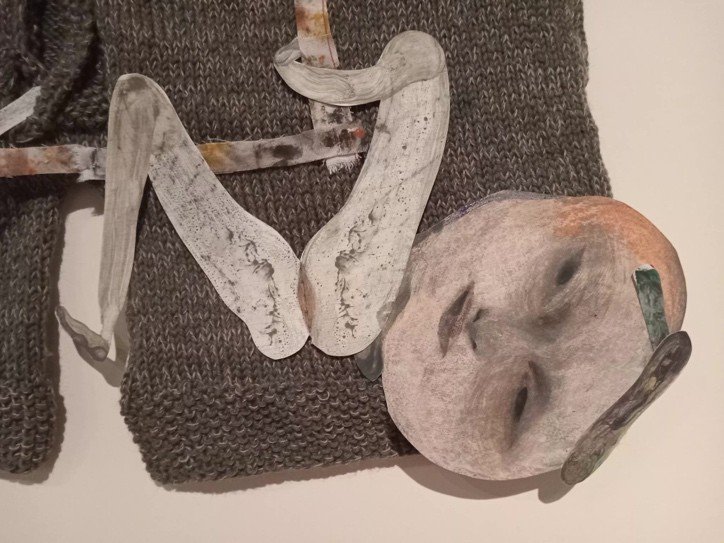
News from the Near Future (2025) further situated the entangled bodies and roots of the mangroves and interlaced figures in sexual euphoria to the Belgian artist Berlinde De Bruyckere’s Marthe (2008) whose twisting flesh figure with limbs metamorphize into tree-like branches that descend similarly to the loosely floating roots of mangroves. The body’s twistedness resonated with Guglielmo Castelli’s, Of aggression and possession (2024) at GAM, an artist from Turin whose studio we visited. It became quite clear in my experience, I was drawn to how contemporary curatorial practices address the display of nude figures across bodies that are differently abled/aged, gendered and racialized. It brought my sensitivity to the depiction of female anatomy orchestrated by the male gaze and the possibilities of depicting female pleasure and the figure in artistic practices today.
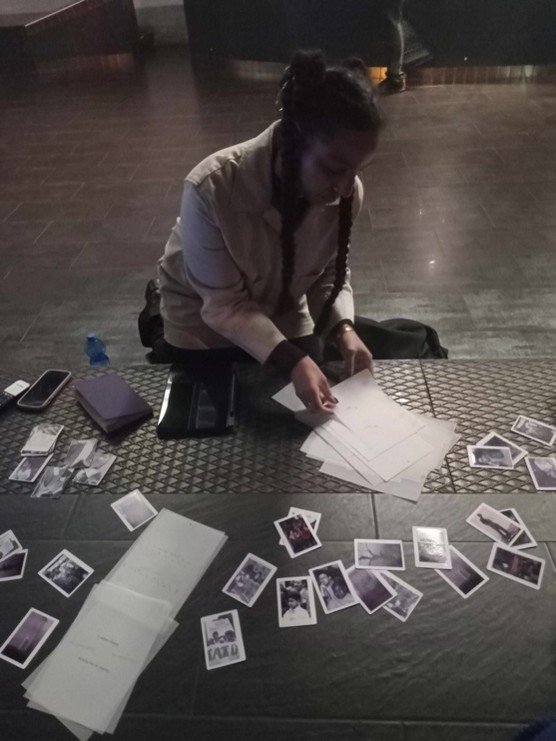
The conference further brought me closer to the answer of why there was little presence of Afropean or locally based Black artists in the Italian institutional landscape. Given how part of the Venice art scene I operate in as an insider outsider, is often saturated by African, Black and Afrodiasporic artists from outside Italy, this often overshadows the presence of Black European artists operating in their immediate local contexts which could be due to the international focus of art institutions in Italy. However, it was great to encounter the work of Valerie Tameu recovering photographic archives of Afrodescendent Italians in the search for her personal history connected to Cameroon and that of Black Italians in public memory in Turin. This included learning about The Recovery Plan co-founded by Justin Randolph Thompson, also an artist I met during the conference who is doing interesting work in Florence. They rethink exclusions in official historical narratives with a programme of exhibitions, a library, community and research centre that recovers Black history in Italian history extending to antiquity.
The question of distribution and dissemination of art and ideas also became important as a question of how museums can expand their outreach of inaccessible art collections. In a time where many emerging and established artists from the Global South have never shown their work in their home countries due to censorship, displacement amongst inability of local institutions to afford exhibiting financially high value works, especially if their intended audiences are situated there, one of the points discussed in our breakout group is the possibility of Western museums expanding their program through traveling exhibitions to non-Western countries to the artist’s country or region of origin. This may foster the possibility of democratic access to art across geographies and policy consideration for institutions that could give art a chance to do its work in the home country.
The note on ‘Institutional Ethics and Pleasure’ stood out to me during the conference in particular Karen Archey’s discussion Towards a Curatorial Pleasure renewing that sense of pleasure between artist and curator when making exhibitions and Rustom Bharucha’s note on Learning to learn from ecology. After a visit to one of the participating artists, Kicsy Abreu Stable’s work at her studio and seeing the work that appeared in Magic Realism: Imagining Natural Dis/order (2025) at Wiels before the conference, Povinelli’s fabulation of fictive ancient civilization surviving ecological collapse through remnants that survive, I understood Stable’s work better in the context of the Cuban landscape of those who had abandoned their homes and disappeared in the water as a material reality and spectral forms of tracing, which helped to expand my own research of artist’s practices. In the context of magic realism one can begin to see the shift in ‘historical intelligence’ in various artist’s work where holistic wisdom (social, spiritual, practical) shifts to focus on abstracted and decontextualized cognitive abilities that are driven by speed and innovation for knowledge production in modern societies without the long-term presence and guidance of indigenous communities. What I take away from the conference is the remark made to envision museums as conversations in an ecological framework as well as the rarely spoken about land on which a museum is on.
Biography
Michelle Mlati (b. 1993 South Africa) is a curator and researcher currently dedicating part of her time as a curatorial assistant at Palazzo Grassi/Pinault Collection for an upcoming 2026 exhibition. She has a BA Honours in Curatorship (2015) from the University of Cape Town and an MSc in Human Settlements from KU Leuven (2020) in Belgium, specializing in Art and Architecture. Her work centers on creating intersections between art, architectural and urban design practice through an intersectional environmentalist lens of practices from the 1960s to the present. She is a 2023 ICI Marian Goodman Gallery Curatorial Research Fellow in honour of the late Okwui Enwezor researching The Forest and Desert School, a Sudanese literary movement influential in modern and contemporary art in the East African region, including an interview with Sudanese artist Kamala Ibrahim Ishag.
As a curator, Michelle has worked with various artists, galleries and non-profit art spaces in East Africa and continuing independent practice experimenting with The Forest and Desert School, which she curated as a group show at Circle Art Gallery in Nairobi in 2022. She has co-authored a forthcoming chapter together with cultural manager and journalist Pablo Barrios Martínez in Plant Space: Territories, Architectures and Technologies of the Vegetal to be published by Sternberg Press and Academy of Fine Arts Vienna in 2026, edited by Carmen Lael Hines, Adam Hudec and Michelle Howard. She curated a group show, Inceptisols: No Soil nor Sand (2023) of four artists as a resident at The Green Corridor in Brussels. She has contributed texts to the art magazines Glean, Hyperallergic and published her first curatorial work What time is it? WTII (2015) included in Afrikadaa a bilingual French and English quarterly publication dedicated to contemporary art edited by Pascale Obolo in the Museum On/Off (2017) issue 11 rethinking/reinventing museums as a form of ‘paper museum’ curated by Alicia Knock at the Centre Pompidou. This includes a podcast for Storefront for Art and Architecture’s Embodied Memory (2024) episode of the Swamplands series in conversation with Sudanese artist and architect Ola Hassanain. From 2024 to 2025 she worked as Research Associate for the artist Michael Armitage Studio researching archives and practices of modern and contemporary artists from East Africa, notably Chelenge Van Rampelberg and Peter Mulindwa amongst a younger generation of artists situated in Ethiopia, Kenya, Uganda and Tanzania.
She has guest lectured the series Curating Botanical Collections (2021), part of the Strategies for Art in Times of Change course convened by Dr. Portia Malatjie at the Michaelis School of Fine Art. Through multiple workshops focused on ecofeminism, posthumanism, photography and activism such as at Qattan Foundation this has also informed her Masters thesis, Posthuman (Un) Settlements in Palestine: The agency of plants, technology and humans in the political ecology of the West Bank (2019) centering institutions such as The Palestinian Museum Gardens, Palestine Museum of Natural History to UNESCO heritage sites like the Landscape of Battir, a refugee camp and resident's gardens to monumental landscape parks in Ramallah. She was previously enrolled in a doctoral programme at KU Leuven, based in Brussels, from 2022 to 2024, where she researched the projects of Dutch artist and landscape designer Louis Le Roy in The Netherlands, Belgium and France and presented her findings at several conferences. This included planting projects in Amsterdam in the Bijlmermeer initiated by immigrant communities largely undervalued by academia, further connecting local and international students through field visits hosted by Wouter Pocornie working with Bijlmer Believers 3.0 and Black Archives Bijlmer through research seminars she co-organized.
Michelle Mlati, Independent Curator in Nairobi, Kenya & Pretoria, South Africa, and Curatorial Assistant, Palazzo Grassi, has been awarded by the Getty Foundation.