Leanne Decca Lumanglas
Conference Report. December 2025
Taking Root: Notes on Endurance and Expansion in 21st Century Museum Work and Practice
The CIMAM 2025 Annual Conference titled Enduring Game: Expanding New Models of Museum Making has been a monumental experience for me, a young cultural worker from the Philippines. This officially marked my more serious foray into museum networking and practice, and, perhaps more personally, my first ever travel beyond the soils and seas of Southeast Asia and into the Western Hemisphere. My journey taught me two fundamental things: one, how truly damn cold it is in this part of the world; and two, that I really did come a long way from home, as witnessed by my 24-hour-long haul flights back and forth from Manila to Doha to Rome to Turin. Overall, a nice experience, and would totally recommend it to my colleagues from the Philippines to try and test out their endurance.
Endurance, endure, enduring. Upon submitting my application, I have already been fascinated with CIMAM’s official title for the 2025 Conference, fixated specifically on the part of Enduring Game. There is a deep resonance with this phrase being a museum and cultural worker in the 21st century, whose everyday practice is riddled with issues and realities that shake our very cores. For us fellows from the Philippines, it hits closer to home, as we had to rigorously prepare for our Schengen Visas, which was literally an enduring game. The realization that receiving the grant was not an assurance of our presence in Turin struck our anxieties deep; there are other factors in the bigger picture that we had to contend with to succeed (on the first step) and ascertain our places in this enduring game. Because the rules of this game are written and woven, even our colleagues with the strongest stamina, brilliance, and grit find themselves falling behind. How then do we reckon with such borders and expand the playing field? Getting to talk with my fellow travel grantees from other parts of the world also revealed enduring problems that were surprisingly universal—insufficient funding, lack of systemic government support, absence of spaces and facilities, understaffing and overloading, etc., etc. The Turin weather was cold, but you realize that it was torrid, not from the weather but from the house that was long burning, as Françoise Vergès shares in her keynote speech that echoed the urgency of our times.
Convening, then, is necessary, and it was what allowed me to move forward. The three-day conference, as well as the one additional Turin Tour day for us Getty grantees, afforded us breathing room and space for discourses to happen. I particularly enjoyed the second day, where I had the pleasure of listening to the Mapping Desires speakers who shared ingenious perspectives on what it means to persist in precarious times, shaped by their local contexts. Rustom Bharucha’s conversational model was formative in my main reflections and takeaways for this year’s conference, as it emphasizes a more relational approach to how we conduct our practices. Bharucha’s case study on the development of the Arna Jharna Museum in Rajasthan opens the possibility of a more attentive, non-hierarchical position as curators and institutions, and instead sees our practice as a more interconnected one. More importantly, the organic expansion of the museum rethinks how we view expansion vertically (of the necessity of achieving monumental successes, gearing our museum’s development to soaring heights validated by growing numbers and statistics), back to a horizontal one where foundations are laid in roots that are cultivated to grow deeper and anchor us in a more grounded and stable practice.
From all that is said and done, the virtue in the idea of enduring is found in its active voice. Although we must bear the painful part of endurance to some degree, continuously doing and persisting so transform what we do into resistant practices that see us through the enduring game. We do so by taking root by forming alliances and solidarities along the way that make the long-haul journey bearable and worthwhile. Moreover, taking root by anchoring and letting ourselves grow wider and deeper beyond the game’s borders. I believe that I, along with my fellow travel grantees and CIMAM, have embarked on this journey from the 2025 conference. May we find our roots deeply interconnected and intertwined when we see each other again in the future.
Biography
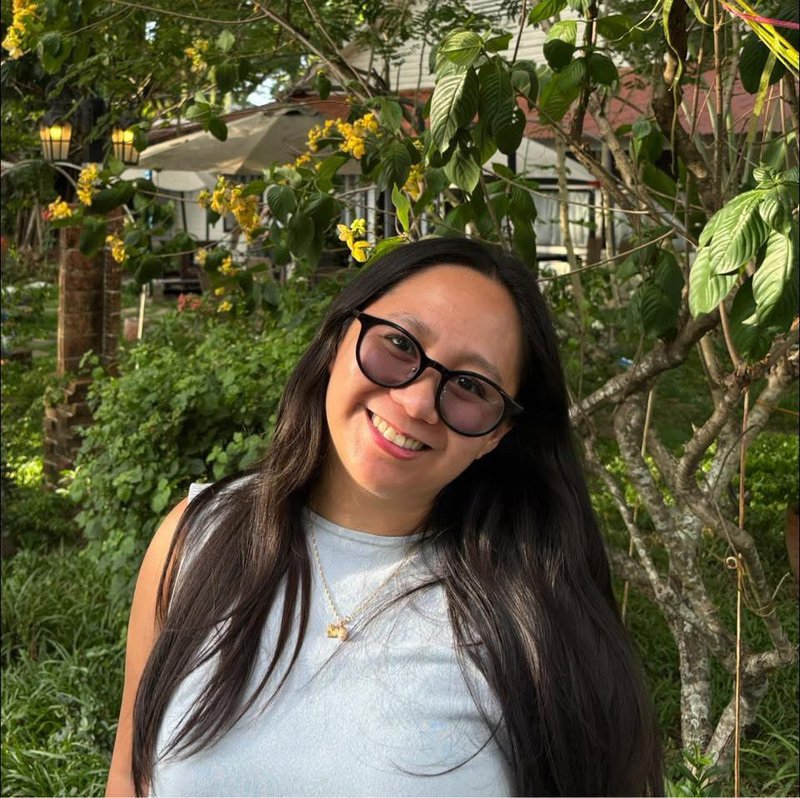
Leanne Decca Lumanglas is a cultural worker in the Philippines, currently serving as Gallery Manager at the UP Fine Arts Gallery, where she primarily conducts her practice. She completed her undergraduate studies at the University of the Philippines Diliman, College of Fine Arts, in February 2023, earning a Bachelor’s Degree in Fine Arts (Art Education) and graduating Magna Cum Laude. She is presently pursuing her Master’s degree in Art Studies (Curatorial Studies) at the College of Arts and Letters at the same university.
Most of her work is situated within the UP Fine Arts Gallery, where, as Gallery Manager, she supervises the daily operations and programming of the three gallery divisions of Parola: Collections Management, Exhibitions Management, and Education and Communications. Her role at Parola allows her to practice museum work oriented towards pedagogy and public education. Her research primarily focuses on the exploration of local curatorial nodes. She is particularly interested in researching in(ter)dependent art practices in the Philippines that foreground and orient curare towards community care and curatorial labor.
Currently, she mainly assists the gallery’s curator with exhibitions that activate the collection. She is focused on recuperating the UP College of Fine Arts Permanent Collection by researching and documenting artworks and artists in the collection, alongside extant archives and documents. This work aims to rethread the fabric of the collection's art history with the institutional history of the UP College of Fine Arts.
Leanne Decca Lumanglas, Gallery Manager/Senior Museum Specialist at UP Fine Arts Gallery, University of the Philippines College of Fine Arts in Quezon City, Philippines, has been awarded by the Getty Foundation & Fernando Zobel de Ayala.