Kuzhali Jaganathan
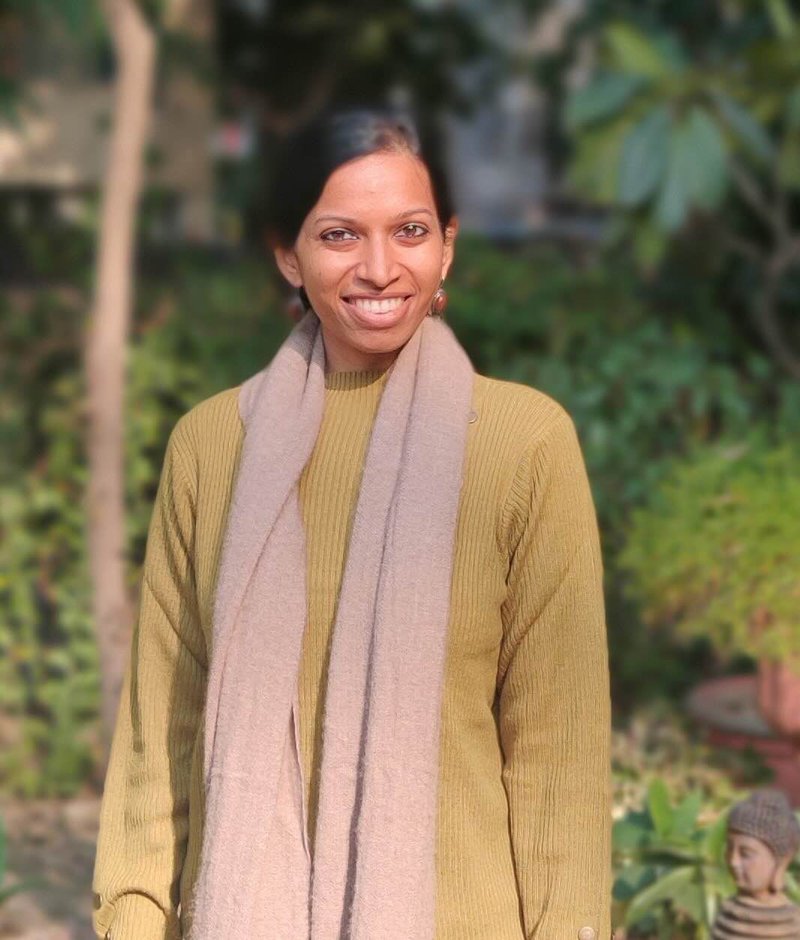
Conference Report. December 2025
As a first-time CIMAM travel grantee and an art worker from India, the CIMAM 2025 Conference served as an important incubator for learning about varied methodological and practical interpretations of curatorial and museum practices. From the practices shared by OMPA Awardees to visits to art spaces, keynote talks and discussions, the conference offered a rich environment to understand how curatorial interventions have moved beyond traditional framings of objects towards more democratic and accessible modes of engagement with art.
The performances showcased at the conference set the tone for the day. Simple movements—such as those reminiscent of the whirling dervish—were reimagined and choreographed to communicate how art institutions can rethink modes of display for broader audiences. Subtle mediations, including the use of pedestals and spatial arrangements, demonstrated how minor shifts can significantly alter audience perception and engagement. On the first day, watching Alessandro Sciarroni’s performance and visiting GAM highlighted how existing movements and artworks can be reinvented through choreography and display to narrate and re-narrate stories from multiple perspectives.
This understanding was further deepened through presentations by the OMPA Awardees, who shared innovative ways of reimagining museums and their potential interventions. In institutional systems where hierarchies and implicit power differences often permeate organizational structures, the Bergen Kjøtt Foundation’s methods toward inclusive practices—particularly within technical spaces of art institutions—were both thought-provoking and practical. Their approach offered concrete strategies for rethinking museum governance and demonstrated how change can be initiated from within institutional frameworks.
The second day of the conference, which began with a visit to the Egyptian Museum in Turin, prompted critical questions around institutional desire and power: whose desires do museums ultimately serve, and is it possible to imagine institutions grounded in more equitable forms of desire? While decolonizing museum spaces remains a pressing concern, the discussions raised an important question—can smaller institutions, shaped by alternative intentions and personal desires, offer possibilities that large colonial institutions cannot? These questions were addressed through diverse voices, encouraging reflections on positionality, power structure and the importance of acknowledging differences while reclaiming pleasure in our work.
As an art worker who has navigated both institutional and independent roles, one of the most resonant provocations of the conference was the informal discussion around art worker associations active in various parts of the world. Working in a field known for overwork and underpayment, these conversations highlighted the urgency of collectively rethinking sustainability within the arts. This theme was reinforced on the final day through the keynote address, which left a lasting impact. While Key Performance Indicators (KPIs) continue to dominate museum governance systems, the conference underscored the possibility for art workers to move toward collaboration rather than competition as a means of affecting structural change.
Taking these insights forward, I am currently researching art worker associations in India that advocate for minimum wages and fair working conditions. In the coming year, I hope to develop this research further and potentially draft a statement aimed at young art workers. This would address what to expect when entering institutional roles and explore ways to negotiate responsibilities while remaining connected to the closely knit yet complex art ecosystem in India.
The CIMAM Travel Grant made it possible for me to participate in this conference, engage with global perspectives and critically reflect on my own position and practice. The experience has significantly shaped my thinking around institutional work, collaboration and most importantly, advocacy, and will continue to inform my professional trajectory.
Biography
With over seven years of experience in the arts and culture sector, Kuzhali has worked across a range of roles—including dancer, programmes manager, curator and writer—shaping a multidisciplinary and practice-informed approach to curatorial work. Her engagement as a freelance dancer sparked an interest in cultural policy and its influence on pedagogy, which became an impetus for her curatorial career.
She began her professional journey at Serendipity Arts Foundation, a non-profit institution that promotes creative placemaking through its annual multidisciplinary festival. There, she contributed to various facets of festival planning, including project management, curatorial assistance and public engagement. For a deeper understanding of interdisciplinary frameworks, she pursued a Master’s degree in Arts & Aesthetics at Jawaharlal Nehru University (JNU), New Delhi. Core modules on modernism, institutional histories and the culture industries enabled her to situate exhibition histories as essential for interpreting contemporary artistic practice.
Following her graduate studies, she joined the Museum of Art & Photography (MAP), Bengaluru as a Curator. At MAP, she was responsible for the end-to-end development of exhibitions, drawing from the museum’s diverse and expansive collection. She curated three exhibitions that delved into India’s modern history, sculpting and printmaking traditions through monographic studies, and exploratory practices through material experimentation.
As an independent curator and writer, her work continues to engage with questions around the representation of women, living traditions and the evolving role of cultural industries. For her curatorial residency at Dhi Artspace, she is exploring how regional museum displays influence collective memory and shape visual imageries. This project seeks to examine how contemporary artists become mediators of representational histories by reimagining the region through materials, motifs and methods. She is currently pursuing her PhD in Visual Studies at JNU, where she is researching the impact of Geographical Indications on objects of utility.
Kuzhali Jaganathan, an Independent Curator and Researcher in Chennai, India, has been awarded by the Getty Foundation.