Fabiola Talavera
Conference Report. December 2025
This year’s edition of CIMAM Annual Meeting reunited members from all around the world to gather in different venues of Turin, Italy. Although we are all cultural professionals, either holding positions in museums or working independently, we all come from different economic, social, political contexts, which inform the varied understandings we have towards what an institution is, how we collaborate with it, and its role within a wider context. These conditions affect the people that make up a museum entity and the everyday dynamics that are developed within a specific workplace. From a dialogue with other participants, mostly a young crowd not holding directorial positions, I found that some do think of their workplaces as fulfilling, others are looking for better opportunities, but most agree dynamics need to be changed. In a meeting like this, there’s an expectation to be employed by an institution, or at least to be working steadily with one. For those coming from emerging economies this is a hard task by itself if you consider the vast cultural budget cuts, massive layouts, irregular contracts and changes in executive public positions through presidential appointments. For the ones working from the inside, the question is: how to change an institution before it changes us? Before we become desensitized to basic human needs through bureaucratization, or before we are replaced by other counterparts (which might not even be human) that are less threatening to the status quo.
The first day of the conference kicked off with Alessandro Sciarroni’s “Don’t be frightened of turning the page” performed by Marco Bertani. This subtle choreography of a body rotating around its axis set the tone for all that was to come. At first, I met this constant turning with some impatience, but upon the realization that this spinning wouldn’t stop, I watched it unravel with awareness to its details, to the variations in hand movements and the placements of the feet within the mat. Having to unwind in a dizzying current became a metaphor for those in the conference for the first time, but Sciarroni’s work revealed a bigger communal feeling of how we experience time in this fast-paced world.
The program followed with a keynote speech by Françoise Vergès where she addressed the inequalities that lay behind institutions and our societies at large. We are facing a time of rising intolerance and hate, propelled by our current neo-liberal technocratic models that demand a state of high competition and productivity. The value of the quantitative, above the consideration of the qualitative, condemns cultural work as an end-result, as the only metric of success, omitting all the processes, lessons and human relationships that make it possible. Inclusion boils down to putting artists and collaborators into well-defined categories (female, queer, indigenous) that translate into statistics that are supposed to demonstrate how diverse an institution is. Museums often strive to include narratives that reflect different cultures, histories and perspectives, however, many fall short in practice. Do we want museums to only represent (speak for someone else) or to really learn from others? To integrate other worldviews means to challenge our current operational models. The museum asks about its impact within a community, but seldom does it address itself as an organism of constant evolution within its environment. Being slow, as Vergès would reflect, allows the needed nurture for anything to grow.
Breakout discussions showcased the diverse nature of the museums we inhabit, from historical religious buildings to high-end architectural premises. Some are built on top of ancient ruins in the middle of a city, others in isolated terrains on the outskirts. The land they occupy is never neutral. It is our duty to ask ourselves which communities have not had access to these spaces. What are the ghosts of these places and objects we borrow? Only in this manner we can respond to our current times as an active listener, and not as a dictator of history repeating itself.
We were welcomed at the Teatro Carignano, one of the oldest premises for the arts in the city of Turin, for the second day of the conference. With the motto “Mapping Desires”, we witnessed different presentations by guest speakers, some resonated with me particularly. Rustom Bharucha’s example of The Desert Museum in Rajasthan, a self-sustaining complex in an open landscape, was truly inspiring. Its focus on an ordinary object, a broom, reminded me of the exhibition I developed this year, “Ná’ Reza” [Broken Hand], where Oaxaca-based artist Ana Hernández created works centered around a clay vase commonly used as an oven in kitchens around the Isthmus of Tehuantepec. Objects like these are not just designs to be appreciated but reveal larger symbolic implications to their contexts and to the communities of artisans passing on through generations the craft of their making. The museum is never finished, in Bharucha’s words, but a site for unlearning and relearning where dialogue can be used as a methodological principle.
The simple, yet radical, act of talking to people was also brought up by Azu Nwagbogu, who shared a lesson on the importance of arriving at a place with humility. To adapt to local customs, to engage in a horizontal manner, and to listen without judgment, is fundamental to not perpetuating extractivist curatorial practices. When museums aim for connection, rather than just preserving collections, as Onome Ekeh reflected, they become nodes of wider networks. For it, we must surrender our notion of institutions as sole emissaries of narratives but rather give in to collaborative practices and the flow of new ideas that can lead to a deeper transformation. Curating is ever more so, a practice of accompaniment, of caring for others, rather than just caring for the material creations of humans made in the past or present.
The last day of the talk saw Mariana Mazzucato remark on the similarities of the art’s patronage system to a feudal hierarchy. Coming from Mexico, these types of dynamics aren’t surprising, as public culture funds are mostly destined for institutions in the country’s capital, other major cities have had to heavily rely on the donations of private entities to establish museums and support their programs. This intertwinement between the private and the public sector of art allows for bigger and more ambitious projects of international collaboration, where expenses and venues are shared. But one is left to wonder, where are the grass-root initiatives (even local ones) taking place? Do they have any access to these institutions? It is already a fortune for a city to have people willing to fund the arts, but they can ask themselves, how are their collections, exhibitions and residences contributing to a wider cultural discussion? Are they establishing only local dialogues or global exchanges? Mazzucato highlighted how investing in culture is often thought of as an expense, but with specific case studies, it is demonstrated that cities that invest in culture have an overall surge in their economies and quality of life. When the focus is not on the results, but on the joy of the process, we can expect a much bigger impact over time.
Although one of the guiding lines was “Doing Less” the Annual Conference was packed with activities followed by short visits to museums. For my first time being in the North of Italy, it was exciting to get a glimpse of what the city had to offer. Most of the institutions visited exhibited renowned artists, mostly from Europe or USA, or other newcomers that already had participations in important biennales. Maybe with more time in hand we could have learned more in depth about other artists working in the city and the topics of interest. Aside from this being a personal concern as a curator, I believe it should be something sought out by all museum professionals. We need to take notice in artists and collectives beyond what we recognize as established, museums are after all, the ones to give an important platform to a younger generation of creators. I’m curious to see a different perspective at CIMAM’s next Annual Conference in Zimbabwe, to get to know artists with less international acclaim, and see the evolving infrastructures of institutions and other independent initiatives.
I remember a conversation with a colleague from India, discussing how she sometimes felt pressured to develop projects with a clear political stance. Often, narratives of the Global South (a global majority), especially when portrayed in Western cultural hubs, address the regions’ histories of violence and conflict. While these stories are part of the local experience for artists and other professionals, there can be a tendency to emphasize dramatic stories or identity roles that attract attention. This portrayal can inadvertently reinforce stereotypes framing communities primarily as victims rather than agents of change. “Tough city to live in” I overheard in an exhibition about Mexico City at a foundation during the post-conference tour. Problems do exist within our contexts, but are these the only stories to be told? We can pay attention not only to the productions of historically oppressed communities within our territories, but to the contemporary creators living within them, and in listening to how they position themselves within a larger global art context.
An ending comment by Chus Martinez, noting how most issues arise from a lack of communication, reminded me of the importance of this gathering, of being in the present and sharing our vulnerabilities. Maybe the radical political act in these dividing times is already in being together, in coming from different realities and in listening to each other without pretenses. Sharing the sum of our experiences and reflecting on where we are positioned now, so we can look forward to what we can build together. I take with me these lessons, memories, and a network of new friends whom we are all enthusiastic about coming up with different schemes of collaboration. Let’s keep open this bridge of dialogue, even if it means sitting in discomfort, to a continuous process of learning in this enduring game.
Biography
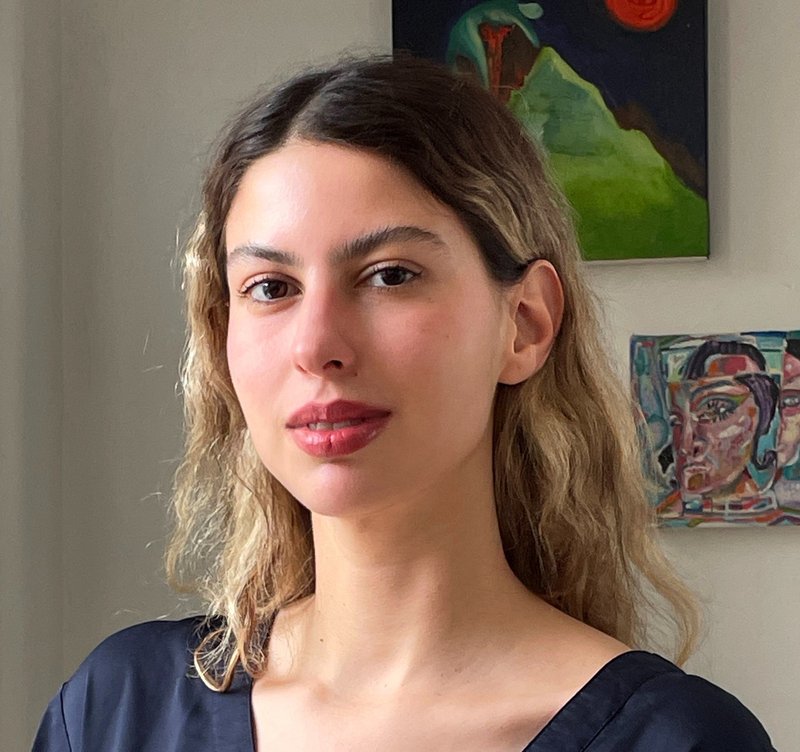
Fabiola Garza Talavera (Monterrey, Mexico, 1995) is a curator, writer, archivist, and cultural producer based in Mexico City. She holds a bachelor’s degree in Art Studies and History from Universidad del Claustro de Sor Juana. During her university days, she coordinated the Juan José Gurrola archive and worked with the curator Chris Sharp on projects such as the 2018 exhibition Dwelling Poetically: Mexico City, a Case Study at ACCA, Melbourne, and New Zealand’s pavilion for the 2019 Venice Biennial.
She has worked for institutions such as the Museo del Palacio de Bellas Artes as a coordinator of international loans for exhibitions like The Paris of Modigliani and His Contemporaries and at Casa del Lago in Mexico City, working on exhibitions, publications, festivals, public talks, and inaugurating the Poesía en Voz Alta Archive and the exhibition room Resquicio, aimed at showcasing emerging Latin-American artists.
In 2024, she went on a residency to Canal Projects in New York City to research the topic of cultural assimilation of Latin-American artists currently working in that territory. She coordinated and curated six events broadcast live for Montez Press Radio in multiple venues in Mexico City and co-curated, along with Jo Ying Peng, the individual exhibition of Iranian-born, USA-based artist Roksana Pirouzmand, A Flame, A Rock, Between Two Mountains at Vernacular Institute, Mexico City.
In the present year, she took the position as Curator of the public museum Laboratorio Arte Alameda in Mexico City, where she curated Ná’ Reza [Broken Hand] the first institutional solo exhibition of Oaxaca-based artist Ana Hernández. She continues to collaborate with the non-profit Montez Press Radio.
Her writing has been published in books, exhibition catalogues and the magazines Art in America, Elephant and Tres Tres Tres.
Fabiola Talavera, Curator at Laboratorio Arte Alameda in Mexico City, Mexico, has been awarded by Aimée Labarrere de Servitje.