Daniel Brena
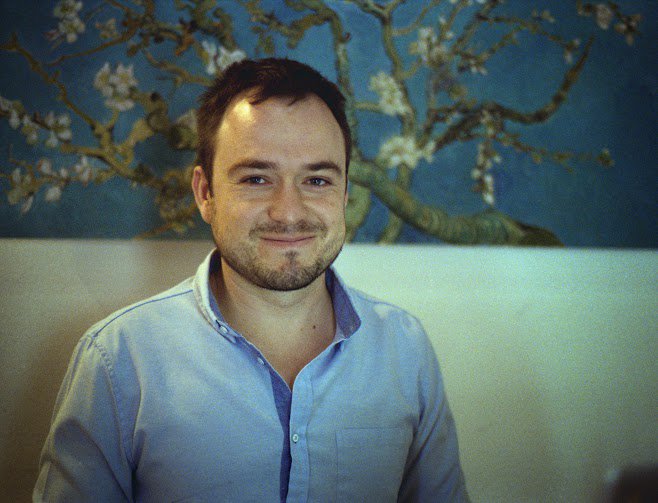
Conference Report. December 2025
Early at the conference, a speaker noted that while the event aimed to reimagine museums, it also offered a compelling model for rethinking how conferences themselves are designed. The level of care and precision applied to its organization was evident throughout. It functioned as a masterclass in both museum discourse and institutional practice, visible in everything from the intentional facilitation of meetings between travel grantees, board members, and funders to the use of performance as an opening gesture.
As a travel grantee, I sought to gain exposure to global perspectives, to situate the challenges we face in Oaxaca, Mexico, within a broader context, and to build meaningful connections with peers confronting similar issues. At the Centro de las Artes de San Agustín, our work increasingly centers on international collaboration. We manage a residency program that welcomes participants from abroad while creating opportunities for artists from Oaxaca to engage with institutions in other countries. This emphasis on reciprocity shaped many of my conversations. I encountered strong support for this approach, and several colleagues generously shared information about residency models, even when their own organizations did not run such programs.
The breakout sessions were particularly revealing. Despite the wide range of national contexts represented, there was a shared commitment to making diversity visible within museum practice. One participant introduced the concept of diversity. This idea resonates deeply with our work at CaSa, as it emphasizes the importance of recognizing cultural, linguistic, and social differences in their specificity rather than grouping them into broad categories. This approach is central to our work with indigenous languages, where each language is treated as its own category, a practice that remains uncommon in many national programs.
Several keynote presentations reinforced these concerns from different angles. Rustom Bharucha questioned how museums value knowledge and labor, demonstrating how an everyday object, the broom, can carry ecological intelligence and social histories that are often excluded from institutional narratives. His argument proposed a shift away from accumulation toward maintenance and care as foundational elements of museum making. This perspective paired powerfully with Azu Nwagbogu’s focus on community led institutional work. Nwagbogu emphasized that institutions cannot be built through authority or predefined frameworks but must grow through listening and a willingness to relinquish control.
These reflections were complemented by Francesco Manacorda’s presentation of the Torino Model, which outlined how institutions across a city can connect resources, expertise, and infrastructure to generate collective impact. The logic of this model was not only theoretical but visibly enacted through the structure of the conference itself, offering a compelling example of collaboration as lived practice.
Mariana Mazzucato provided a necessary counterpoint by calling for ambitious, mission-oriented goals that deliberately exceed existing capacities. Her framework challenges institutions to build new capabilities rather than simply administering what already exists. This perspective prompted reflection on how we might apply such an approach within our own organization by setting bold missions that align teams around shared outcomes and move us from reactive management toward proactive direction.
The conference was further enriched by observing these ideas in practice during visits to cultural sites across Turin. The Outstanding Museum Practice Award winner, Museo Barda del Desierto, was compelling in its proposal of a museum without walls. Its emphasis on ecology and situated narratives resonated strongly with experiences in Oaxaca, where photographic practices are deeply intertwined with the built environment. Within Turin, the Museo Egizio stood out for its elegant presentation of original pigments. The clarity of this approach offered concrete inspiration for how material processes can be communicated with precision. Citywide projects such as Luci d’Artista and the self-guided routes at Pinacoteca Agnelli further demonstrated how art can be embedded directly into the urban fabric.
Beyond the formal programming, the opportunities for informal exchange were vital. Connecting with peers at different stages of their careers fostered a strong sense of continuity. I was especially grateful to second-time grantees, who shared insights about funding and professional development. Conversations with members of the travel committee were candid, and informal moments enabled longer discussions with senior figures who spoke with remarkable honesty about the challenges of working with artists across borders.
I return to Oaxaca not only with the knowledge shared by the speakers, but with a deep appreciation for the conference itself as a model of institutional practice. The care devoted to programming, the creation of time and space for meaningful exchange, and the attention to how people moved, met, and learned together offered lessons as valuable as the presentations themselves. It was an invaluable experience, and one I hope to communicate and adapt thoughtfully to our own work in Oaxaca.
Biography
Daniel Brena (Oaxaca, 1982) is a curator, writer, and cultural manager whose academic background and professional practice connect heritage techniques with contemporary art and design. He studied Art History and Linguistics at UCLA and completed a museum studies internship at the Peggy Guggenheim Collection in Venice in 2006. Upon returning to Mexico, he served as Arts Coordinator at the Centro de las Artes de San Agustín (CaSa) and later as Director of the Centro Fotográfico Manuel Álvarez Bravo (2011–2016). Since 2016, he has led CaSa—an institution founded by artist Francisco Toledo.
At the CFMAB, Brena presented exhibitions of renowned photographers such as Antoine D’Agata, Charles Harbutt, Joan Liftin, and Mary Ellen Mark. He expanded the center’s educational outreach to communities across Oaxaca and launched Colección en Vivo, a program in which scholars taught directly from original prints in the Toledo Photographic Collection, establishing a unique, object-based learning model.
At CaSa, his leadership has focused on weaving together heritage techniques and contemporary practices, expanding international collaborations, and consolidating Premios CaSa as Mexico’s most important literary prize in Indigenous languages. Under his direction, the center has hosted exhibitions by artists such as William Kentridge, Alfredo Jaar, Dexter Dalwood, and Graciela Iturbide. His curatorial work frequently draws from the Toledo Collection, including exhibitions centered on the artist’s prints and a focused show on Mary Ellen Mark, exploring themes of memory, place, and social engagement.
Daniel Brena, Director of Centro de las Artes de San Agustín (CaSa) in Oaxaca de Juárez, Mexico, has been awarded by Aimée Labarrere de Servitje & Eloisa Haudenschild.