Anusha Vikram
Conference Report. December 2025
My introduction to the CiMAM community was very recent, only occurring this year when I learned about the travel grant via a LinkedIn post. The exciting prospect of securing a grant to travel abroad immediately motivated me to apply. However, as I started the application, I noted that the grant was specifically aimed at contemporary curators and directors. As someone who primarily identifies as a museum worker, an archivist, and a documenter of artworks, I never saw myself as a curator. I almost abandoned the application.
Yet, I reconsidered. Perhaps the definition of ‘curation’ could be flexible enough to encompass the core of museum work: the collection. The conference theme, "expanding new modules of museum making," suggested openness. 'New' could mean looking beyond the typical curatorial practices and focusing on people—artists, their lives, the objects, and their lives.
To a collection’s worker, this focus isn't a new module at all. It’s not about jargon or abstract concepts; it’s the practical reality of data, measurements, mediums, textures, conditions, inventory, numbers, and often, simply trying to answer, “what is this artwork really?” For an archivist, the artwork—not the exhibition, not the curatorial vision, and not even the audience—is the absolute centre of the art world.
The CiMAM Annual Conference provided a stimulating platform for exploring critical issues, particularly during my breakout session on Ethics in Museum Practices. Moderated by Raphael Chikukwa, the session included an esteemed and geographically diverse group of museum directors: May Lyn Cruz, Blanca de la Torre, Blair French, Ivana Goossen, Helen Hirsch, Kari Immonen, Stephanie Rosenthal, Nevenka Sivavec, and Bettina Steinbrugge, representing institutions from Zimbabwe, the Philippines, Spain, Australia, the Czech Republic, Switzerland, Finland, Abu Dhabi, Slovenia, and Luxembourg.
Over 90 minutes, we tackled a range of challenges within our respective museums. The introductions quickly merged into a discussion of various complex issues, from internal language conflicts and struggling to fit into the local cultural landscape, to the delicate political and financial tightrope walk of securing funds amidst rising right-wing governments, and the ongoing effort to maintain relevance for diverse communities while avoiding contemporary art's prevalent rhetoric and managing issues of elitism and power structures.
My specific contribution focused on how societal hierarchies, such as the caste system, are mirrored in the museum's internal organization—a starkly vertical community structure. This hierarchy is not only visible internally but also in the collection itself and how it is cataloged. A key observation was that genuinely inclusive initiatives are often relegated to ephemeral experiences, such as public programs, walkthroughs, and inclusive events. In contrast, the museum's core operating structure remains deeply problematic. Furthermore, with stable jobs and adequate wages becoming increasingly scarce in the culture sector, the field is dominated by those who can afford the privilege to work in it, which significantly impacts who is making key decisions about inclusivity. Archiving ethics—specifically, what is acquired and archived, and what is not—was a crucial point that Stephanie Rosenthal circled back to toward the end of the session.
The discussion also highlighted the challenges of language. While many museums showcased brilliant ways of using language for inclusivity within their programming, there was a noticeable absence of examples where research, curation, and execution were conducted in a regional language or led by the relevant community themselves; the work was invariably presented in translation, occupying a secondary position.
Beyond our session, several talks offered powerful insights: Elizabeth Poinelli’s talk provided a framework for avoiding the problematic trap of “trauma porn” and “empathy porn.” Rustom Barucha’s ecological questions about engaging with a “gift of nature” offered a parallel to the support received from “patrons” and “donors,” tying into Mariana’s concept of centering art and culture within the economy. Karen Archey’s presentation on the pleasures of curatorial practice prompted reflection on the dis-pleasures of collections work, particularly the mechanical and monotonous labor of managing excel sheets and inventory. Francesco’s proposal championed friendships for collaboration, emphasizing that these should serve as an operational tool rather than forming a “super institution.” Onome’s perspective on the networking museum candidly addressed the courage and inherent awkwardness of professional networking, highlighting its ridiculous difficulty.
I was genuinely surprised when Chus Martinez and Augustin Perez Rubio requested a testimonial from me regarding the breakout session during the closing remarks. My initial response was a lengthy expression of gratitude, specifically acknowledging the sheer courage required just to say hello. While this may have seemed insignificant, especially given the critically focused questions immediately posed by my Indian colleagues, I believe this humble note of gratitude deserves a more critical reading. Being simply grateful to greet people actually reflects the highly vertical nature of the existing system. A travel grant represents a monumental step through a door, one you constantly fear will slam shut. The ability to simply share a table, dine in a palatial setting, and visit museums that would otherwise be inaccessible—these are, truly, things to be grateful for. Enjoying and understanding these opportunities is the essential first step; being critical is the necessary second. This report marks my second step.
My core advocacy, voiced across both breakout sessions, is the necessity of making artistic practice more viable. The crucial question is: How can institutions that profit from art enable this?
Simply aiming for horizontal structures isn't the complete solution. Vertical structures will likely endure, perhaps evolving into a radical, triangular shape if managed thoughtfully. I envision a museum where communities are truly central—serving as curators, gatekeepers of knowledge, and researchers—not just relegated to collaboration or programming participation. I dream of a space where curatorial narratives are actively challenged by archival records, opinion pieces from museum guards, or readings by art handlers.
The challenge lies in truly inhabiting an institution without succumbing to activist burnout or being afraid to discuss failures. A statement once made by the director of the Wereld Museum, Leiden, deeply resonated with me: "Some ways of being in the world are not for translation, not for taking." How do we embrace "queering" ourselves, find joy and flourish, and accept the inherent "loose ends," especially when the work of activism becomes exhausting? Conferences like CiMAM Annual Conferences are a step in this direction and through the very engaging attendees, the inspiring OMPA Awardees and the work of the artists, I could see that with my own eyes.
Biography
Anusha Vikram holds an undergraduate degree in Painting and a postgraduate degree in Art History and Visual Studies. Her master’s research explored transcultural artistic practices through the work of Russian immigrant artist Nicholas Roerich. Her broader interests include landscapes, popular culture, migration, transculturality, and South Asian art and visual culture.
Her curatorial approach centers on the archive—not just as a source of objects, but as a space of meaning and experience. She is committed to making archival materials accessible and engaging, not simply as curated exhibits, but as archival entities brought into public view.
In 2021, she was selected for the Getty Graduate Internship Programme, where she worked at the Getty Research Institute in the Content and Digital Strategy Department. There, she explored archival collections and created the Google Arts & Culture exhibition At the Crossroads: Qandahar in Images and Empires in collaboration with the Aga Khan Trust. Although the physical exhibition was canceled due to political instability in Afghanistan, the digital version ensured global access to these rare images. At the GRI, she also created content strategy for video works such as I Am Denilson, which offered a layered understanding of Denilson Baniwa’s contemporary artistic interventions with Spanish colonial prints of Indigenous peoples.
At the Museum of Art and Photography (MAP), she led a digitisation project of film materials and curated multimedia exhibitions on themes like disco and romance. These exhibitions combined nostalgia with critical research—exploring topics such as disco’s links to space exploration and gender dynamics in Hindi cinema’s romantic narratives.
As a Collections Specialist, she aims to highlight the richness of archival material while championing education and accessibility. She believes the archive must be curated in its own right, before it becomes content in an exhibition.
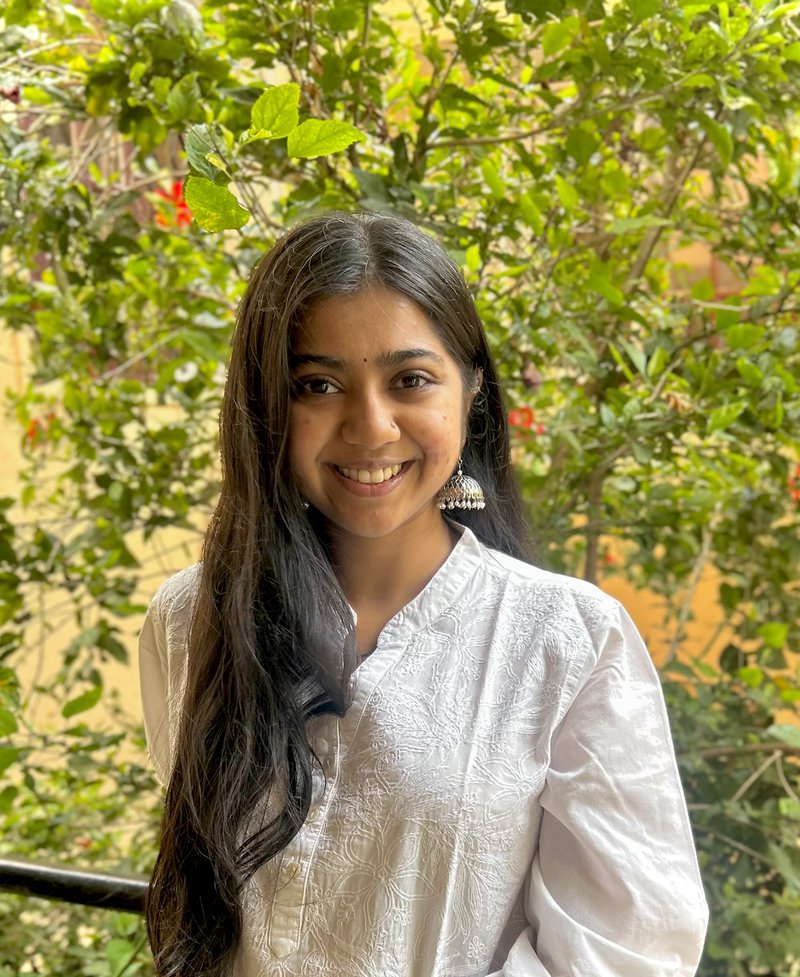
Anusha Vikram, Collections Specialist at the Museum of Art and Photography in Bangalore, India, has been awarded by the Getty Foundation.