"There is no single exportable model of the museum"
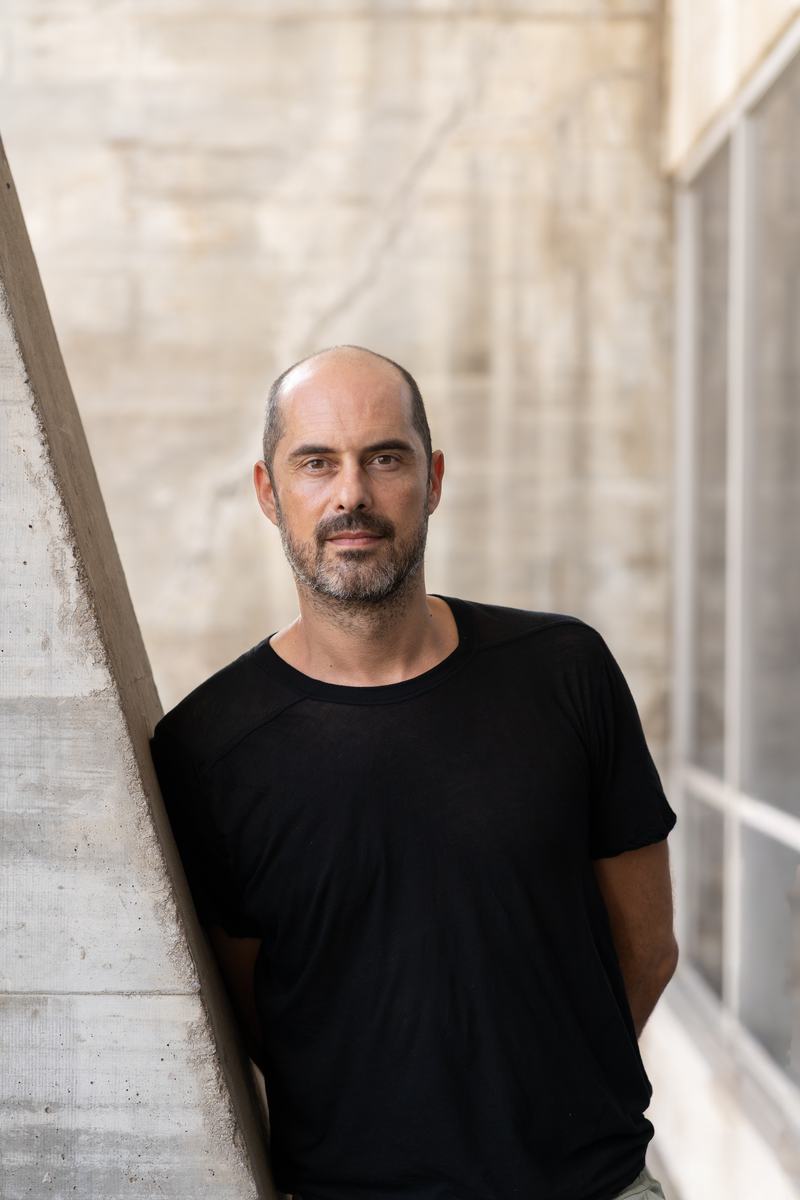
Interview with Pablo Lafuente, CIMAM Board Member and Artistic Director, Museu de Arte Moderna do Rio de Janeiro, Rio de Janeiro, Brazil, published in the yearbook Coleccionar Arte Contemporáneo (Spain), March 2026, written by Vanessa García-Osuna.
The Museum of Modern Art of Rio de Janeiro (MAM Rio), inaugurated in 1948, is one of the most influential cultural institutions in Brazil. What is the most stimulating aspect of directing such an institution?
I have been working as artistic director of the museum for five years, and perhaps the greatest stimulus is making the institution “work,” in a context that is constantly changing: ensuring that the museum is a reference in the city and beyond; that it serves as a space for creation and education; that it contributes to the dynamics of urban circulation and the construction of citizenship; and that the people of the city see it as a relevant institution. That people in the city develop a relationship with the museum that also contains sentimental and emotional elements, because the museum forms part of their biography and of their life in the city.
Modern and contemporary art from Latin America constitutes one of the axes of its collection, which exceeds 15,000 works. What aspects of its current artistic scene would you highlight?
The museum has a diverse collection that begins with international and Brazilian modernism, later moving toward a Latin American interest starting from Brazil and eventually concentrating on art made in the country. Today our program is almost exclusively focused on artistic practices conceived and developed here, partly for budgetary reasons but also because we think there is still much work to be done both with local contemporary art and with the history of what has taken place in the country over the last hundred years.
Creative processes in Brazil are, and have been, extremely diverse, partly because of the country’s vast geographic extension and partly because of a combination of autochthonous cultural elements and those that arrived through migration. with those that arrived through voluntary and forced immigration processes and that continued developing over decades. Today art continues to be produced by very diverse communities, and in recent times the institutional system has opened up, after many demands, to people and collectives who previously had no access. This does not mean that the current situation is more democratic in its processes, nor that this inclusion is the result of an impulse toward social justice, but there are now more people from diverse backgrounds occupying these spaces, and this creates extremely interesting situations.
You have advocated for a greater democratization of art. What implications does this have and why is it important to you?
Access to different forms of art depends on cultural capital and is mediated by class structures and by historical processes of the formation of social groups. For different reasons, codes and methods of circulation tend to be circumscribed to specific groups and rarely relate to the entirety of a society.
This partiality does not necessarily have to be understood as a problem: it is not a question of social justice that there be total access to all artistic practices developed by different groups. Relevances and meanings are the result of personal or collective experiences and knowledge, and some practices or objects are more important for some groups than for others.
Moreover, sometimes there are practices to which it is not possible to give general or mass access, because they may be lost partially or entirely. And we can argue that there are objects and practices to which specific collectives should have more access than others.
With these considerations in mind, what seems important to me is to think about how the processes in which we become involved as professionals can question historical hierarchies that have defined privileges and exclusions, both of practices and of people and groups. The task is not to ensure that everyone has access to a consensual canon of artistic practice and understands and values it in the same way, but rather that the field of art—and by extension culture—be places where structural exclusions and privileges are continuously and insistently questioned, while at the same time contributing to the preservation of practices and to the emergence of new ones.
Your professional experience has taken you around the world, from Oslo, London, Quito, and Mexico to Brazil, where you arrived in 2013 to become involved in the São Paulo Biennial. Why did you decide to stay?
It is difficult to create clear hierarchies between professional processes and personal ones, but in this case, I believe the professional process created the conditions for other processes.
To work on the curatorial team of the 2014 São Paulo Biennial, some members of the curatorial team decided to temporarily leave our jobs and move to Brazil about one year and three months before the opening. My family situation allowed it, and I obtained leave from Central Saint Martins in London, where I was working.
We thought it was necessary to be permanently based in São Paulo to develop a project with density, one that spoke from and with the context, that did not simply drop in from outside. I do not know if we fully achieved it, but at some point during that immersion process, I decided that it was not possible to return to the previous situation, where I was no longer physically or emotionally present.
The contexts, questions, and people with whom I became involved in Brazil during that time did not seem resolved or finished, and those I had left in London became distant. For this reason, it makes sense to say that the decision to remain in Brazil was less a decision than a conclusion.
One of the main objectives you set when assuming the direction of MAM was to promote a process of “decolonization,” giving greater visibility to other narratives, particularly Black and Indigenous ones. What initiatives have had the greatest impact on the museum, and which make you most proud?
There have been several initiatives, all of which echo social, cultural, and political processes that have affected Brazil in particularly intense ways in recent years, as well as other parts of the world.
First, there has been a growing awareness of the historical processes that constituted Brazil as a country and Brazilian society today: colonial processes filled with violence that permeate both structures and lived experiences.
Once this is understood, a responsibility emerges to respond personally and institutionally, considering not only the contents of programs but also working processes and the relationships the museum maintains with society as a whole.
If the history of Brazil is a history of expropriation and expulsion of Indigenous peoples from their lands, and if the Black population descends from people forcibly brought as property and enslaved as labor (as part of the Indigenous population was also enslaved), and if the ideas and dynamics that sustained those processes remain active today, the institution must contribute to this discussion and respond to these histories, including them in its programming but not limiting itself to that.
It must also revise working processes in order to incorporate what historical processes excluded: people, knowledge, ideas, approaches, and sensibilities that did not fit within the colonial process.
Today, MAM Rio is different from the museum of five years ago, because of the arrival of new people who now work alongside those who were already there, with working processes that are sensitive to this history.
We implemented ongoing projects that structurally incorporate consultation, revision, and learning, constantly modifying the museum’s practices, such as the annual professional residency for people with disabilities. As well as projects that review the history and present of art from different positions, such as Nakoada: strategies for modern art, an exhibition that in 2022 revisited the Brazilian modern canon from Indigenous perspectives, curated by Bia Lemos and Denilson Baniwa.
What major global changes have you perceived in the museum field?
After these five years working at MAM Rio, and speaking with colleagues who work in other museums in Brazil, Latin America, and other regions of the world, I have perceived in practice that although the museum institution was created in Europe and exported from there—often as part of the colonial process we discussed earlier—it has adopted different models and emphases in different contexts and moments.
For example, at the risk of generalizing, museum institutions in Latin America are addressed by the tradition of the 1972 ICOM round table in Santiago, which discussed a museum integrated into society, in which the specific content of the museum (in our case art) is not the priority but rather its tool.
We can find institutions in the region that respond to this call by rejecting it, but I feel that this demand is present here in a way that I do not identify, for example, in Western Europe.
For this reason, when we speak about global changes, I believe we must understand them as being modulated by these differential historical experiences.
One interesting way to perceive some of the most positive changes may be to examine the composition of the board of CIMAM (International Committee for Museums and Collections of Modern Art), where today there are museum directors and professionals from territories in Asia, Africa, Europe, North America, and South America, from “old” museums and recently created ones, with ten women and five men.
In this context, it is almost impossible to continue thinking in terms of a single exportable model of the museum.
In this context, it is almost impossible to continue thinking in terms of a single exportable model of the museum, which demands enormous sensitivity and attention in order to understand possible or necessary modulations in different contexts, the risks and difficulties each context presents, and the possible solutions.
How can the museum retain its influence and symbolic power, and how should it adapt as an institution to the spirit of the times?
Rather than influence, I prefer to speak about relevance, as an artistic-cultural, heritage, educational, and civic institution.
I understand relevance as the result of familiarity and respect.
To achieve familiarity, it is important that there be a relationship: that people build a shared history with the institution, that they see it as an interlocutor, as a place where they have had formative, unexpected, or simply pleasurable experiences, where they gained knowledge, where they came into contact with people, things, or ideas, and where they were treated with respect.
To create a contrast, what I am proposing is something different from the model of cultural consumption. I am thinking of an institution that does not function simply as a platform of content, experiences, or programs to which people go in order to choose what they want to access.
I understand the institution that maintains its relevance as one with another ambition: one that builds programs with people and collectives actively, initiating or collaborating with processes of construction that create mutual responsibilities.
Ultimately, an institution with which people do not have a substantial relationship is an institution that loses part of its meaning and that could eventually cease to exist.
What role do you think digital technology will play in the future of museums?
Physical presence and in-person experience have been defining elements of the museum until now, and I think it is fundamental to consider how to continue this work with museums that have physical collections and buildings that function as places of encounter.
The museum’s physical space can be a place where unexpected things are encountered—things that the visitor was not searching for when they decided to visit—and this function of bringing the unexpected, what is outside our circle of interests or repertoire, is particularly important today.
The museum can also be a place where people who do not belong to the same groups meet.
At MAM Rio we use the internal and external spaces around the museum, together with diverse lines of activity (events, courses, cinematheque, exhibitions, fairs…) to provoke these encounters, attempting to create small short circuits in plans and desires.
In a city like Rio de Janeiro it is also important to encourage urban mobility, to make people circulate, and thus contribute to creating a right to the city that is not guaranteed.
But returning to the question, it is also important to think about how to offer access to people who cannot go to the museum, whether they live in the city or in other regions.
The museum cannot exist only for those who have the means to visit it.
If the museum is a place of memory because of its heritage, shared experiences, and dissemination of ideas, narratives, and images, it is important to design and implement systems that allow this work to take place beyond its physical location, with the complexity that these experiences, ideas, and knowledge deserve.
As a curator you have had the opportunity to work with major artists. Could you recall a project that marked you in a particular way?
Ah, it is difficult to choose…
Sometimes the projects that leave the deepest mark are the smaller ones; other times the larger ones. All of them involve people with diverse roles and occupations, not only artists.
Participating in the curatorial team of a biennial, as I did in São Paulo in 2014, is a fascinating process, extremely demanding, responding to often irreconcilable expectations and from which it is almost impossible to emerge without some wounds and without professional and personal changes.
But for me the most meaningful processes are usually projects of continuity, such as the two years during which I coordinated the educational team of the CCBB cultural center in Rio de Janeiro (2018 and 2019), because of the daily responsibility of receiving and establishing relationships with hundreds of people and their experiences and perspectives.
Thinking about this, perhaps the most significant projects are those that demand greater responsibility, such as Dja Guata Porã: Rio de Janeiro Indígena, an exhibition at the Museu de Arte do Rio in 2015–16 for which I was part of the curatorial team and which presented the current and historical presence of Indigenous communities and individuals in the state of Rio, with Indigenous protagonism in all aspects of creation and production.
Contributing to that process in an institutional context and a society that did not recognize—or still does not recognize—the complexities of Indigenous history and the possibility of Indigenous cultural and political agency was important for me.
In some way, all those elements are part today of how I understand my responsibility at MAM Rio.
As a member of the new CIMAM Board of Directors, what museum-related issues do you think are important to put on the table?
I believe that the previous questions already map a series of issues that I consider fundamental: questions of institutional relevance as social responsibility; the need to understand that what a museum does is part of other broader and more complex processes; thinking about audiences in terms of relationships that go beyond models of clients and consumers and that embrace processes of dialogue, education and civic engagement; understanding how institutions can effectively contribute to processes of memory through their heritage; and accepting that, despite the urgencies of the present, it is important to go beyond what is expected or demanded at each moment.