Research Findings on Performance Practices in Art Museums
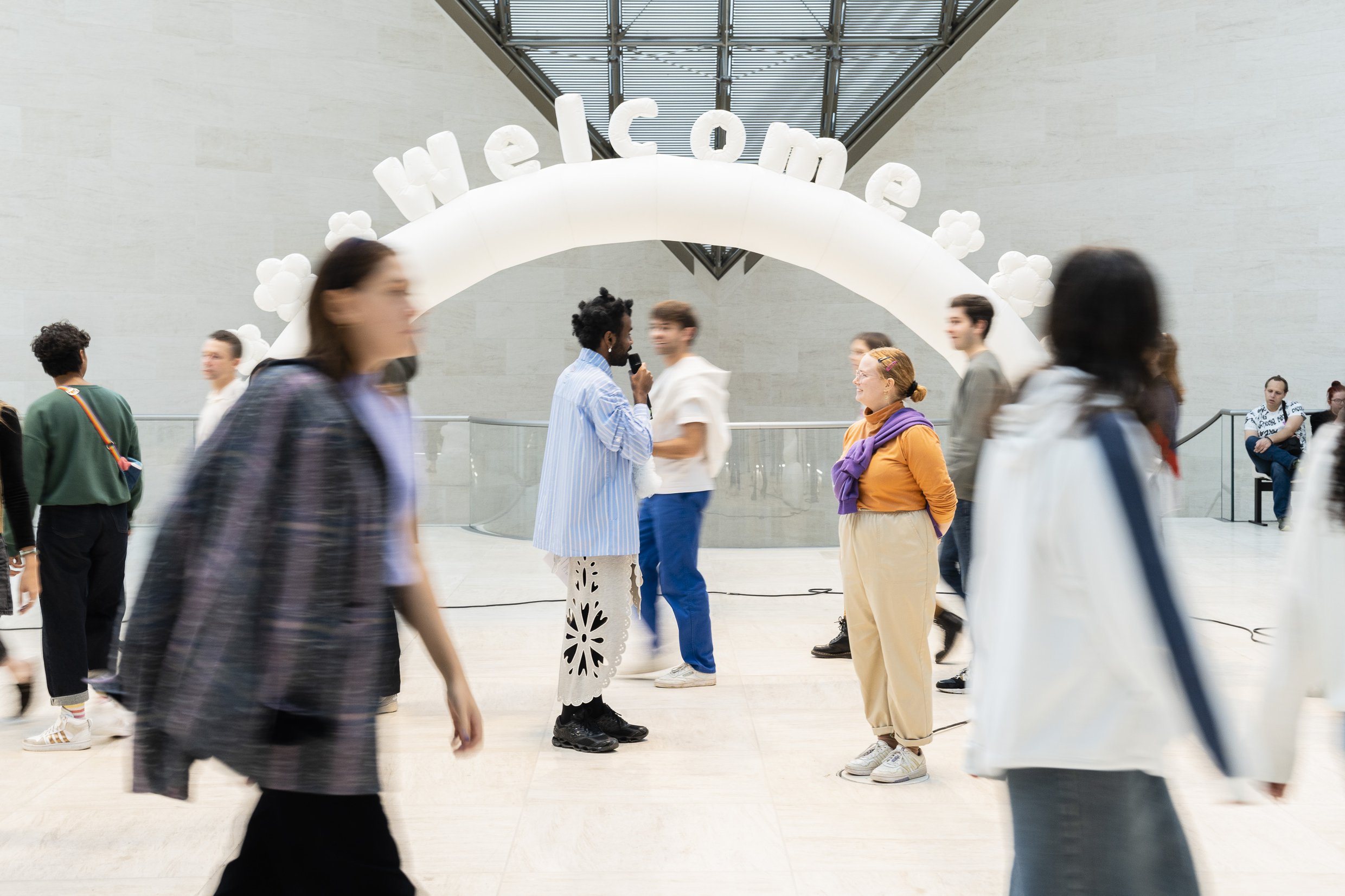
CIMAM collaborates with PIT to advance research on Performance Practices in Art Museums
A global survey developed with EU-Funded Project PIT partners explores the role of performance in art museums and art centres.
CIMAM is pleased to share the first results of its collaboration with PIT: Perform, Inform, Transform. Performance Practices in Museums and Art Centres, a three-year European cooperation project dedicated to the research and development of performance practices within museum contexts.
PIT has received funding from the Creative Europe Programme of the European Union under its Cooperation Projects strand (2025–2027). The project brings together a consortium of leading European institutions, including Bozar (Belgium), Mudam Luxembourg (Luxembourg), CAC Vilnius (Lithuania), Serralves Foundation (Portugal), TEA Tenerife Espacio de las Artes (Spain), and Triennale Milano Teatro (Italy).
As part of this collaboration, CIMAM partnered with the PIT consortium to design and launch the first Global Survey on Performance Practices in Modern and Contemporary Art Museums, initiated in March 2025. Through this survey, CIMAM invited its international membership—including institutions beyond the European Union—to contribute insights into how performance is researched, produced, presented, and supported within museums and art centres worldwide.
The survey explored a wide range of questions, including the role of performance within exhibitions, collections, architecture, and public programmes; the relationship between performance artists and audiences; institutional resources and infrastructures; and the challenges museums face when engaging with this inherently time-based and embodied practice.
The objective of the PIT project is to map current practices and identify emerging models of live activation between bodies, museums, and art centres, through performance, research activities, screenings, and public debate.
A total of 40 institutions have participated, primarily from Europe but also from beyond. The survey has helped us identify clear trends and practices within a growing community of organizations interested in performance art. Over 60% of respondents have dedicated performance programs. Most institutions report hosting fewer than 10 performances per year, including both newly commissioned works and existing pieces. While museums traditionally collect and curate static objects intended for long-term observation, performance art introduces a dynamic duality into these spaces. Many respondents have emphasized that performance brings embodied presence, temporality, and social engagement to exhibitions, activating spaces and creating new interpretive frameworks:
“Performance brings embodied presence, temporality, and social engagement to static exhibitions, activating spaces and creating new interpretive frameworks. There is a sense of shared experience and of communing that I find very interesting and necessary to break up the more solitary exhibition visit.” (anonymous reply)
Most institutions are developing diverse approaches to support performance within their spaces, often in the contexts of exhibitions, collections, public programs, or partnerships with universities. Some host annual festivals, run residency or mentorship programs, or even award national prizes for performance art.
Audience engagement has emerged as a central theme. Over 72% of museums and art centres reported that audiences occasionally take an active role. Examples include interactive works requiring participation, workshops, post-performance discussions, city walks, and intergenerational community projects.
“The museum audience moves beyond passive observation to become co-creators, collaborators, or active witnesses in the performance. Participation can range from subtle engagement (observing and reacting) to full immersion (physical or creative involvement), depending on the structure of the performance itself.” (anonymous reply)
Despite the growing interest, institutions often face significant challenges. While 67% have dedicated budgets and 55% employ staff for performance programs, only half possess specific performance spaces. Many rely on cross-departmental collaboration and adapt existing exhibition or public program areas to host performances. Key challenges include limited space, insufficient funding, and lack of technical or curatorial capacity. Several respondents have highlighted the need to rethink how museums accommodate performance’s temporal and spatial demands.
Some institutions were cited as models of best practice include the Barbican Centre, Palais de Tokyo, Tate, MUDAM, M Leuven, and MoMA, which combine continuous and diverse programming, dedicated resources, strong public participation, in-house and collaborative production, and an innovative approach connecting performance with collections and exhibitions. These examples show performance’s potential to foster dialogue, participation, and experimentation, making it a vital and dynamic component of museum practice.
Research conclusions
- The survey demonstrates that although performance remains a relatively marginal practice compared to traditional museum disciplines, it is gaining relevance. Its ephemeral nature can create tension with the museum’s traditional role as a space for conservation and exhibition, but this tension is widely recognized as productive. The results suggest a dialectical relationship rather than a contradiction between performance and the museum.
- Performance activates static collections and exhibitions by introducing movement, temporality, and audience interaction, making museums more accessible and participatory. Conversely, the museum provides performance with scenographic and conceptual contexts and documentation opportunities, extending its impact beyond the live moment.
- Institutions are increasingly experimenting with innovative formats and public participation strategies, reflecting both institutional interest and a broader shift in how museums relate to their audiences. While staff, budget, and space limitations remain common challenges, many organizations are turning these into opportunities for interdisciplinary collaboration and creative reimagining of exhibition spaces. By reactivating traditional galleries for performance, visitor experiences become more immersive, often blurring the boundaries between artwork, artist, and audience.
In summary, although the survey’s scope was limited, it confirms that performance is no longer an isolated or purely experimental practice. It can become a vital part of contemporary museum strategies, and institutions are collectively shaping a more responsive and dynamic cultural landscape through the integration of performance art.
Conducted in 2025, the survey is expected to stimulate further discussion and research within and beyond the PIT community, including for the project publication as well as a webinar with CIMAM later in 2026.
For more information about the PIT project, please visit https://pitperform.eu/