New collaboration between CIMAM and Valiz
CIMAM and Valiz are pleased to announce a new collaboration, launching in March 2026, through which CIMAM members will enjoy a 20% discount on English-language titles. Together, we will strive to ensure that topics that resonate in the art world, but often deserve broader societal attention, find their way into the world.
Valiz is an independent international publisher on contemporary art, theory, critique, design and urban affairs.
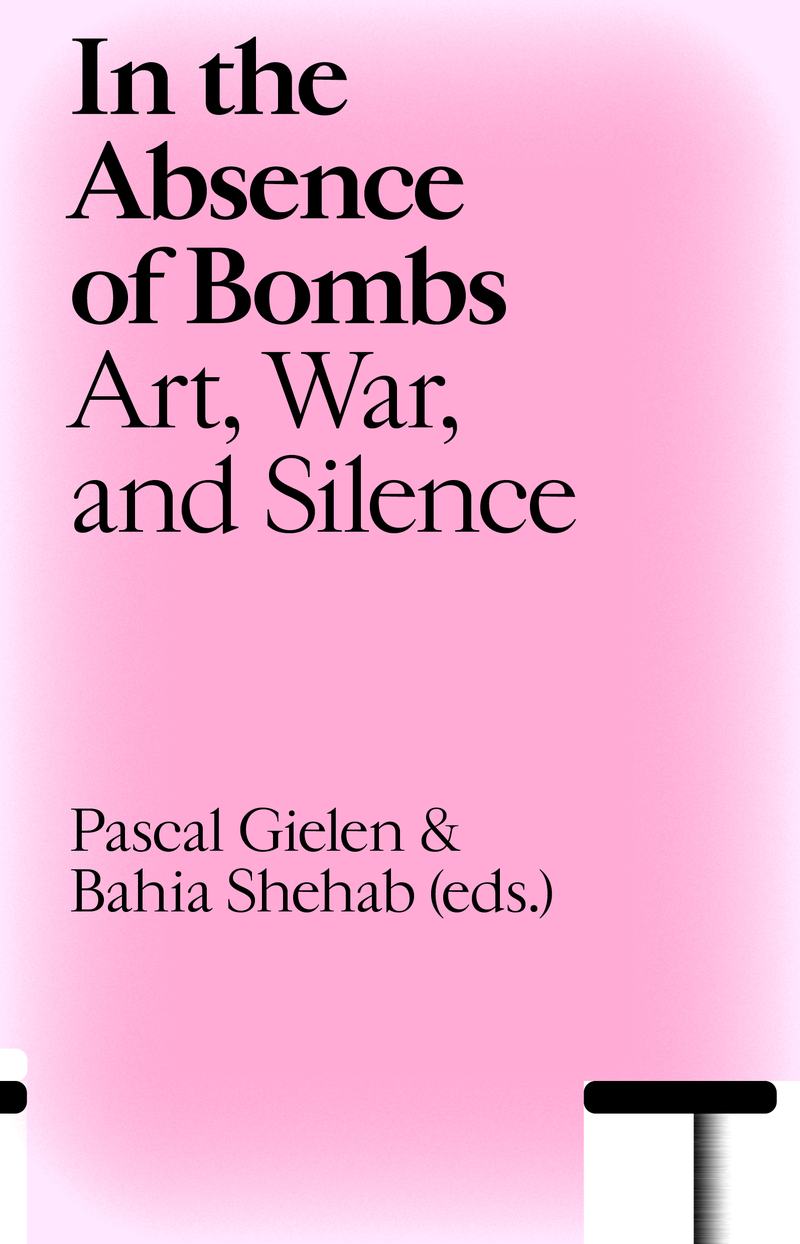
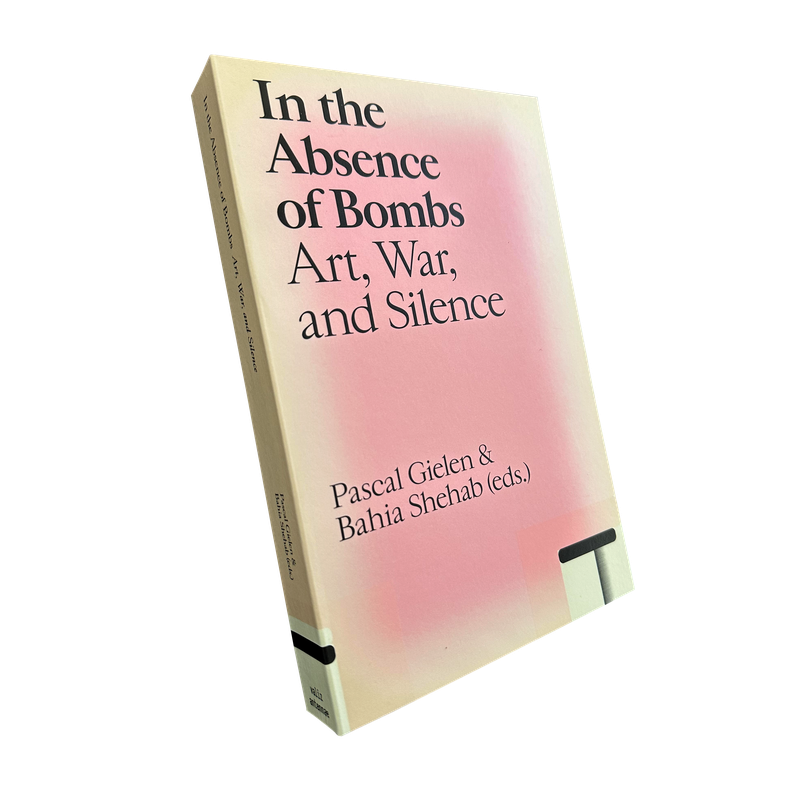
We are kicking off the collaboration with the new Valiz title In the Absence of Bombs: Art, War, and Silence, edited by sociologist of culture Pascal Gielen, Professor of Sociology of Culture and Politics at the University of Antwerp, and Bahia Shehab, artist, designer, and Professor of Practice in Design and founder of the Graphic Design Program at the American University in Cairo, is a timely and incisive anthology that examines the complex relationship between art, media, and war.
Bringing together testimonies and reflections from artists, filmmakers, and thinkers from Palestine, Lebanon, Ukraine and beyond, the book explores the silence of institutions, the limits of representation, and the ways artistic practices respond when violence unfolds in real time. At a moment when wars and geopolitical conflicts challenge the capacity of cultural actors to speak and act, the publication asks what aesthetic forms might still allow us to perceive, process, and share experiences of violence, loss, and mourning.
In the Absence of Bombs is a versatile, in-depth anthology about the influence art and media have on the perception of war, and how artists can use art to illustrate the atrocities of violence around them. It explores the silence of institutions and (engaged) artists regarding recent geopolitical conflicts.
➝ Access the 20% discount code in the Members Only section.
For those who are interested in attending a live interview: On Thursday 19 March Pascal Gielen, Sruti Bala, Lara Khaldi, and more tba will dive into In the Absence of Bombs, during the UvA Colloquium 'Social Practice: Art in Times of Destruction'. The discussion will then be opened to the audience with an investment in the burning issues that the book raises. Drinks and a Valiz book stand will be available afterwards. Click on this link for more info and to RSVP.
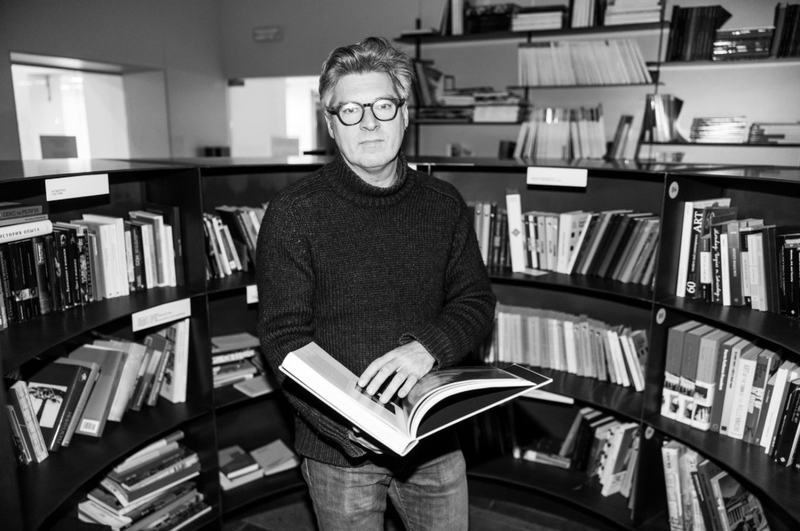
As a preview of the book, we invite you to read an interview with one of its editors, Pascal Gielen, writer and Full Professor of Sociology of Culture and Politics at the Antwerp Research Institute for the Arts (ARIA), where he reflects on the ideas that shaped this publication.
The book opens with the poem “Let me barbaric” by the Palestinian artist and poet Yousra Benfquih, which challenges Western notions of civilization, diplomacy, and neutrality. Why was it important to begin the book with this ethical inversion?
I asked the author, Yousra Benfquih, for this poem to open the book because it has an extraordinary force, and for two main reasons.
The first is that it performs a radical inversion of the gaze. The poem does not look from the West, but from there, questioning how we constantly resort to categories such as “barbarians,” “enemies,” or “animals.” This inversion of perspective is, for me, one of its greatest strengths.
The second reason is more implicit: the poem suggests another form of aesthetics. It is constructed with words and reflects conceptually, but at the same time it shows performatively what language can do in an immediate way.
In a certain sense, the poem already offers a response to the central question of the book: what other aesthetic forms might help us understand what is happening, and also help us go through grief and pain? What forms can touch us and remain within us?
This experience is very important to me. When I returned from Ukraine, I realized I had an experience that I never saw reflected in the media, when back in my country: the experience of how people spoke to me in a war zone, their expressions, their gestures, their tics, their haunted eyes. I call it ‘the aesthetics of war’. It’s also the language of trauma: a shocking experience you cannot catch in words. In the Absence of Bombs is exactly a quest for those aesthetics: an aesthetic that is pre-symbolic, that is visceral, that is touching without speaking or speaking with words that perform.
Even the title —“Let me barbaric,” which deliberately remains unfinished— conveys that feeling of something suspended, incomplete. The poem generates an atmosphere of something unfinished that remains. Just like the experience I had in Ukraine: something that enters your body and does not leave again.
And that is precisely what I understand as aesthetics: a sensory experience that passes through the body, that affects you without being able to name it. Many of the artists in the book try to find ways to express exactly that experience.
You have mentioned that the war in Ukraine and the early months of Gaza formed the context that prompted the book. What was the decisive trigger that made you feel it was necessary to intervene in the debate from this aesthetic perspective?
When I returned from Ukraine and went back to my country, I was surprised to see on television that a certain type of experience —something I had lived— simply did not appear in the media.
I am referring to what we fail to capture: the silence after the explosion, when you still feel the ringing in your ears but cannot yet make sense of what has happened. It is a state prior to consciousness, before words or symbols.
The Syrian visual artist Tammam Azzam describes this very well in his interview in the book. That silence after the blast is precisely what is missing from images in mainstream media. That was, in fact, the trigger for the book. From there, the aesthetic question emerges: how can that experience be captured? Is that silence not itself an aesthetic experience?
In this context, I identify three dominant “aesthetics” in contemporary media representation.
The first is the aesthetics of bureaucracy and neutrality. It is the institutional logic of numbers, of apparent neutrality and semantic debates: discussions about whether something is or is not genocide, where terminology ends up displacing the reality of suffering.
The second is the aesthetics of shock. These are shocking images that apparently attempt to break that bureaucratic rhetoric. However, as Susan Sontag already pointed out, such images tend to produce desensitization. Moreover, the media “circus” of shock also operates according to the logic of numbers: capturing attention quickly and generating metrics.
The third is the aesthetics of empathy. There is an attempt to generate identification with victims, but in the West, this is usually constructed through individual stories —a mother who loses her child, a particular case we can identify with. However, we have few tools to identify with the collective, with the experience of an entire people.
The book responds to these three aesthetics. I am not saying they are negative in themselves; they fulfill a function. But from there, we begin to look for other responses and to engage in conversations with different artists and thinkers. We set out to find aesthetic forms capable of expressing collective rather than individual rage and grief, forms powerful enough to move those of us living in the absence of bombs from passive spectatorship toward active engagement and a felt sense of responsibility for what is happening where bombs are falling.
The book is structured around three interconnected sections: Imagery: The Lens of Conflict, Witnesses: Torn Between Bombs and the Absence of Bombs, and Grief: The Art of Loss and Mourning. Within this framework — which moves through perception, testimony, and mourning — you bring together 34 contributions in addition to your own. How did you organize this constellation?
The chapters follow an almost logical structure: they move from life toward death.
They begin “here” – in Europe, in my country, in the place where bombs do not fall, which is also the place where most images of war reach us. It is, quite literally, about observing the war, as the philosopher Marlies De Munck points out: a distant, almost passive gaze, but where empathy can play an activating role.
The second part attempts to understand what is really happening through witnesses. Not only those who directly experience the war in Gaza or Ukraine, but also those who testify from the diaspora.
This appears clearly in the interview with the painter and filmmaker Diana Al-Halabi, originally from Beirut and now living in Rotterdam. She describes the experience of exile through recurring dreams marked by the guilt of having survived while others suffered the war. When she began sharing these dreams on social media, other exiled people responded, saying they were dreaming the same things. From that exchange emerges a kind of collective unconscious: a shared aesthetic and emotional experience among those who have lived through war or displacement.
This section also addresses how institutions, especially museums, can —or cannot— bear witness. The Palestinian director of De Appel in Amsterdam, Lara Khaldi, analyses the problems with museums in witnessing and keeping stories alive. Maybe the graveyard is a better place to mourn, to be angry, and to vitalize political action than the museum – she claims.
The final axis of the book addresses loss and death. Here, the difference between grief and mourning appears. Grief is usually understood as an individual and psychologized experience that can isolate trauma. Mourning, on the other hand, can become a collective practice.
The book suggests —without offering a definitive answer— the need to find aesthetic forms that allow for the reconstruction of collective mourning. And that mourning also carries political value.
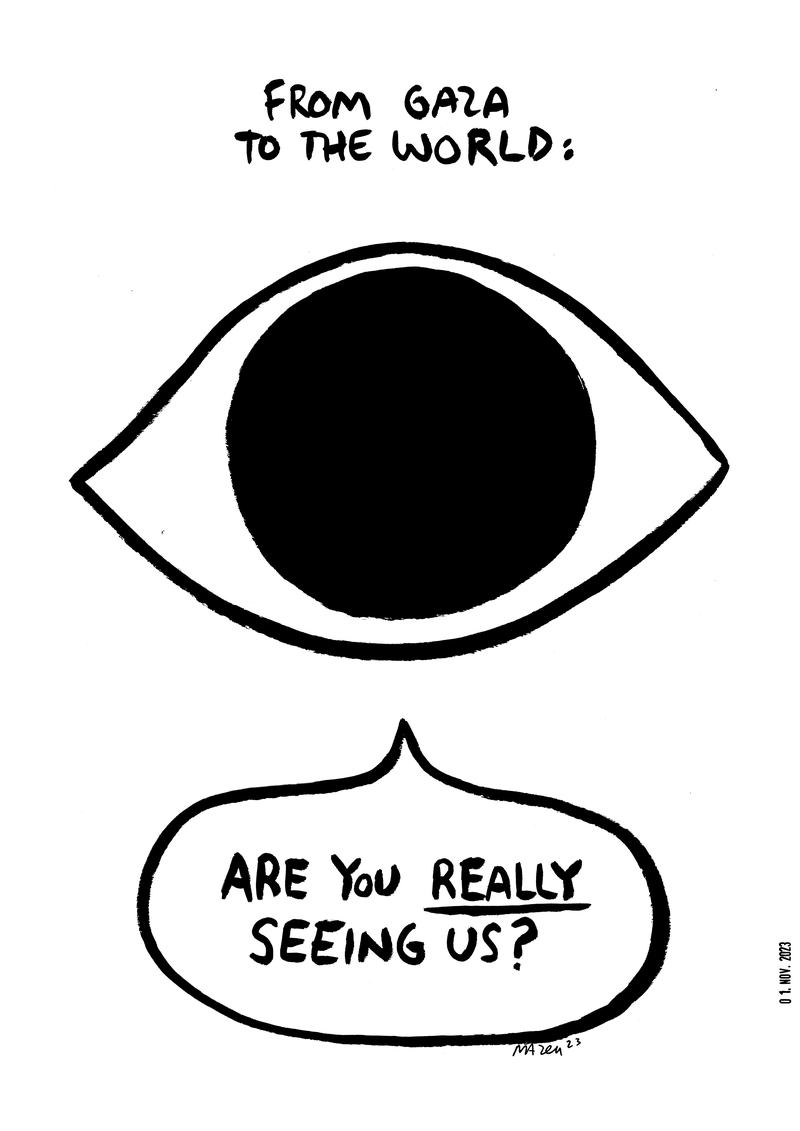
In Imagery: The Lens of Conflict, you propose a shift from an “aesthetics of shock” to an “aesthetics of attention.” What does this shift imply?
The aesthetics of shock plays a central role in the attention economy: it seeks to capture our attention immediately.
When I speak of an aesthetics of attention, I mean something different: paying attention, listening, caring. It is not about capturing others’ attention, but about entering a state of availability.
Here I am very interested in the work of Hartmut Rosa, who speaks about resonance: learning to resonate with situations, with other people, or with the environment. This resonance does not mean claiming that we fully understand another person’s situation, what empathy often means. Rather, it involves opening our senses and allowing ourselves to be affected by something without appropriating that experience.
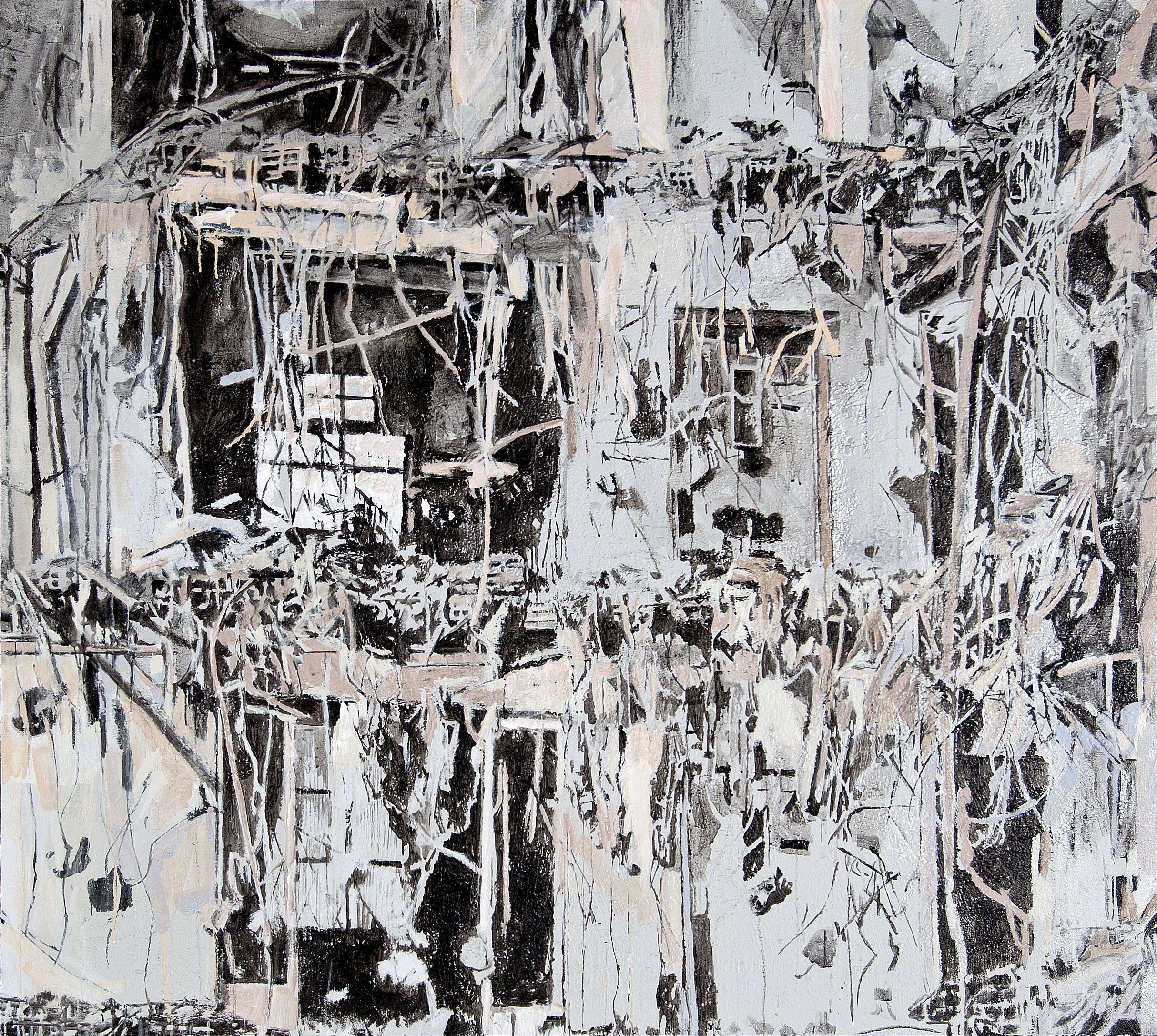
This connects with what Tammam Azzam says: when art starts functioning like a meme, it stops hurting. Azzam, who had to flee Syria during the war, paints scenes related to the conflict transformed through the materiality of paint. The paint drips, almost as if it were crying, and people never appear in his paintings. In this way, the viewer cannot identify with a specific individual; there’s no empathy involved, but rather the resonance with a collective atmosphere. It’s exactly the atmosphere I experienced in war torn Ukraine, but that I could not catch in words.
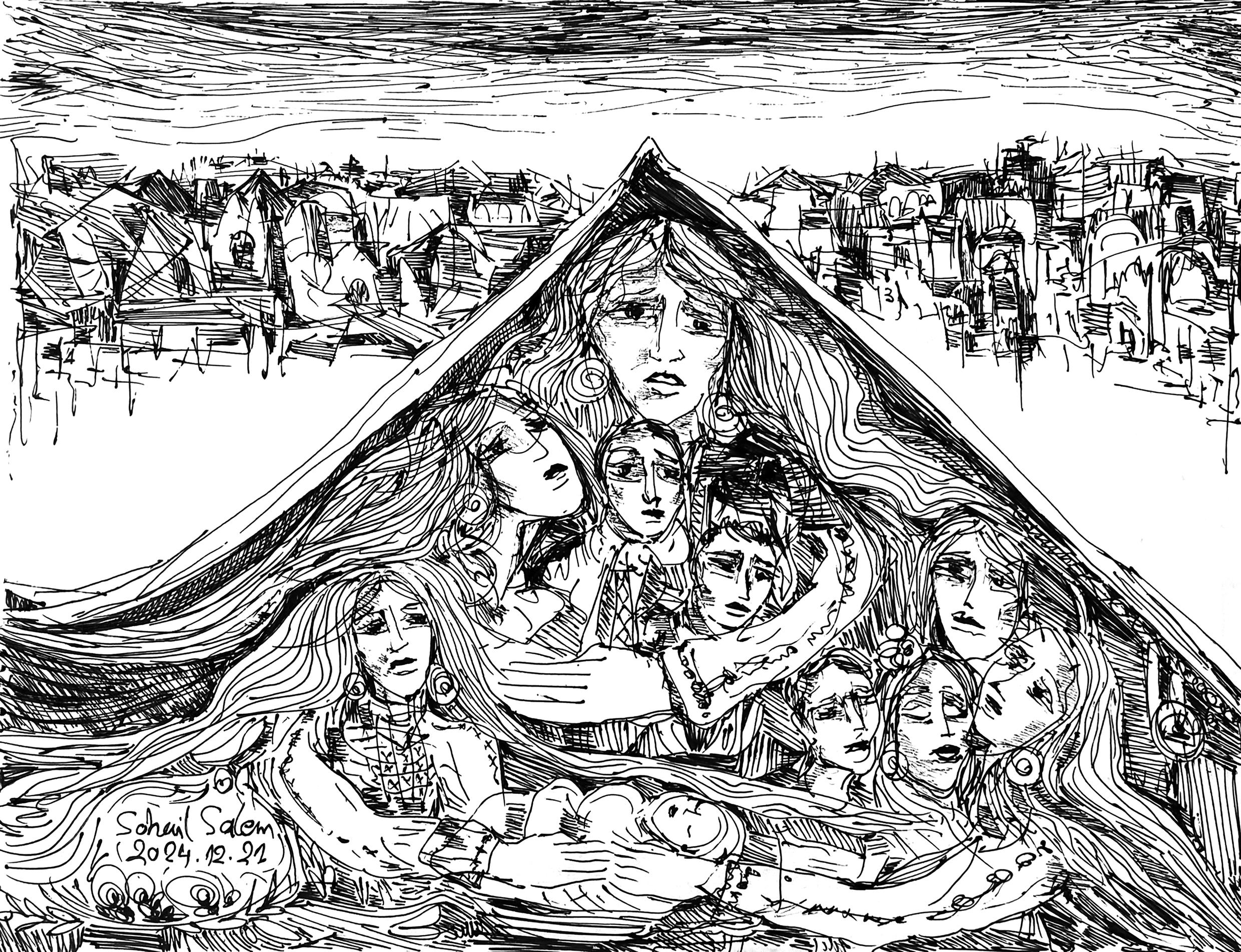
In Witnesses, the book reflects on the role of cultural institutions. What does it mean to imagine museums not as places of closure, but as spaces where the present remains open and contested?
An essential function of a museum could be to create an environment where people can come into contact with one another. Not based on closed identities, but from the awareness of sharing a common need.
An artwork can function as a mediator. It becomes a “common third” that allows a conversation to begin. From there exchange can emerge: someone says, “I feel that too,” or “I experienced something similar.”
It is also important to approach people directly affected by conflicts —refugees or communities in the diaspora— and to create spaces of encounter that welcome them, offering a room where they can meet, talk, and organize themselves. When this happens, a political dimension also emerges.
Lara Khalid refers to a reflection by Boris Groys according to which the Louvre “kills” the revolution by turning it into the past, by musealizing it and presenting it as something closed.
She also cites The Palestine Museum, where a simple sheet of paper is displayed that reads: Here should be the weapon of one of the Palestinian revolutionaries, but it was buried and never found again. That absence is more powerful than exhibiting the object itself.
The challenge for museums is to move from representation to activation: from narrating to performing, from showing to mobilizing. In that sense, the museum can once again become a civic space.
You also argue for reclaiming the commons in response to contemporary individualism.
In our educational systems and art schools, there is a strong emphasis on the idea that we must be unique, creative, and singular. It’s the cultivation of what we call ‘expressive individualism’.
But this vision has developed within a highly competitive environment that, in a certain way, represses and conceals our interdependence with others. We are deeply interdependent, yet we tend to mentally deny that connection because we are morally forced to be independent, to be autonomous. I believe that this repression of interdependence generates a form of collective trauma and, at the same time, helps explain many contemporary phenomena: burn-out, depression, fear of the masses, fear of societies and religions that still can celebrate this collective feeling, while ‘we’ here in the West are forced to suppress and neglect our common being.
Collective rituals can help us recover that bond. They create connections not only among the living but also with the dead. That is why the idea of the commons is fundamental for museums and cultural institutions: creating the conditions for us to share our vulnerabilities.
In the third section, Grief, it is suggested that “mourning becomes a method” and “loss a medium.” How does this idea translate into artistic processes?
The feeling of loss often appears as the effect of something that has happened. When I speak of “medium,” I mean the possibility of expressing that experience with words, for example, but we can also express it through a poem, a painting, or a specific artistic language.
At that moment, the medium becomes mediation: loss transforms into a collective medium that connects people and allows them to share an experience, and this implies moving from individual grief to collective mourning.
There are traditions —such as certain Greek rituals— in which women sing together when someone dies. These rituals transform an individual feeling into a shared experience, as happens with the Mothers of Plaza de Mayo in Argentina: mourning becomes a political force.
Art can contribute to this process, and museums can offer the infrastructure necessary for it to take place. In doing so, they move beyond simply representing the past and become more vital spaces capable of activating collective engagement with the outside world.