For the First Time, Modern Art Museums Will Meet in Africa
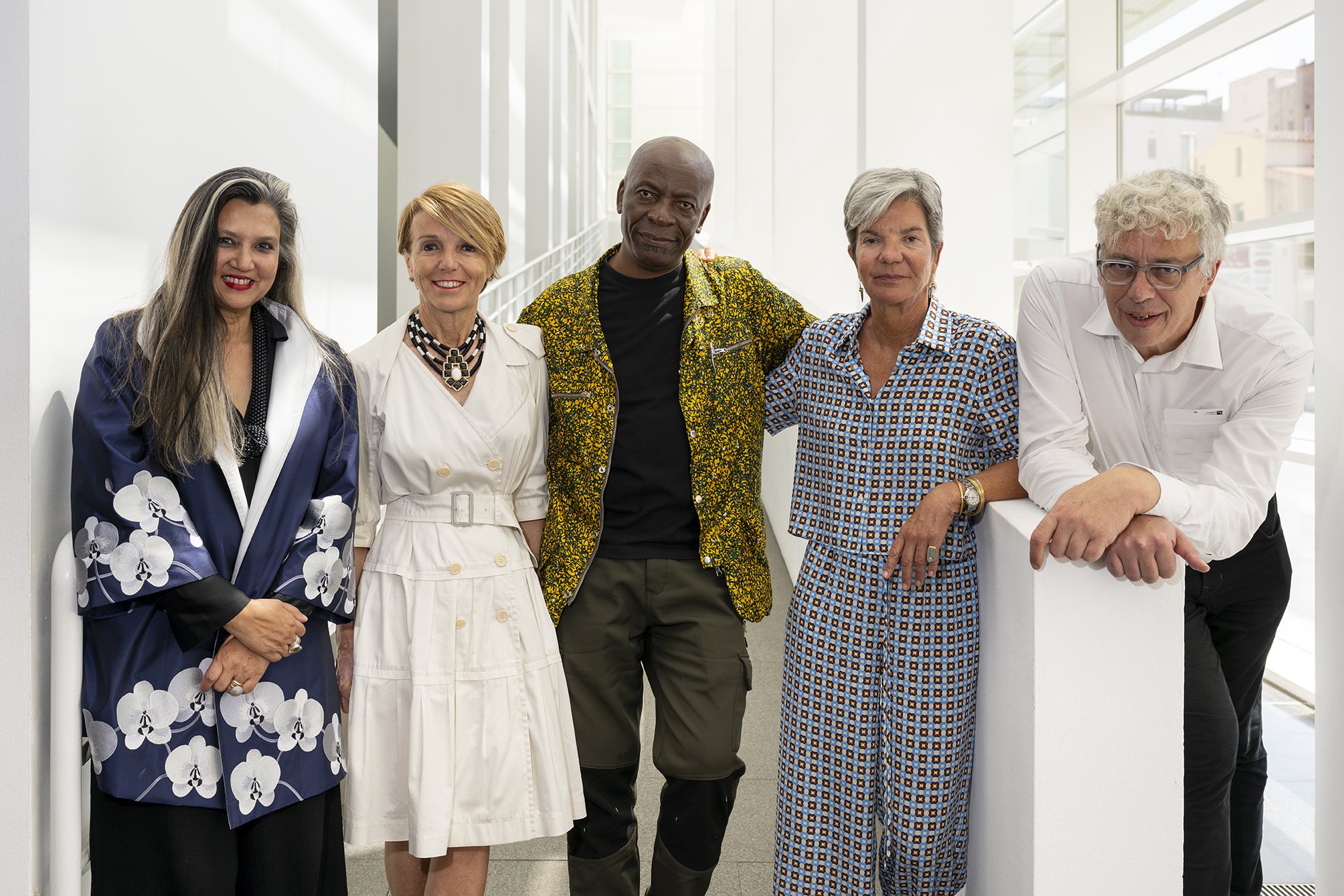
Written by Roberta Bosco and originally published in Italian for Il Giornale dell'Arte on July 7, 2025. Read the original version here.
Zimbabwe will host the CIMAM conference in 2026: “After colonizing, the West cannot also claim decolonization: Africa must decide how to do it, reflect on its past, and create new narratives,” explains Raphael Chikukwa, Director of the National Gallery of Zimbabwe in Harare.
CIMAM members, the International Committee for Museums and Collections of Modern Art, returned to Barcelona 20 years after establishing their first executive office in the Catalan capital. They did so to celebrate an activity that, over these two decades, has intensified and solidified, but above all, to make a historic announcement: in 2026, CIMAM will hold its annual conference in Africa for the first time in its 64-year history. The event will take place at the National Gallery of Zimbabwe in Harare, the country’s capital, which boasts a unique artistic and cultural vibrancy on the continent and a relatively stable and calm political and social situation, despite the difficult struggle for independence from the United Kingdom, which led to the birth of Zimbabwe in 1980 under the leadership of Robert Mugabe, deposed in a coup in 2017.
“A remarkable announcement required an equally remarkable occasion,” said Suhanya Raffel, Director of the M+ Museum in Hong Kong and President of CIMAM since 2023 until the end of 2025. She announced the location of CIMAM’s 58th conference on June 24 during a gathering at the home of collector and philanthropist Han Nefkens. Traditionally, the announcement would have been made at the end of the previous year’s conference, which will be held this coming November in Turin. “Last year we had already considered the possibility of holding our meeting in Africa, but we decided to wait until the time was right, and the choice then fell to Italy. Turin, where we’ll meet this coming autumn, is a city with a particularly dynamic and attractive modern and contemporary art scene, which engages in a rich and intense dialogue with its historical heritage,” Raffel noted, emphasizing that for the host city and country, the conference represents a unique opportunity to promote the local art scene, as well as to foster connections and collaborations among members of the most influential global contemporary art professional network.
“Welcoming CIMAM back to Italy after 49 years (Italy has hosted only one conference before — the 11th, held in Bologna and Prato in 1976, Ed.) is a great honor, and the title of the conference, ‘Enduring Game: Expanding New Models of Museum Making’, underlines the long-term commitment required for artistic projects and the need to critically address new artistic and museological practices in order to analyze the role of contemporary art institutions in an increasingly complex global context,” said Patrizia Sandretto Re Rebaudengo, President of the foundation that bears her name, which is organizing the event in Turin from November 28–30, along with the Fondazione Torino Musei and the Castello di Rivoli Museum of Contemporary Art. More than 300 participants are expected at the 57th CIMAM conference, which is supported by the Fondazione CRT. “Through its annual meetings held in different countries, CIMAM reaffirms the essential value of global dialogue and cultural exchange. It will also be an opportunity to share the rich cultural heritage of Turin and to reaffirm the importance of art and culture in building open, dynamic, and resilient communities,” Sandretto added.
The Voice of the African Continent
“Africa must tell its own story and be heard within its own context. For too long, our story has been told by others,” said Raphael Chikukwa, who arrived in Barcelona after a difficult journey due to the recent closure of North African airspace following Israeli bombings in Iran. “The National Gallery of Zimbabwe, which I have directed since 2020 and where I’ve worked since 2010, has long brought Zimbabwean art to the world. Now the time has come to welcome the world, so it can see and experience the African contemporary art scene up close, free from prejudice and from our own perspective.” Chikukwa, who since 2011 has ensured Zimbabwe’s consistent presence at the Venice Biennale, is a clear example of the benefits CIMAM initiatives offer, such as the Travel Grants Program, from which he was once a beneficiary.
“Holding the CIMAM annual conference at the National Gallery of Zimbabwe represents a recognition of the institution’s contribution to the history of modern and contemporary art. The event will have a significant economic impact on local communities, particularly in terms of cultural tourism, and it will provide local artists and galleries with the opportunity to showcase their work and exchange ideas and experiences with peers from other countries,” explained Chikukwa, noting that in 1962, at the same time as CIMAM, the International Congress of African Culture (ICAC) was founded, with the support of figures like Alfred Barr, the first director of MoMA, and Roland Penrose of London’s ICA, among others. “Africa must no longer be seen as the little sister of the global art scene. It’s time to engage in a critical dialogue about the future of African museums. The colonial model that shaped their founding is outdated. After colonizing, the West cannot also claim decolonization: Africa must decide how to do it, reflect on its past, revisit it, create new narratives, and establish new models, and in this evolution, art and education can play a fundamental role,” said the director of the National Gallery, inaugurated in 1957 and soon to be the main venue of the first African CIMAM conference.
CIMAM currently has around 1,000 members from 90 countries, including 24 from Africa and 8 from Zimbabwe. For Chikukwa, Africa’s artistic and cultural independence, one of the guiding principles of the liberation movements, is as important as its political and economic independence. That’s why he actively participates in negotiations for the return of artworks, archaeological artifacts, and archives looted during the colonial era, as well as human remains still kept in Western scientific museums. Their repatriation can help heal the wounds of colonialism and will be one of the key topics discussed at the CIMAM conference in Harare. “Restitutions are a key issue in the decolonization process. Many countries use absurd excuses to avoid returning the requested works. If we are labeled as primitive peoples, then why are they unwilling to return our objects? If our ancestors were capable of creating them, we are capable of preserving them,” he concluded.