CIMAM and Museums in Crisis: Is the Single Narrative Losing Strength?
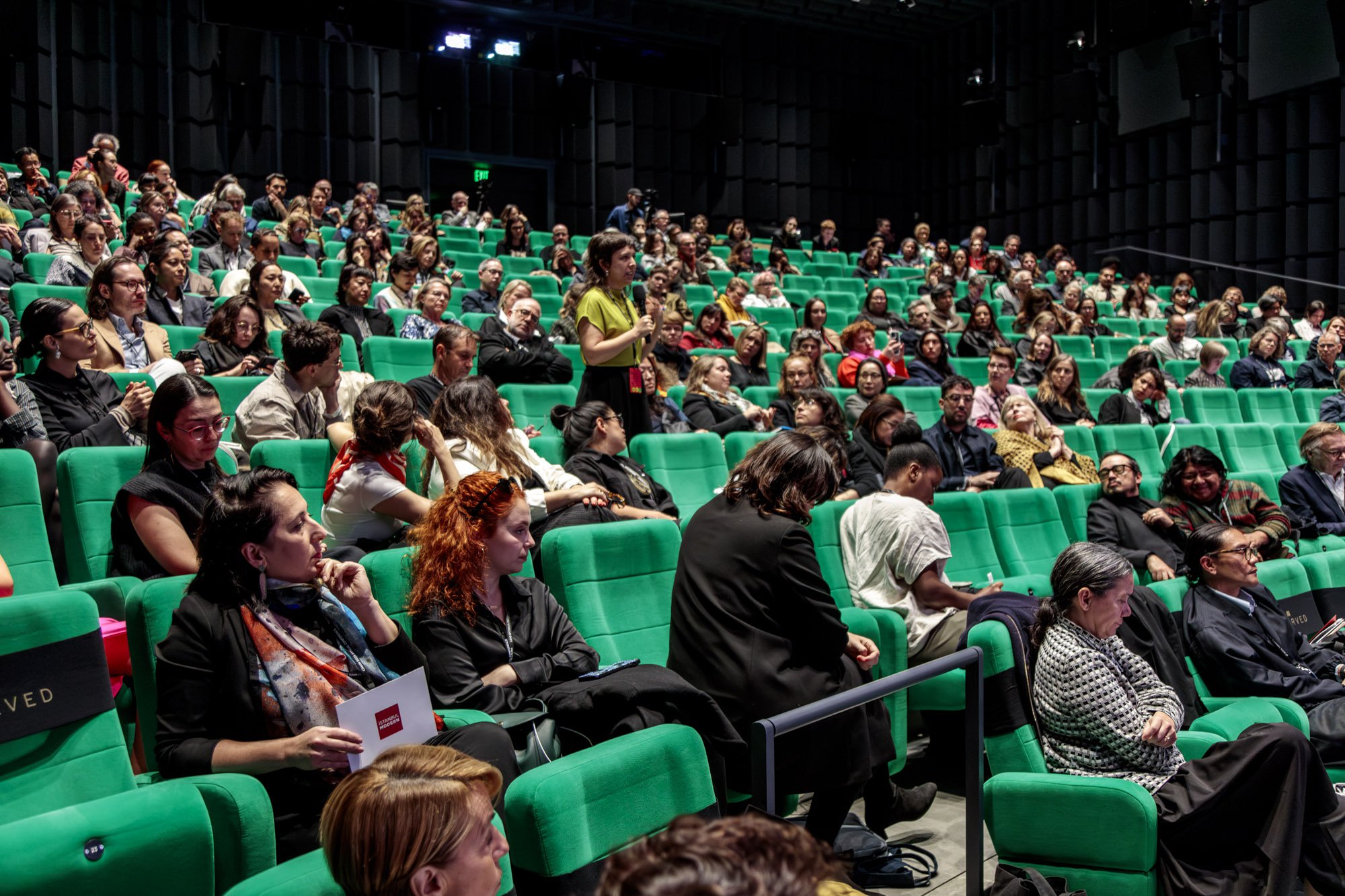
Op-ed by Marisol Salanova, originally published by ARTEINFORMADO, July 2, 2025.
Many museums around the world share similar discourse, aesthetics, and language. For Marisol Salanova, this is no coincidence, but part of a roadmap agreed upon by their leadership through CIMAM, the influential committee that currently shapes how cultural institutions should think—and speak.
It is becoming increasingly difficult to tell one museum from another. Their white walls, curator texts filled with standardized expressions, thematically aligned programs, even their ethical decisions and vocabularies: everything seems to follow the same pattern, a shared roadmap that, through repetition, begins to take on a normative tone. A closer look at how CIMAM members operate—the International Committee for Museums and Collections of Modern Art—reveals that this phenomenon is not random, far from it. It is the result of agreements, of collectively assumed resolutions, of an institutional construction exercise taking place in forums where it is decided—with more or less transparency—what a museum should be today.
And this roadmap is far from irrelevant. What happens in museums, or from museums, has an impact on society because these institutions are not just repositories of objects, but spaces for mediation, memory, symbolic production. For careful reflection and costly educational programs. But one must ask: do they embrace all forms of thought? Or are we witnessing a new orthodoxy, a new canon that excludes anything outside its discursive boundaries?
The concepts of plurality and diversity are essential to challenge dominant narratives and promote greater inclusion. However, at times these terms can be used superficially or even become a kind of "dominant narrative" themselves in certain circles, resulting in homogenization rather than true diversity. Sometimes this happens due to the urgency institutions feel to adapt to social and academic demands or to meet certain inclusion standards. Nevertheless, maintaining a critical stance is vital to avoid replacing one single narrative with another, and instead keeping the dialogue open about power structures and representation.
In cultural matters, over the past decade, we have shifted toward a global perspective in which even language has been reshaped. Verbs like "discover," once commonly used to refer to the identification of young talent, have been banned in many institutions due to their association with colonialism and the gesture we call the "discovery of America," now rightly redefined as a foundational massacre. The decolonial current has encouraged a rethinking of language, yes, but it has also generated an atmosphere of self-censorship that some experience in silence, fearful of making a mistake unknowingly. Museums have ceased to be temples of apparent neutrality and creative freedom—perhaps they never were—and have become moral arbiters of what can be said, shown, or debated. The paradox is clear: in the name of critical inclusion, the boundaries of the sayable are being redrawn.
For the first time since its founding in 1962, this international body will hold its main event on the African continent. And it bears repeating: sixty-three years in which Africa has been little more than an object of study, a symbolic reference, a topic in panels, but never inhabited from within.
In this context, CIMAM's announcement that its 2026 Annual Conference will take place in Harare, Zimbabwe, cannot be read as a mere logistical decision. Is it a rupture? Certainly, a turning point that questions where centers of contemporary art thought production are located. Now, for the first time since its founding, this organization will speak from Africa. Raphael Chikukwa, Director of the National Gallery of Zimbabwe, puts it without raising his voice: "For many years it has been said that the world needs to see African art. But this time, it is the world that needs to come to Africa." It seems a hopeful change is coming. Chikukwa has led his institution with few resources and admirable perseverance, turning necessity into creativity. Harare does not seek to imitate any model. What it demands is attention. Far from any trace of Western condescension, it requires listening.
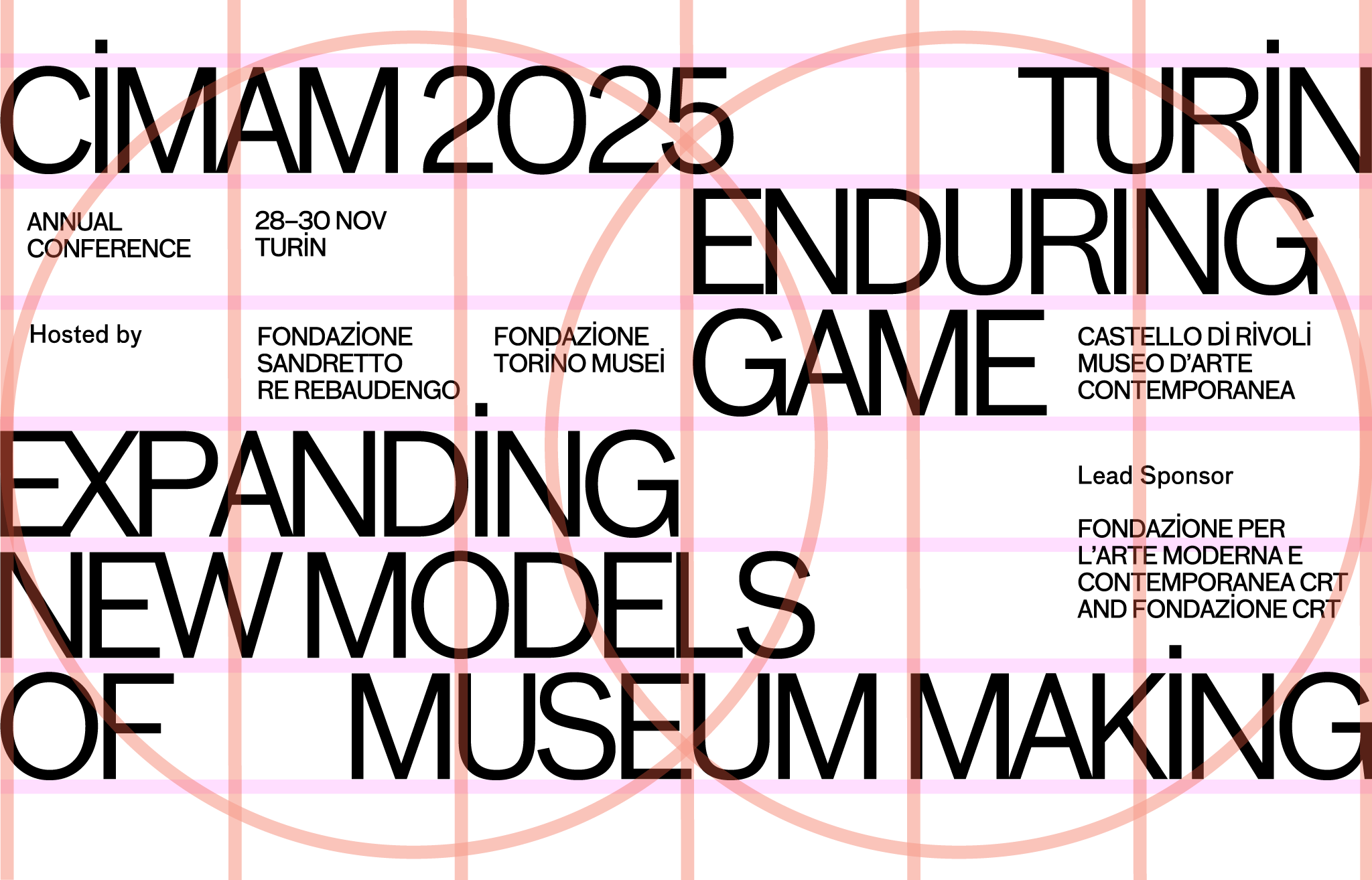
Image of the CIMAM 2025 Annual Conference to be held in Turin, Italy
When resources are minimal, discourse tends to shed its cynicism. What is at stake is not the museum's brand or the star curator's name. Nor whether the center will receive a "best practices" seal to gain approval. It is about the possibility of transforming, from context, a policy of global representation. Harare has the potential to shake our gaze—something indispensable in a field as stale as the art world. Before that, however, CIMAM will meet in Turin, this coming November. Italy is no ordinary country for the organization: its first meeting was held in Milan in 1962. Half a century later, Turin hosts the conference not with nostalgia, but as a way to make visible the transformation that seems underway. Patrizia Sandretto, the event's host, states it with a clarity that avoids solemnity: the museum is no longer a place to preserve certainties, but to cultivate questions. And urgent ones. Because neither the canon, nor the archive, nor even museum architecture can stand today without being rethought.
Sandretto does not speak from a defensive position. She speaks from responsibility and resilience. From the awareness that being part of the system does not mean keeping it intact or following feel-good trends but daring to reformulate it. In this sense, the Turin conference can be seen as a general rehearsal for what Harare promises. A new distribution of voices, a new way of inhabiting institutional frameworks through different rhythms, urgencies, and aesthetics.
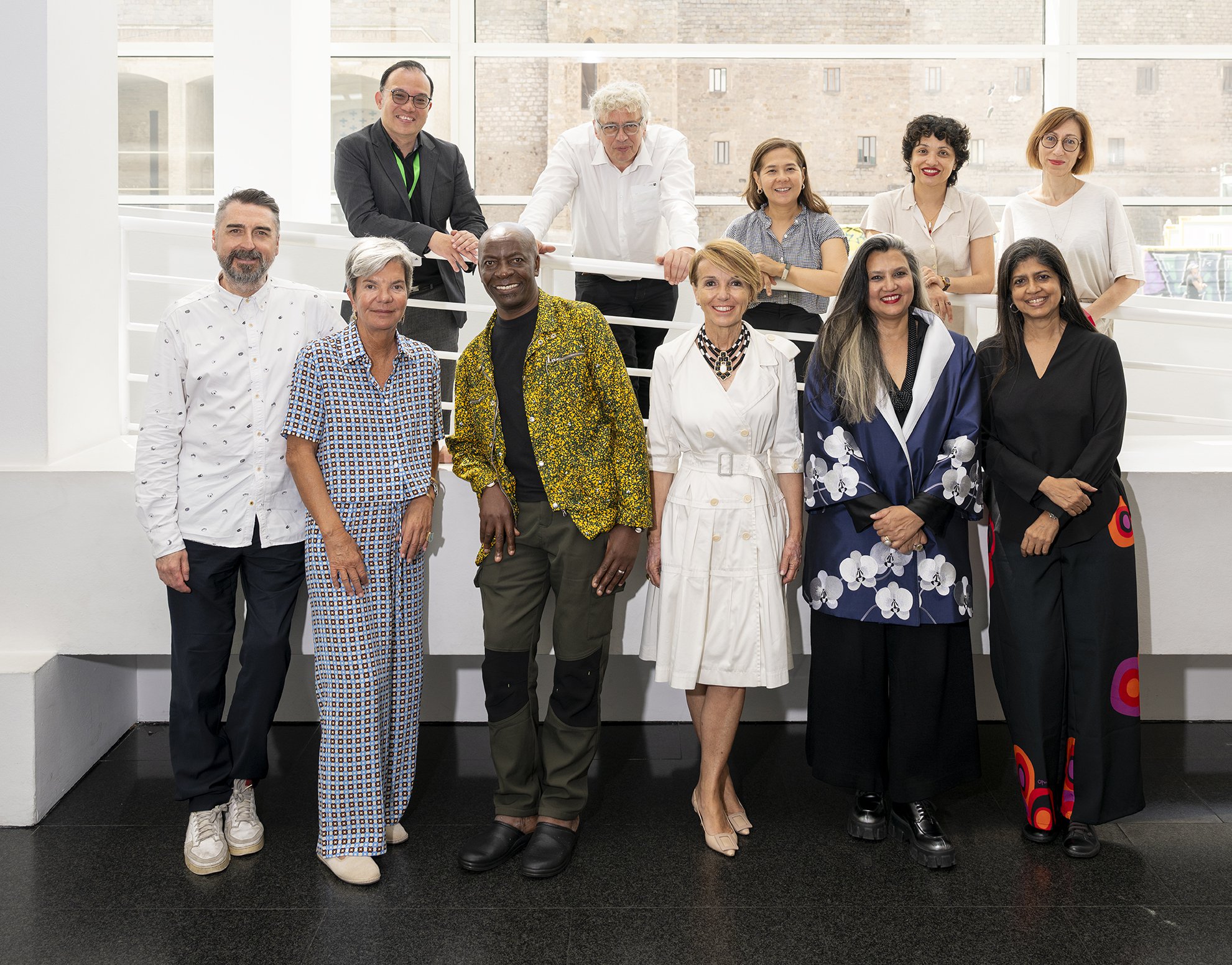
Barcelona, CIMAM's executive headquarters, was the stage where this dual vision was announced. A place where European museum tradition coexists with the tensions of a city that can no longer look inward. The message carried particular weight, especially because two art critics (Roberta Bosco and myself) were allowed to attend, interview committee members, and listen in on their deliberations. This is unusual: during annual conferences, press is typically not allowed, as museum directors and international curators claim to need a safe space to share all kinds of concerns that outsiders—critics or journalists—might misrepresent. As in many other forums, the press is not usually welcome.
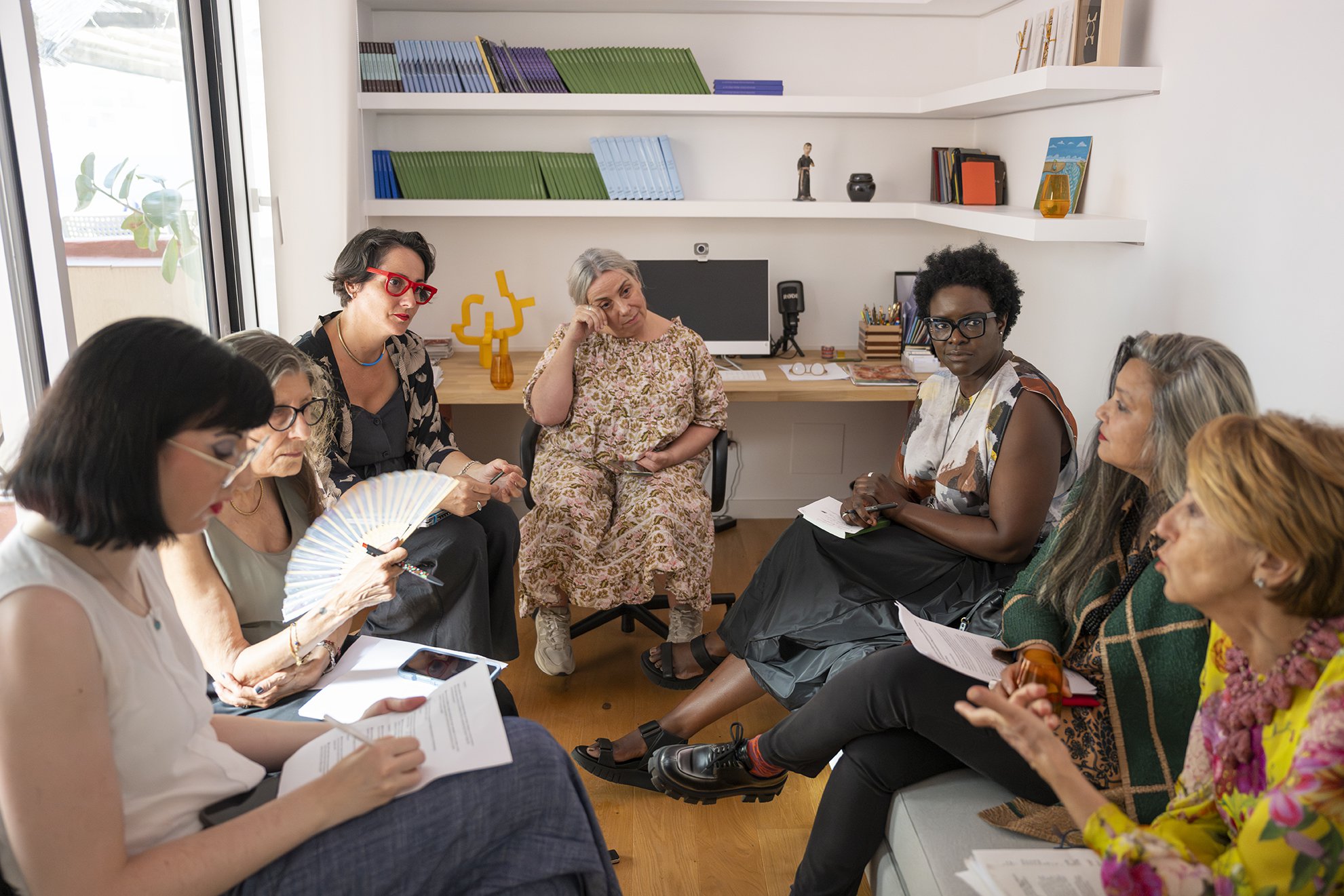
We are probably witnessing a series of changes preceding the imminent shift in leadership within the association. Suhanya Raffel, current president of the committee, was clear: "It is time to listen firsthand." And to listen, she said, one must know when to be silent. In this case, it means stopping the omniscient narrative many institutions have embraced. Elvira Dyangani Ose, another key figure in this southern shift, co-directs the Harare program with the critical intelligence that has always defined her. Her idea of the institution is not about power or prestige, but care. That active listening which becomes programming, living architecture, real mediation. The participation of figures like her suggests that what will happen in Harare will not be merely symbolic, but foundational.
Are museums ready to stop narrating from above? Can they deconstruct the authority with which they decide what politically incorrect works can be exhibited and what cannot?
CIMAM is not a neutral organization. Since its beginnings, it has sought to professionalize and regulate the modern and contemporary art museum field. But in recent decades, it has shifted toward a more complex role, more involved in generating and replicating structures. On the other hand, it has developed initiatives such as Museum Watch, which denounces attacks on curatorial or artistic freedom, and has promoted grants for professionals working in contexts of vulnerability or conflict.
Ultimately, the upcoming Harare conference brings hope and the expectation of a milestone. Not because of the exoticism—another forbidden word—of the location, but for what it could mean epistemologically, politically, and discursively. It is not only about changing where we speak from, but also how and with whom. Are museums ready to stop narrating from above? Can they deconstruct the authority with which they decide what is politically incorrect that can be exhibited and what is not?
I want to believe they can. That when CIMAM sits in Harare, even if only for a few days, something will shift in its structure. That this meeting will not be an exception, but the beginning of a different kind of institutionalism: more porous, more collective, more courageous. And that there will be no need to avoid words like "discover," not because they serve as excuses, but because they become a humble gesture toward the unknown. That language, too, will be transformed from there, as institutions finally decide to look from another center.