Africa Takes the Stage: Zimbabwe’s Moment as Host of the CIMAM Annual Conference
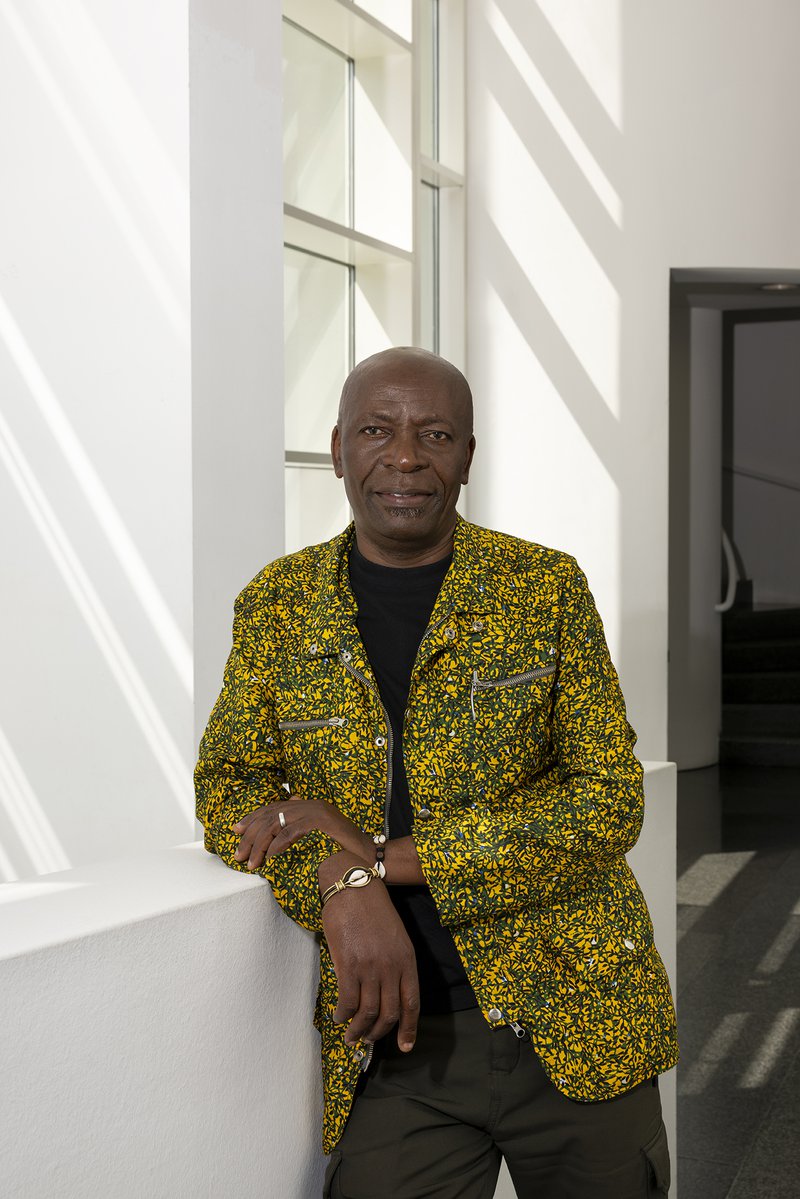
Interview by Stephan Rheeder, originally published in Art Africa magazine on 18 September.
For the first time in its 64-year history, CIMAM (International Committee for Museums and Collections of Modern Art) is bringing its Annual Conference to Africa. Zimbabwe will host the 2026 gathering at the National Gallery of Zimbabwe, marking a watershed moment for museum professionals across the continent. This is not merely a change of venue; it signals a power shift, a chance for African institutions to move from periphery to fulcrum in global museum discourse. Executive Director Raphael Chikukwa insists that this milestone offers more than rhetoric. It is an opportunity to cut the umbilical cord with Western models of museum governance and curatorship, and to tell Africa’s stories in Africa’s voice. With limited budgets but expansive cultural imagination, African museums are already defining new leadership practices rooted in resilience, community and context. In this conversation, Chikukwa reflects on what hosting CIMAM in Zimbabwe will mean, not just for visibility, but for solidarity, voice and structural change in the international museum ecosystem.
ART AFRICA: Congratulations on bringing the CIMAM Annual Conference to Zimbabwe—the first time it will be held on the African continent. What does this milestone represent for you and the broader African museum community?
Raphael Chikukwa: Thank you for this interview and for the congratulatory message for Zimbabwe hosting the 2026 CIMAM Annual Conference. For years, events like the CIMAM Annual Conference have primarily taken place in Europe and America. This milestone marks a significant opportunity for African Museum professionals to come together and stand counted among the global museum ecosystem. Most importantly, artists will have a chance to be seen in Africa.
You’ve spoken about the importance of “cutting the umbilical cord with the Western model.” How does this idea shape your thinking around curatorial practice, institutional governance, and models of leadership within African museums?
Over the years, we have been passengers in our own ship and cutting the umbilical cord on western models allows us to tell our story during the CIMAM Annual Conference 2026. The context in which African Museums are working needs to be understood, for if we want to continue mimicking the West, it will not allow us to be ourselves. The arrival of COVID-19 has shown the resilience of Museums in Africa, and the CIMAM Annual Conference in Zimbabwe will provide an opportunity to share this with an international audience. Operating from very low budgets, I believe our Museums in Africa are unique, and it is this story that we would like to share with our counterparts who today discuss budget cuts in Museums across Europe and America.
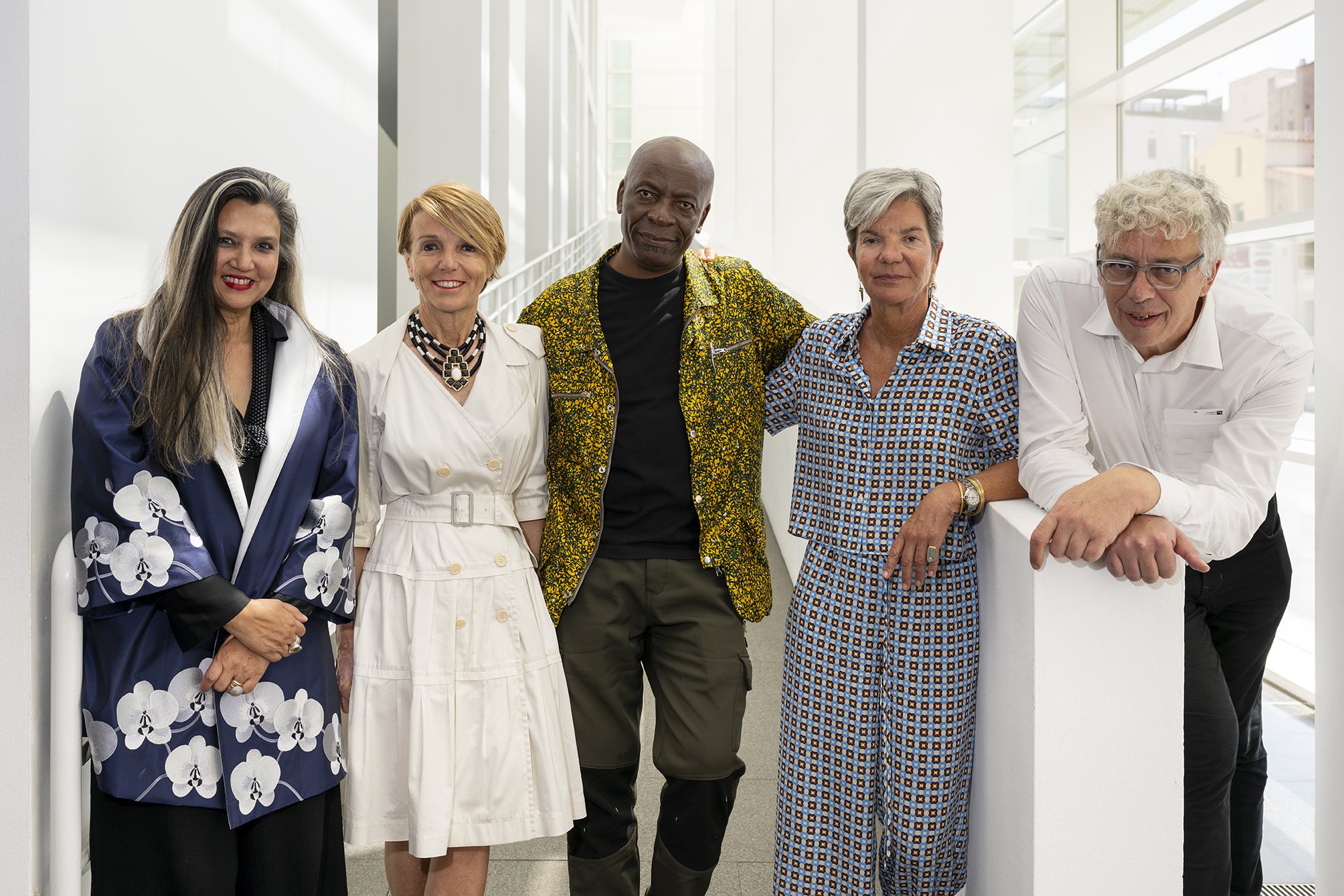
Suhanya Raffel, President of CIMAM and Museum Director M+ Hong Kong; Patrizia Sandretto Re Rebaudengo, President Fondazione Sandretto Re Rebaudengo, Turin, Italy; Raphael Chikukwa, Director, National Gallery of Zimbabwe, Harare, Zimbabwe; Mercedes Vilardell, Chair of Tate’s African Acquisitions Committee, Spain; and Bart de Baere, Secretary General of CIMAM and Director, M HKA, Antwerp, Belgium. Photo by Roberto Ruiz.
Why is it crucial for the international museum community to begin speaking about Africa—and its art institutions—from within the continent itself?
We cannot avoid speaking to each other, and the CIMAM Annual Conference 2026 in Zimbabwe is an excellent opportunity to connect and find each other. Over the years, we have been invited, and we now understand their context; it’s equally essential for the international museum community to understand our context. Furthermore, the international Museum community cannot fully grasp our context through media alone; this is where the CIMAM Annual Conference 2026 in Zimbabwe presents a valuable opportunity. Hosting the CIMAM Annual Conference on the African soil comes at the right time, as many African artists showcasing on international platforms, along with a small but significant portion of the global museum community, will have the opportunity to see African artists and museum professionals in their context.
Zimbabwe’s art scene is still underrepresented globally. What do you think the CIMAM community will discover when they engage with the country’s local artistic and cultural ecosystem?
This is an opportunity to understand the Zimbabwean art scene in its context, and this includes its museum professionals, too. Zimbabwe has made immense contributions to the global art ecosystem, but it has not been able to leverage its impact fully. The CIMAM Annual Conference offers Zimbabwe a platform to re-establish its presence in the global art ecosystem. Over the years, we have been taking Zimbabwean art to the world, and the CIMAM Annual Conference allows us to bring the world to Zimbabwe.
How has the National Gallery of Zimbabwe positioned itself as both a local anchor and an international player in shaping contemporary art discourse?
The National Gallery of Zimbabwe’s history is key, and the continued presence of the Zimbabwe Pavilion at the Venice Biennale has arguably positioned the National Gallery of Zimbabwe. Furthermore, the continued lobbying of Zimbabwe to host the CIMAM Annual Conference 2026 can not be ignored.
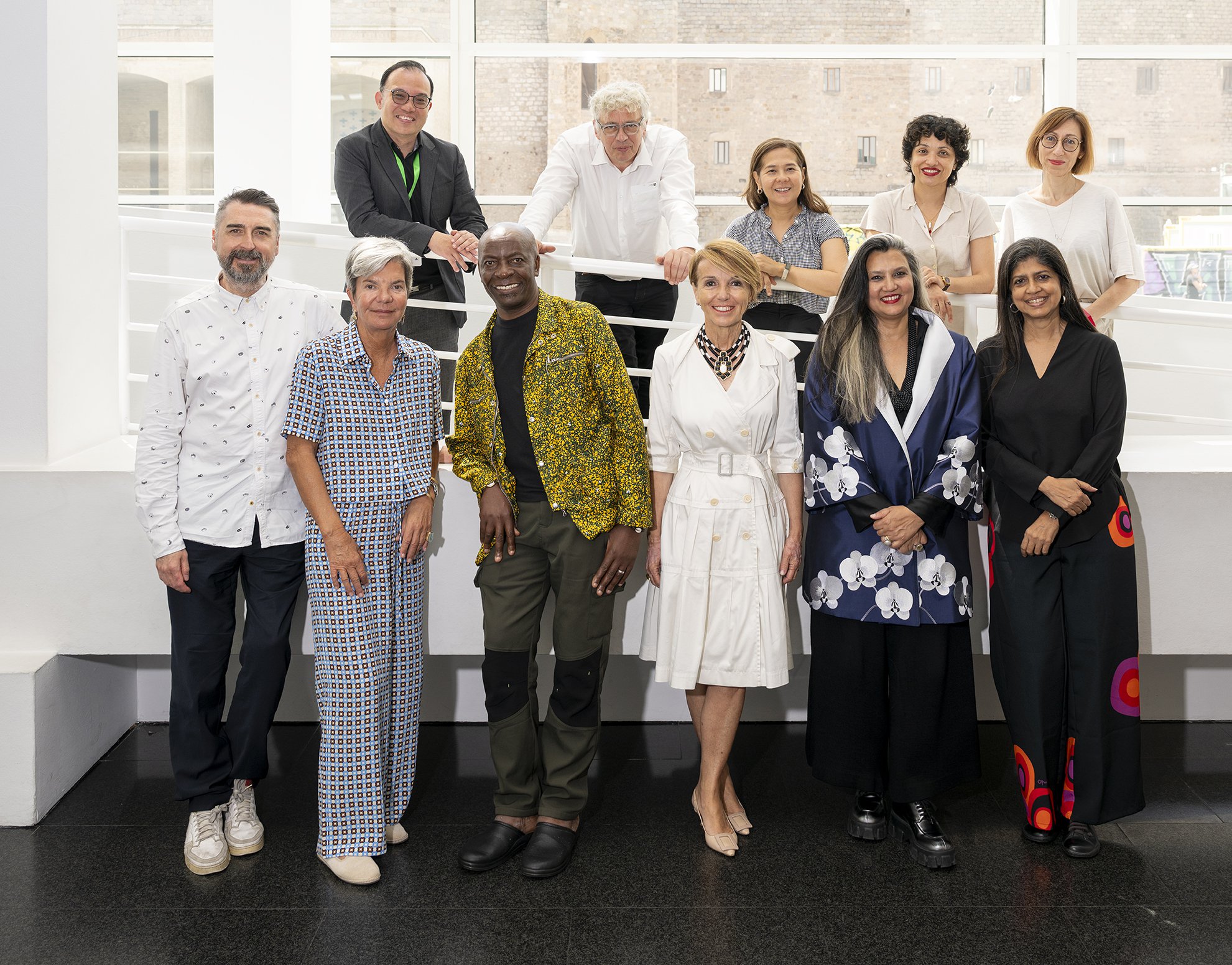
Down line, from left to right: Agustín Pérez Rubio, CIMAM Board and Independent Curator, Madrid, Spain; Mercedes Vilardell, Chair of Tate’s African Acquisitions Committee, Spain; Raphael Chikukwa, Director, National Gallery of Zimbabwe, Harare, Zimbabwe; Patrizia Sandretto Re Rebaudengo, President of the Fondazione Sandretto Re Rebaudengo, Turin, Italy; Suhanya Raffel, President of CIMAM and Museum Director, M+, Hong Kong, Hong Kong; Kamini Sawhney, CIMAM Board and Head, Public Arts Projects, BlrHubba, Museum Management Expert, Independent Curator, Bangalore, India. Upline, from left to right: Yu Jin Seng, CIMAM Board and Director (Curatorial, Research & Exhibitions), National Gallery Singapore, Singapore; Bart De Baere, Secretary General of CIMAM and Director, M HKA, Antwerp, Belgium; Joselina Cruz, CIMAM Board and Director/Curator, Museum of Contemporary Art and Design (MCAD) Manila, Philippines; Amanda de la Garza, CIMAM Board and Artistic Deputy Director, Museo Nacional Centro de Arte Reina Sofía (MNCARS), Madrid, Spain; Malgorzata Ludwisiak, CIMAM Board and Ph.D., Museum Management Expert / Freelance Curator / Academic Teacher, Warsaw, Poland. Photo by Roberto Ruiz.
One of CIMAM’s goals is to foster long-term collaboration between institutions. What kinds of partnerships or exchanges would you like to see emerge from the 2026 conference?
We hope that the CIMAM Annual Conference 2026’s long-term partnership can be organic. We have been meeting more in the West than on the African soil, and I hope this is an opportunity for us to get to know each other and learn about our own contexts.
Looking ahead to 2026, what kind of conversations do you hope will take centre stage in Zimbabwe—and how might they shift the global museum landscape?
This is an opportunity to rethink the state of museum practice in these difficult times, repositioning the narratives in Museum practice and decolonising museum practice. The global museum landscape can only change when it examines its own practices without being allergic to both its long and toxic past, as we look into the future.
The CIMAM Annual Conference will take place in Harare, Zimbabwe, in November 2026 at the National Gallery of Zimbabwe.