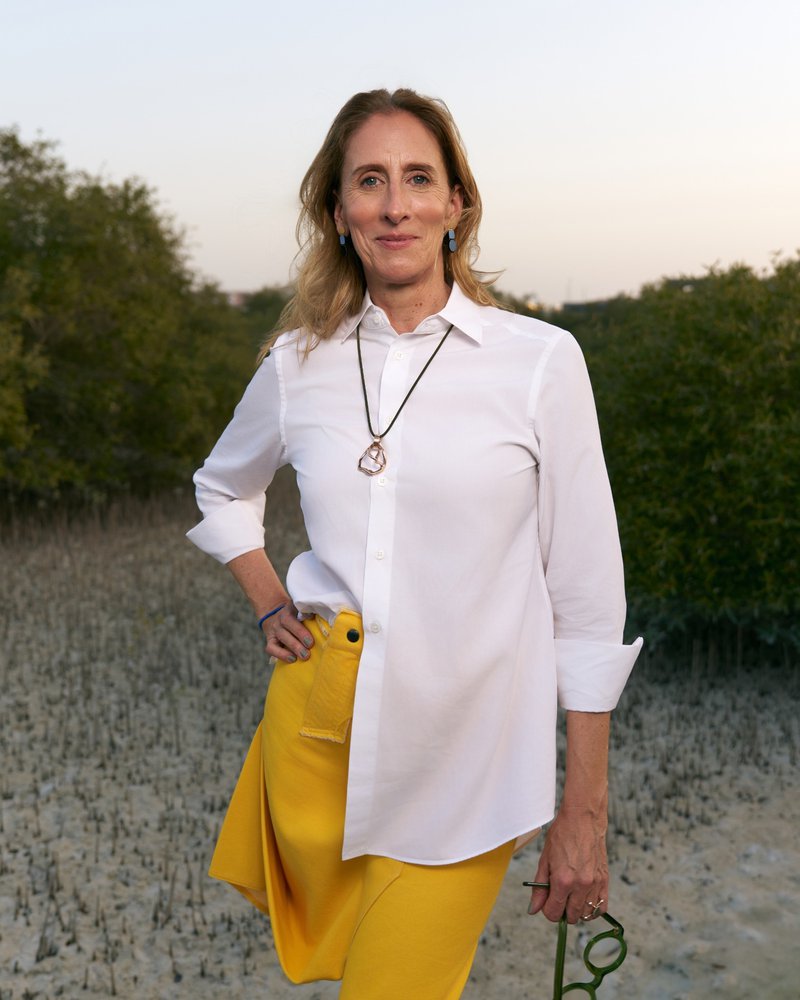
Stephanie Rosenthal
Academic and Professional Background
I bring over two decades of leadership shaping visitor-oriented exhibitions across Europe, Asia, Latin America, the US, and Australia. My PhD on American painting of the 1950s–60s provided rigorous training in research and curatorial methodology.
My practice has since expanded to transcultural approaches, performance, dance, and participatory formats which now define my exhibition-making. I believe every visitor journey should be a carefully choreographed, multisensory experience connecting artistic content with the wider institution.
Encounters with First Nations people have profoundly shaped by curatorial perspectives. While I do not represent these voices, I am committed to create platforms for multiple perspectives within institutions.
I also explore how digital tools and AI can support participatory practices while addressing their ethical and cultural challenges.
From 2018–2022, I was Director of the Gropius Bau, Berlin, repositioning it as a site of dialogue, experimentation, and care-centered curating. From 2007–2017, I served as Chief Curator at the Hayward Gallery, London, foregrounding performance, dance, and global art histories. In 2016, I was Artistic Director of the Biennale of Sydney, shaped by migration, translation, resistance, and dialogue with First Nations practices.
I have served on advisory boards such as ifa (Institute for Foreign Cultural Relation), gaining experience in consensus-building across diverse institutional contexts.
Currently, I am Director of the Guggenheim Abu Dhabi Project, overseeing its artistic vision and positioning it as a global platform rooted in the region.
With this cross-regional perspective, I aim to strengthen CIMAM’s global connections, particularly with West Asia and the Gulf.
Motivation statement explaining what encourages you to join the Board of CIMAM
Museums are living ecosystems of ideas, encounters, and mutual learning. I am drawn to the CIMAM Board by the conviction that museums can shape conversations that transcend borders. Having worked across continents and contexts, I bring a cross-regional perspective that amplifies underrepresented voices and strengthens CIMAM’s global reach.
My expertise lies in creating visitor-centered institutions and exhibitions shaped by participatory practices, performance, and dance, enriched by learning from First Nations knowledge systems. These encounters have reinforced my belief that museums must provide platforms where diverse knowledge systems and institutional scales connect. At the Gropius Bau, I initiated Ámà: 4 Days on Caring, Repairing and Healing, uniting grassroots initiatives with major institutions, followed by the exhibition YOYI! CARE REPAIR HEAL—a collaborative model I believe CIMAM could expand globally.
Within CIMAM, I would like to advance dialogue on:
Building structures of exchange between smaller and larger institutions, recognizing smaller museums as vital contributors to global discourse.
Integrating performance into museums—not only in programming but also in acquisitions, collection care, and institutional strategy.
Harnessing digital tools, particularly AI, to support research and archival practices while addressing ethical and cultural implications.
Exploring how museums can contribute to health, well-being, and social care through art and communal space.
At this point in my career, I am ready to contribute strategically to CIMAM’s vision. My strength lies in creating platforms for dialogue that allow institutions of different scales to learn from one another while ensuring experimental, performative, and community-based practices remain central to our shared future.
Explain how you see the role of CIMAM in advancing contemporary art museums globally
I see CIMAM as both convener and conscience of international museum communities. With my background in visitor-oriented exhibitions, participatory practices, performance, and institutional strategy, I would contribute to strengthening platforms for peer-to-peer exchange and advancing ethical frameworks for both curatorial practice and governance.
In a moment marked by geopolitical tension, climate urgency, and shifting cultural paradigms, CIMAM’s role in building resilient, transnational networks of solidarity is essential. Museums must remain rooted in local contexts while engaging rigorously with global discourses. For me, this means valuing the practices of smaller institutions alongside larger ones and learning from diverse knowledge systems.
This also means confronting how digital technologies and AI are reshaping our field. CIMAM can play a crucial role in helping the sector critically integrate AI—leveraging its potential for access, preservation, and exchange, while addressing ethical risks such as bias and cultural sovereignty. CIMAM can ensure that institutions engage with and embrace technological advancements, recognizing that failing to do so risks their relevance and long-term sustainability.
As museums worldwide confront challenges around decolonization, governance, and public trust, CIMAM can lead by fostering exchange across scales and practices. I am committed to advancing this work from within, supporting museums not only adapt but thrive through shared learning and collaboration. I belief that museums are key public spaces for human and non-human encounter and cultural discourse, particularly in a world where opinion-making is increasingly shifting to the private sphere.
How would you help CIMAM advocate for museums in areas such as funding, membership engagement, and strategic initiatives to achieve its mission?
My advocacy is grounded in building trust, transparency, and shared values. I would help CIMAM strengthen its global relevance through three priorities:
1.Funding & Partnerships: Drawing on my networks across governments, cultural councils, and philanthropic foundations in Europe, the US, and West Asia, I would support CIMAM in diversifying funding streams and ensuring long-term resilience.
2.Membership Engagement: I would propose region-specific working groups and thematic assemblies that foster exchange between members, with attention to smaller institutions that are often overlooked. I would also champion mentorship programs linking experienced professionals with emerging voices, particularly from underrepresented societal groups and regions.
3.Strategic Initiatives: I would advocate for embedding performance practices into CIMAM’s agenda—not only as programming but also in acquisition and collection care. I would also commit to supporting CIMAM’s work on digital literacy and AI, helping museums engage critically and ethically with tools that are already shaping contemporary practice.
These commitments reflect my broader belief that museums learn best from each other—across geographies, scales, and through a diverse range of practices including performance and participatory methodologies.
If elected as a Board Member, what would be your main objectives or areas of action for the next three years for CIMAM to contribute to the sustainable development of the modern and contemporary art museum sector?
If elected, I would focus on 5 priorities as I believe to make a distinctive contribution:
1.Regional Representation and Knowledge Sharing: Strengthen CIMAM’s presence in underrepresented regions, particularly West Asia and the Gulf, bringing my network of artists, thinkers, collectors, and philanthropists into dialogue with CIMAM’s global community.
2.Global Equity & Capacity Building through Exchange Between Smaller and Larger Institutions: Develop platforms that allow smaller museums to share their innovative practices with larger institutions, and vice versa centering Research & Knowledge Production allowing experimentation, and interdisciplinary collaboration.
3.Experimentation in Audience Engagement with AI and Digital Futures: Support museums in engaging with the opportunities and challenges of digital tools and AI, which must now be seen as a given. I would help CIMAM foster critical discussions on how digital tools can support performance preservation, enable cross-regional exchange, and expand accessibility, while also addressing ethical risks.
4.Museums as Centers of Research: Supporting museums as center of research, experimentation and collaboration by thinking through different approaches to collection care and radical accessibility of collections (open storage as places for new ways of engagement)
5.Performance Practices: Advance the integration of performance into museums not only as programming but also as acquisition, collection care, and conservation practice. Performance challenges conventional models of ownership and preservation, and I commit myself to foregrounding this discussion within CIMAM.
Together, these objectives would help position CIMAM as a forum where experimental practices, marginalized perspectives, and a variety of institutional models actively contribute to shaping the future of our field.