Amanda de la Garza Mata
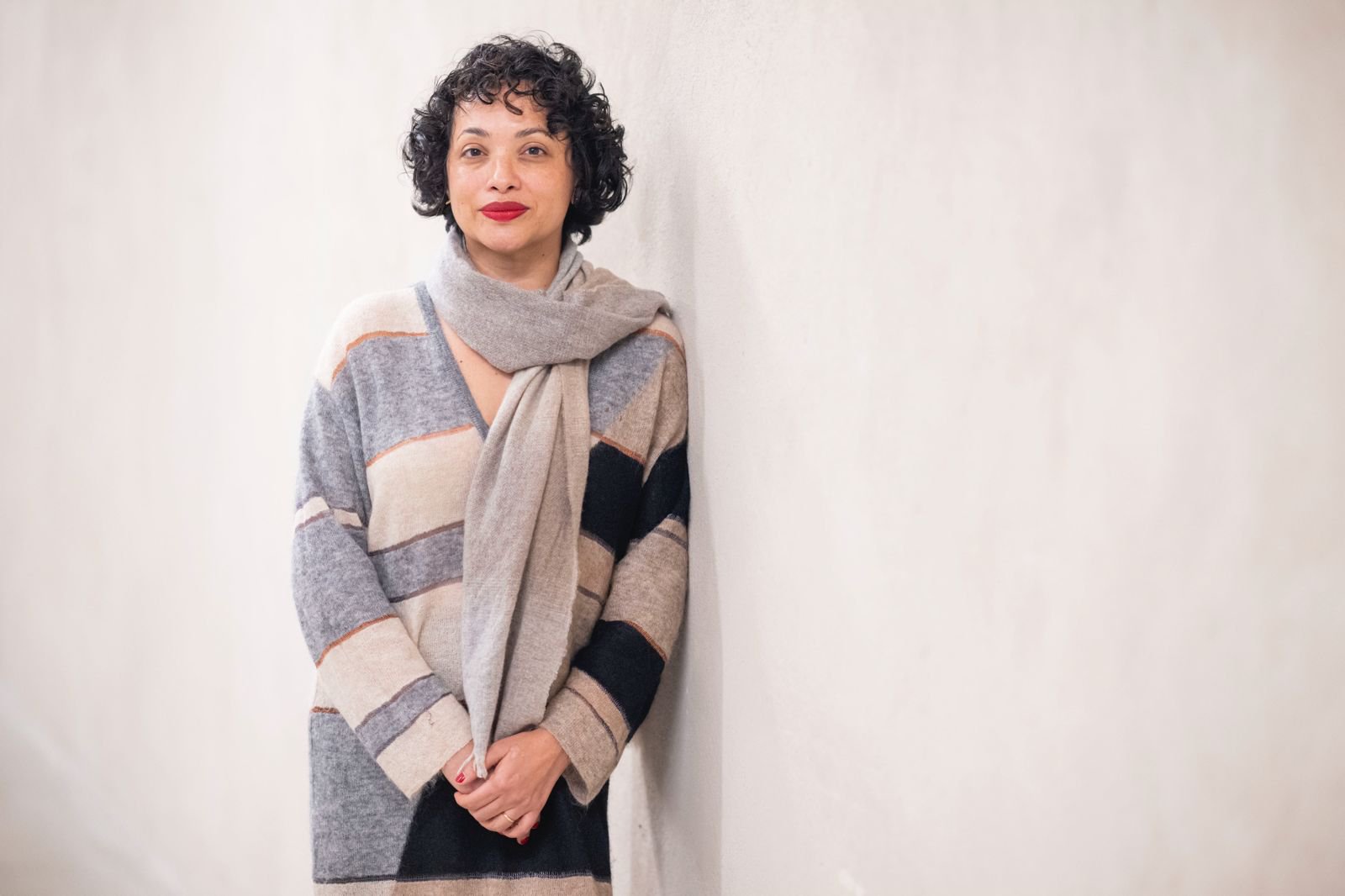
Academic and Professional Background
She is currently the Deputy Artistic Director at Museo Reina Sofía in Madrid. From 2020 to 2024, she served as the General Director of Visual Arts and the University Museum of Contemporary Art (MUAC) at UNAM, one of the most prominent art museums in Latin America. Trained in Curatorial Studies, Art History, Anthropology, and Sociology, between 2012 and 2019, she worked as an associate curator at the MUAC. She has curated and coordinated over 30 exhibitions of modern and contemporary art, as well as archival exhibitions and solo shows of renowned artists, for museums in Latin America, Europe, and the USA. She has published essays, interviews, and reviews in catalogues, books, and specialized magazines. I was a member of AAMD (Association of Art Museum Directors). I served on the Board of ICOM Mexico from 2021 to 2024.
I am part of the Board of CIMAM for my first term. At CIMAM, I have been part of the Contents Committee for the Annual Conference in 2023, in Buenos Aires, and 2024, in Los Angeles. I participated in the Travel Grants Committee, securing funding for Mexican and Latin-American participants. I have coordinated panel discussions for the Rapid Response Webinars and actively participate in the Museum Watch Committee. This first term has made me aware of the relevance of collective thinking and work, and how this is the driving force behind posing new questions for the museum field, to stay relevant and have a say in how the cultural ecosystem is being reshaped.
Motivation statement explaining what encourages you to join the Board of CIMAM
I have been a member of CIMAM since 2015, when I was awarded a travel grant for the CIMAM Conference in Tokyo. It was a significant opportunity, as I discovered a space for museum professionals to discuss relevant topics. At the same time, it gave me the chance to meet colleagues from diverse contexts around the world who shared common interests, despite differences in backgrounds and locations. Back then, the topic of the Conference was “How Global Can Museums Be?” This question lingered with me for a few years, as it made me reflect on the disparities between institutions and how museum work and cultural ecosystems respond to both global and geopolitical specificity. Once I became the director at MUAC and joined CIMAM’s Board, it was clear to me that building an organization that reflected current conversations and was more diverse was crucial.
I want to serve a second term as a Board member, since I believe I can make a valuable contribution to the organization through my experience, commitment, and active critical thinking in the field. At the same time, as a professional from the Global South, I bring a perspective that seeks to foster diversity and critical thinking in the work that museums do. These perspectives are fundamental to the organization and to the cultural world, as we face difficult struggles and challenges that are and will redefine the work we are doing.
Explain how you see the role of CIMAM in advancing contemporary art museums globally
CIMAM is an organization dedicated to fostering a community and an active, engaged network of professionals. The organization has evolved over time, alongside the commitment of its members. Therefore, CIMAM is a key organization where it is possible to have a space to reflect on the role of museums in society, the challenges we face as institutions, and within our own ecosystem. It is a place to meet and build collective thinking through different approaches, including discursive programs, the development of specific tools such as best practice documents, active research in the field, and the recognition of the work done by museum professionals. Representing modern and contemporary art museums is one of its main roles in the field; at the same time, it aims to advance the conversation about the active, relevant, and complex work being done in museums. More than ever, in these challenging times, when the cultural field is rapidly changing and being reshaped, and at the same time, when the values museums represent are being directly attacked by authoritarian ideologies, it is essential to have an organization where professionals can reflect and encounter their peers. In such a worrying scenario, it is more important than ever to have a strong organization that represents museums and keeps enhancing the core values of museums and the importance of their role in the public sphere, as well as shaping new ideas on the museum to be.
How would you help CIMAM advocate for museums in areas such as funding, membership engagement, and strategic initiatives to achieve its mission?
After serving three years as a member of the Board and actively participating in various working groups, I have gained valuable experience in the organization's structure and operations. Additionally, I’ve had the opportunity to participate in the Content Committee for the past two conferences, which has provided me with insight into the changes and challenges we face as an organization. I believe that my experience both on the CIMAM Board and in my professional career can benefit the organization. Working in two major institutions in different regions of the world has allowed me to have a strong professional network and perspective both in Europe, USA, and Latin America; this can have a positive impact in both expanding the membership and bringing in new patrons to the organization. I also have extensive experience in organizing events, such as conferences and public programming. These skills can benefit the various engagement programs tailored for its membership.
If elected as a Board Member, what would be your main objectives or areas of action for the next three years for CIMAM to contribute to the sustainable development of the modern and contemporary art museum sector?
If I have the opportunity to serve a second term on the board, my main objectives would be: to strengthen the institutional and individual membership in regions such as Latin America, Africa, and Asia, as well as mid-scale institutions in Europe; to partner with member institutions to have regional and theme-based discussions, conferences, and seminars both online and in person in order to have a stronger membership program that will strengthen the identity and relevance of the organization. Alongside the toolkits provided by CIMAM, it is relevant to engage in more in-depth research in partnership with other cultural organizations on topics that CIMAM’s membership believes are crucial for museums nowadays. Also, I think the Museum Watch Committee is more relevant than ever to the organization, so a goal would be to increase its visibility and expand its partnerships.