Trapholt Museum of Modern Art, Craft and Design
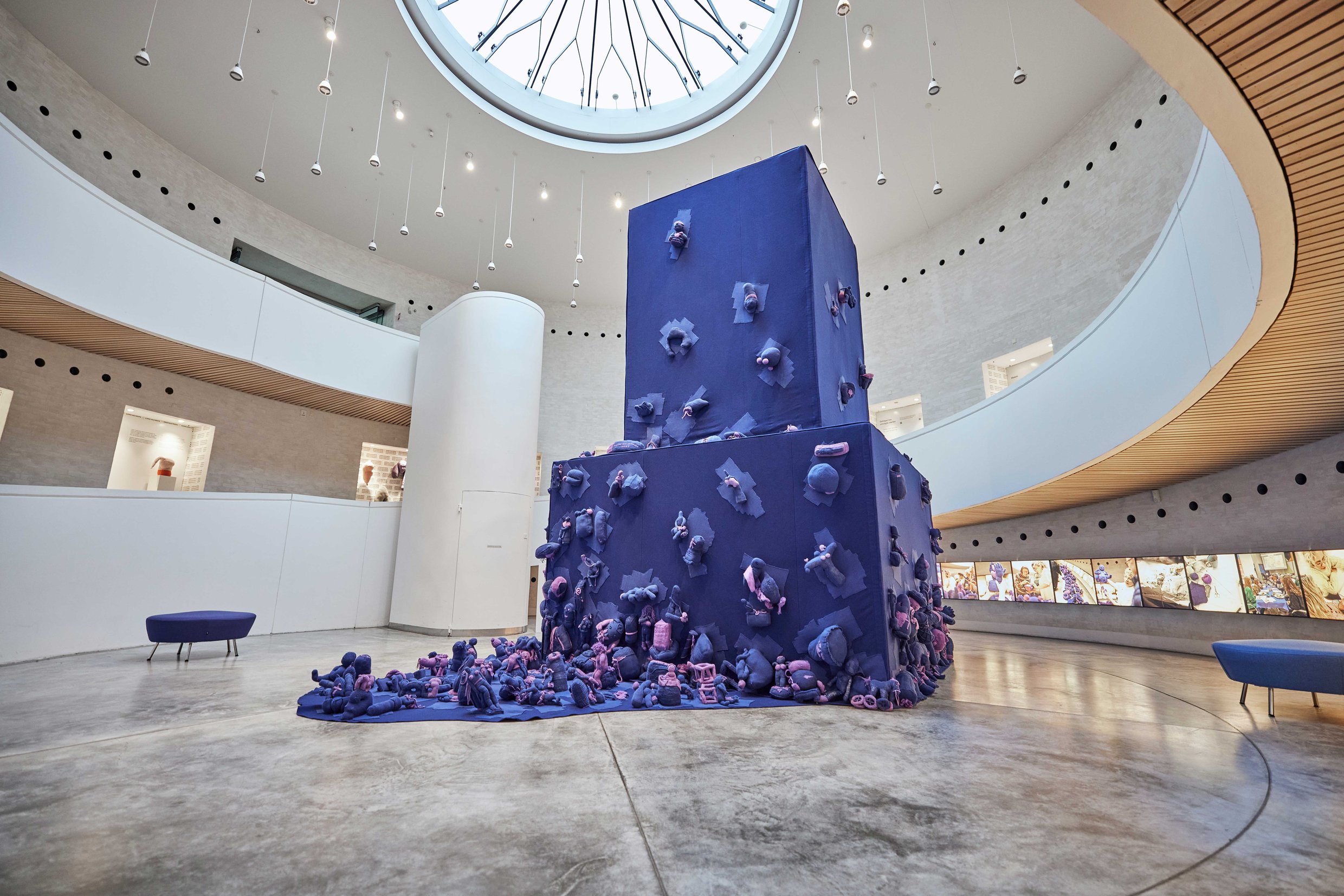
Trapholt presents a steady succession of exhibitions on art, design and crafts and also boasts its own collections, including a large collection of Danish furniture design.
Inaugurated in 1988, the museum is located in a scenic area overlooking the Kolding Fjord. It is set within a large sculpture park featuring works by contemporary Danish artists.
Kolding, Denmark.
Name of the practice nominated: Collaborative Artworks
Describe the practice, program, or project, what innovative approach is proposed, and in which core museum activities it applies:
With Things Matter (2023–24) and Data Mirror (2022–23) as defining and academically researched examples, Trapholt has since 2014 developed a practice with 10, sometimes award-winning, collaborative art projects that reshape the role of museums in contemporary society. Led by artist Randi Samsonsen, Things Matter invited 278 citizens to critically reinterpret existing public monuments by knitting a miniature version, adding personal and political reflections through colour and form. The project catalysed dialogue around representation in public space, making visible the emotional, social, and symbolic weight of public monuments, positioning participants as active agents of cultural heritage.
In Data Mirror, participants embroidered visualisations of their personal Google and Facebook data, transforming abstract digital footprints into tactile, intimate works of art. Led by artist Astrid Skibsted, the project invited 633 contributors to engage with questions of identity, privacy, and presence in the digital age. These projects exemplify Trapholt’s unique capacity to connect citizens’ lived experience, knowledge and skills with broader societal themes through craft, dialogue, and collective making.
This practice is at the forefront of a museum movement that goes beyond audience engagement to foster co-creation, polyphony, and shared authorship. Artworks are built on the collaboration between artists and citizens, where both are essential to the artistic and social outcome. Through hybrid formats—physical hubs, digital platforms, and exhibitions—Trapholt ensures wide accessibility and inclusion, empowering people across generations and geographies. The artworks are included in the museum collection and exhibited for 11 months in one of the finest museum galleries and are highly appreciated by the public.
Museums can act as spaces for knowledge sharing, empowerment, recognition, dissensus, and sustainable transformation. Trapholt’s collaborative art projects reveal the museum as a safe and inclusive environment where people come together to make sense of the world—and to reshape it through art.
Explain in one sentence why you think the project you nominate is outstanding and could serve as an example for the entire community of modern and contemporary art museums.
Trapholt’s long-term practice with collaborative art projects from 2014 to now exemplifies how art museums can become inclusive, polyphonic and co-creative spaces that empower citizens, foster societal dialogue, and redefine the art museum as a catalyst for cultural, social, and sustainable transformation.
Explain why this practice or program is relevant and sustainable in creating meaningful and lasting connections with people, communities, and the museum context with a medium to long-term vision.
By redefining participation as co-authorship, Trapholt positions the museum as a space for recognition, dialogue, and sustainable transformation, offering an example for how museums can connect with people and society. Trapholt engages people through performative segmentation—focusing on what participants do and care about rather than who they are demographically. Many participants are females aged 50+, often underrepresented in public discourse and nonusers of museums. Through craft-based projects, these participants gain visibility, explore critical thinking through complex themes, and become active cultural contributors. Trapholt’s approach focuses on assets rather than deficits, valuing participants for their skills, reflections, and lived experiences. Rather than being passive recipients, they shape the artistic process with their hands, voices and insights, creating works that resonate both socially and aesthetically. This inclusive model fosters deep emotional engagement, builds new communities, and strengthens the museum’s societal relevance.
What are the outcomes of the practice you are most proud of?
Trapholt is most proud of the transformative outcomes empowering thousands of citizens to become active contributors exploring pressing societal themes such as climate change, digital identity, and public discourse. Participants report meaningful, even life-changing experiences, gaining creative confidence, community, voice and new perspectives. Many participate repeatedly, demonstrating the strong sense of ownership and engagement Trapholt has cultivated.
The museum has successfully embedded participation into its core practice, creating a new model for how museums can operate as inclusive, polyphonic spaces. The projects have also received national and international recognition, including awards from the Danish Arts Foundation, the European Art Museum Award and the Danish Critics Award.
Importantly, Trapholt’s approach results in high-quality, artistically compelling works that are preserved in the museum’s collection—artworks that could not exist without the collaboration between citizens and artists. Supported by academic research, these outcomes demonstrate Trapholt’s ability to unite artistic excellence with civic relevance.
How has the nominated practice changed your methods and ways of working?
Collaborative art projects have fundamentally transformed Trapholt’s methods by dissolving traditional structures and role divisions. The practice breaks down the conventional silos between departments, as each project encompasses the full scope of the museum’s work—process, exhibition, collection, and research—requiring close collaboration between curators, educators, communicators, and researchers.
At the same time, the projects challenge the traditional dichotomy between art and amateur practice. Participants are recognised as co-creators whose craft skills, lived experiences, and personal reflections are essential to the artistic outcome. The boundaries between curator, artist, and participant are intentionally blurred, creating an inclusive, co-creative process where all contributors play an active and valued role.
Trapholt also dissolves the classic division between autonomous art projects and educational outreach. In this model, mediation, participation, and artistic expression are fully integrated, forming a unified artistic-social space. The result is a museum practice that is collaborative, inclusive, and deeply transformative.