Museu d'Art Contemporani de Barcelona (MACBA)
The MACBA Museu d’Art Contemporani de Barcelona opened its doors on November 28, 1995. Since then, it has established itself internationally as a model in contemporary art: on the one hand, its collection has grown considerably, allowing visitors to trace the artistic references of our time; and on the other, it has developed lines of work based on risk-taking and a willingness to act as a laboratory, positioning it as a key center in the field of research and in the generation of new dynamics for analysis and reflection on artistic activity.
Name of the practice nominated: The Jardin Ambulante [Mobile Garden]
Describe the practice, program, or project, what innovative approach is proposed, and in which core museum activities it applies:
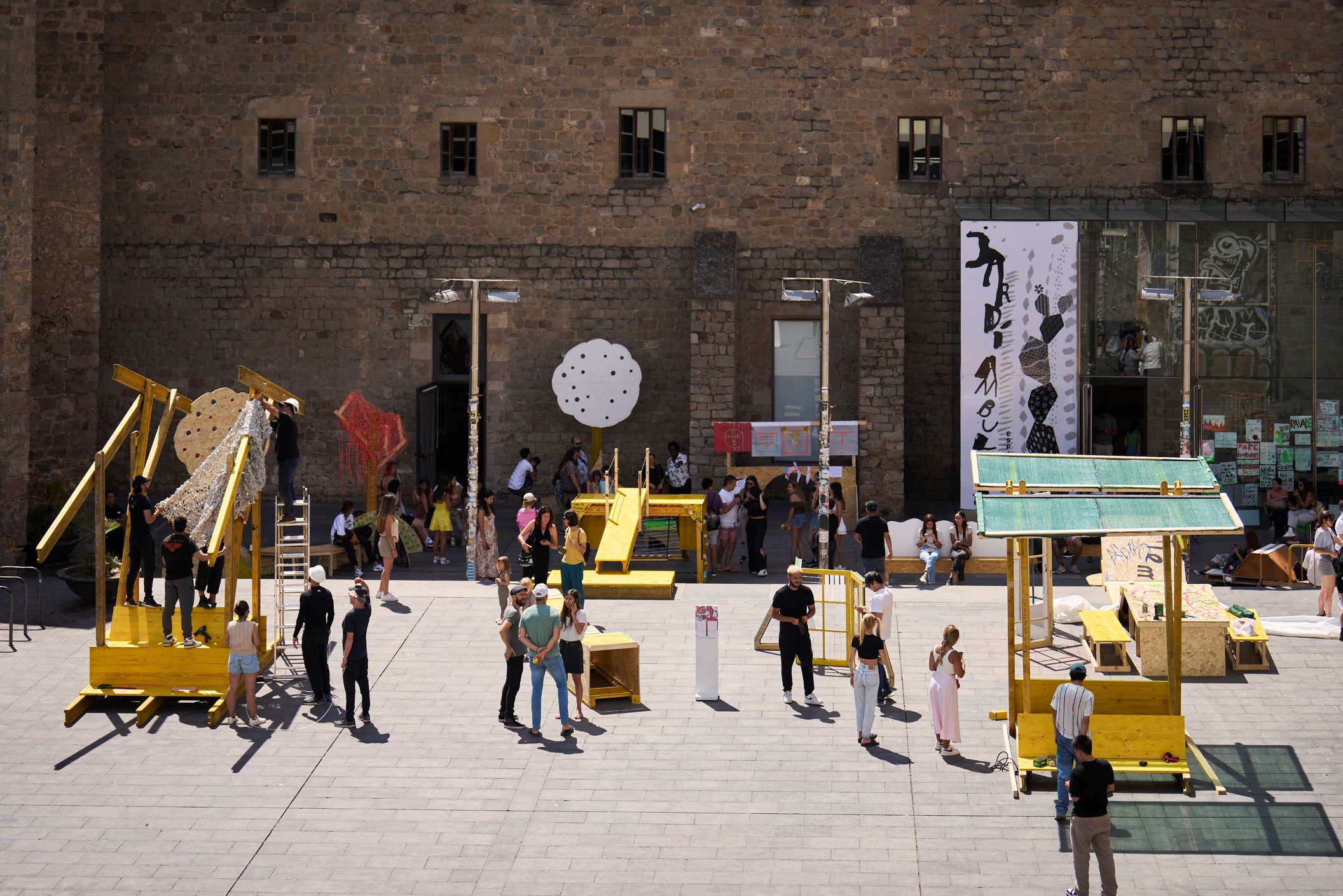
The Jardin Ambulante [Mobile Garden] was launched in 2022 to enhance further MACBA’s long-standing community engagement in the El Raval neighbourhood. Despite previous efforts, the connection with residents has always been fragile, with engagement mostly confined to specific public or educational programmes rather than structurally embedded in the institution.
The museum established a Social Council to evaluate its relationship with diverse communities, audiences, and professionals. Jardin Ambulante is the most autonomous group at the council, and its name symbolises the community’s call for more greenery in the public square that does not yet allow those features.
The museum allocated a space and budget and appointed a representative to foster a selforganised community to which the museum would contribute equally beyond the initial constituting gesture. It consists, hence, in a consortium of organisations, associations and individuals –including, neighbours; medical residents from the local surgery; women’s associations; schools’ faculty, students and families; and NGOs supporting groups at risk of social exclusion; among others—, whose main scope is to improve the well-being and material conditions of local communities, which are affected by structural violence and multiple vulnerabilities.
Activities at the Jardin encompass accessibility —i.e., workshops on parenting with prison inmates; governance —i.e., working with local authorities and experts to rethink public space—and sustainable community, i.e., a weekly social gathering for womxn drug users and survivors. A core component of the Jardin is the planting and caring for a communal garden called Huerto Comunitario, which the participants created. The Huerto is a place for gathering, exchange, and co-education on harvesting, ecological justice, health, intercultural dialogue, and intergenerational care. The Jardin’s success is embedded in its active life as a learning community, conceptualised and guided through those who, as the caretakers of the Huerto, tend to it daily.
Explain in one sentence why you think the project you nominate is outstanding and could serve as an example for the entire community of modern and contemporary art museums.
How to transform a moment of social backlash and political tension, into an opportunity to foster a nuanced and sustainable long-term relation with social agents in the museum’s immediate context by engaging in dialogues and community-driven proposals that challenge the institution’s vision, its structural operations and programming, and the role of the community within it, permeating the museum’s governance.
Explain why this practice or program is relevant and sustainable in creating meaningful and lasting connections with people, communities, and the museum context with a medium to long-term vision.
Indicators are vital for the continuity of organisations that report to public administrations, as they justify their involvement in the Jardin. Therefore, participants and museum staff are developing a manual of shared indicators to measure the project’s social impact and community value. One indicator highlights the reduced need for medical appointments and treatment among participants in activities such as the Huerto Comunitario, for example.
A long-term aspect is the space’s governability and the participants’ autonomy. Group agency arises from owning and caring for the space and its activities, managing budgets, and prioritising expenditure. Furthermore, it has been possible to build a sense of relevance and trust around the Jardín, setting in motion improbable yet beautiful encounters between different organisations that would not have otherwise inhabited the same space. We view this as a significant and transformative connection that fosters community cohesiveness, reinforces collective agency, and enables new forms of solidarity.
What are the outcomes of the practice you are most proud of?
Generating and activating empowering practices, such as the Huerto, helps neighbours confront situations of violence and structural exclusion—personally and collectively—while allowing them to engage with the museum on their terms. After the first year, strong relationships of trust have been built between the museum and local communities. Neighbours now organise themselves to care for one another, feel a sense of ownership over the space, and prepare together for climate and social demonstrations. One key outcome of the project was the collaboration with members of the 9th edition of PEI – multi-disciplinary professionals from different areas of the Americas, some of whom reside in the Barcelona metropolitan area.
This collaboration highlights how the Jardin promotes cross-disciplinary, community-rooted practices that align with the museum’s critical and conceptual mission.
How has the nominated practice changed your methods and ways of working?
The Jardin Ambulante reimagines the museum as a space of care, where decision-making processes occur in monthly assemblies, where participants collectively agree on programming, priorities, evaluation, and budget. It decentralises power, fostering new relationships and practices that transform traditional institutional habits. Everyday acts, such as a neighbour gifting mint to a guard, gain significance, making the museum a place that is both caring and nurtured by its community.
Knowledge exchange emerging from this project is key to MACBA’s articulation of its transdepartmental work culture. Jardin Ambulante’s shared indicators will help us establish new social impact measurement parameters, beyond yearly visitor numbers and a more conventional value system. As the Jardin fosters new forms of participation, challenging traditional roles in cultural production and institution-building. It promotes methodologies for togetherness that reframe relationships between authors and spectators, producers and recipients, ultimately transforming the museum’s governance and operations.