Museo Nacional Centro de Arte Reina Sofía
The Reina Sofía National Art Museum (MNCARS), commonly known as the Reina Sofía Museum, is a Spanish museum of 20th-century and contemporary art, located in the city of Madrid.
Name of the practice nominated: School of Situated Mediation
Describe the practice, program, or project, what innovative approach is proposed, and in which core museum activities it applies: conservation, education, collection, exhibition programs, publications, research, accessibility, communication, governance, and sustainability.
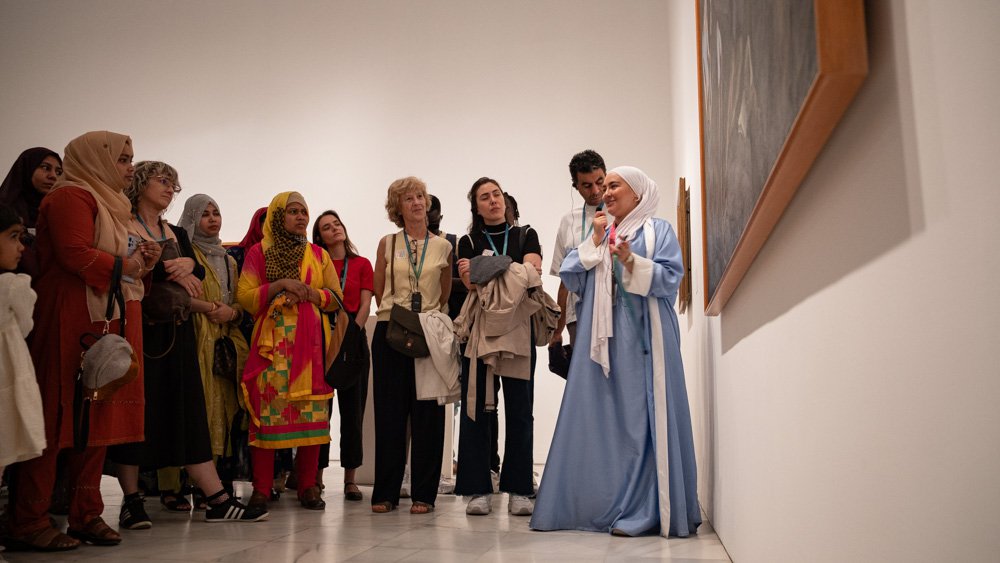
The School of Situated Mediation “Aissatou Ndiaye” (Escuela de Mediación Situada) is a long-term mediation program developed by the Museo Reina Sofía in collaboration with Museo Situado, a grassroots community network based in Lavapiés, one of Madrid’s most culturally diverse neighborhoods. The program engages individuals with migrant backgrounds—originating from countries such as Senegal, Bangladesh, Morocco, Iran, and the Philippines—in a collective process of learning, co-creation, and leading mediated visits to the museum’s collection, drawing on their own languages, cultural universes, and lived experiences.
This initiative redefines museum mediation through a transformative, ethical approach that decentralizes institutional authority and centers plural, decolonial, and anti-racist perspectives. Conducted in languages such as Arabic, Wolof, Bengali, Dariya, Tagalog, Spanish and French, the visits promote accessibility and representation for communities historically excluded from museums and cultural spaces.
Resisting the temporary logic and striving for structural and social sustainability, the school is embedded in the museum’s institutional framework, reshaping educational, communicative, and governance practices. It recognizes migrant participants as cultural agents and knowledge producers, challenges hierarchical models of learning, and fosters sustainable relationships through intergenerational exchange, linguistic diversity, and affective memory. It also strengthens local networks by building bridges between participants, community organizations, and the museum.
By integrating inclusive mediation, language justice, participatory governance, and oral knowledge as valid forms of research, the Escuela activates a socially rooted model of museum practice that could inspire similar initiatives around the world, even if the specificities of any context should be considered. It shows how national institutions can engage responsibly with migrant and racialized populations through long-term, context-driven collaboration. Supporting this initiative helps build a more equitable cultural sector and ensures the continuity of a pioneering model that places community care, diversity, and justice at the heart of museum work.
Explain in one sentence why you think the project you nominate is outstanding and could serve as an example for the entire community of modern and contemporary art museums.
The School of Situated Mediation is outstanding because it reshapes the national museum into a truly inclusive, socially porous and community-rooted space by empowering migrant voices as cultural agents to co-create plural, decolonial, and multilingual interpretations of its contents that by so doing mobilize the resources of the institution in novel social circuits and, in turn, challenge the traditional museum narratives.
Explain why this practice or program is relevant and sustainable in creating meaningful and lasting connections with people, communities, and the museum context with a medium to long-term vision.
The School of Situated Mediation fosters meaningful, lasting connections by centering the voices and experiences of migrant communities in Lavapiés, creating a shared space where diverse cultural perspectives actively shape the museum’s narratives. Its approach promotes language justice and intercultural dialogue, reducing barriers to access. By embedding these practices institutionally, the program ensures structural continuity and fosters community empowerment, intergenerational knowledge transfer, and a sustained commitment to social equity. This medium- to long-term vision transforms the museum into a living, responsive entity rooted in its local context while remaining adaptable as a replicable model for inclusive cultural mediation.
What are the outcomes of the practice you are most proud of?
We take pride in creating a sustainable platform where migrant mediators act as cultural leaders and active co-creators of museum knowledge, offering multilingual tours and fostering inclusive community conversations. This program reshapes museum storytelling by embedding antiracist and decolonial perspectives that broaden accessibility for marginalized groups and by opening the museum’s collections and exhibition to its interpretation by diverse cosmovisions. Honoring Aissatou Ndiaye, a former student who passed away, through the school’s name symbolizes the deep personal and political connections it builds.
Most importantly, local communities have expressed profound engagement with this initiative, which offers them a safe space to connect with the museum, work through trauma and raise hope, and reveal their full identities. The school has become a vital tool for integration, healing, and belonging, transforming the museum into a shared home where diverse voices are truly seen and heard. Furthermore, the certificate the School gives to its students upon completion is also a tool for undocumented migrants to prove their integration in the administrative process of regularization.
How has the nominated practice changed your methods and ways of working?
The School of Situated Mediation has profoundly transformed our institutional approach by embedding community knowledge as a core pillar of museum practice. It challenged traditional top-down mediation models, replacing them with collaborative, horizontal methods that prioritize lived experience and multilingual engagement. Our teams now co-design programs alongside mediators from diverse cultural backgrounds, fostering shared authority and mutual learning.
This has expanded our understanding of accessibility, moving beyond physical access to include cultural and linguistic inclusion. The practice has also reshaped internal communication and governance, encouraging ongoing dialogue with local communities and sustaining long-term partnerships. Moreover, it has promoted interdepartmental collaboration, generating hybrid workspaces and opportunities for institutional learning among peers. Overall, it has transformed the museum into a dynamic space for intercultural exchange, social justice, and collective creation.
https://www.museoreinasofia.es/actividades/escuela-mediacion-situada