Museo Barda del Desierto
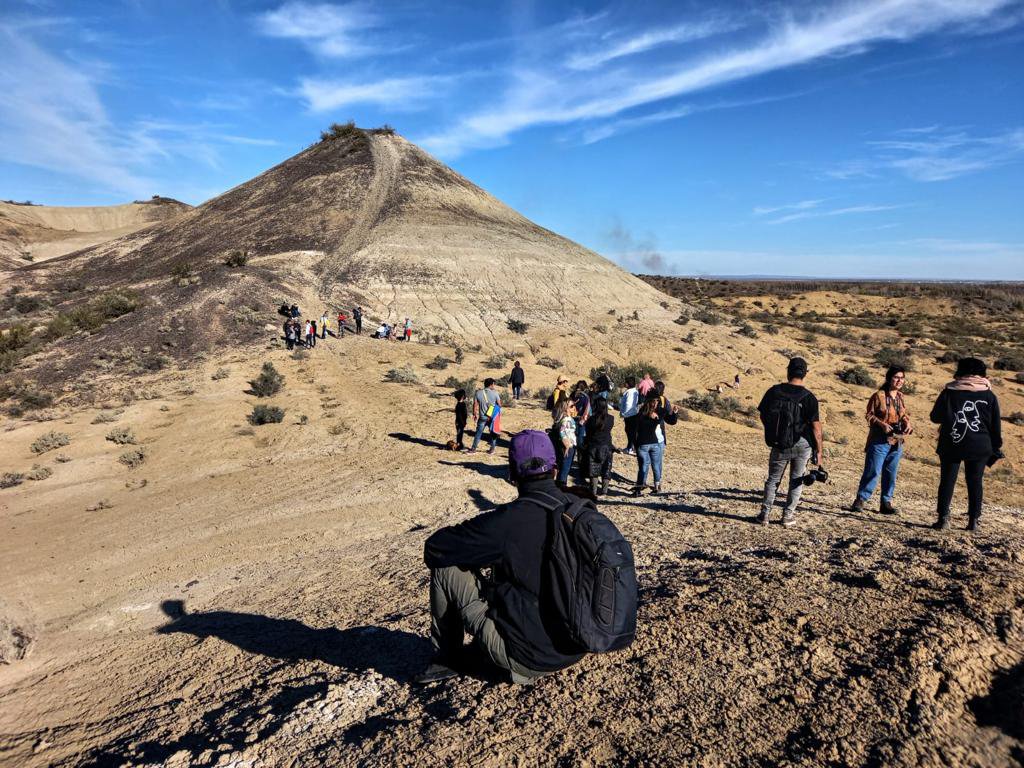
The Museo Barda del Desierto (mBDD) is a non-profit organization dedicated to contemporary art, architecture, and digital technologies. It is located in Las Bardas, a geological formation between the municipalities of Contralmirante Cordero and Cinco Saltos, in the province of Río Negro, northern Patagonia, Argentina.
Name of the practice nominated: mBDD Architectural Project
Describe the practice, program, or project, what innovative approach is proposed, and in which core museum activities it applies:
The Museo Barda del Desierto (mBDD), located in Contralmirante Cordero, Río Negro, Argentina, is a 70-hectare ecomuseum that interweaves contemporary art, digital technologies, and landscape through an architecture of diffuse boundaries. Its design dissolves the line between built space and natural environment by organizing artworks through geolocation and digital access via QR codes. This network of exhibition nodes entangles body, device, and territory, shaping an expanded museum that activates perception across both physical and virtual layers. The mBDD Architectural Project: An Architecture of Diffuse Boundaries is both the museum’s point of origin and its central practice.Inspired by Toyo Ito’s concept of “architecture of diffuse boundaries,” the project dissolves the separation between inside and outside, allowing the museum experience to transcend enclosed space. Architecture becomes a membrane connecting the Patagonian landscape with its digital map, generating a dynamic relationship between geolocated artworks and embodied experience. This produces a topogenesis of experience, where body, imagination, and sensation blur to form a situated aesthetic expression. As a spatial device, mBDD fosters connection between community, art, and territory with minimal environmental impact—respecting the natural terrain and using discreet, low-impact signage. This reinforces affective ties not only with the landscape but also between people and their environment. The museum also functions as a transdisciplinary platform with a socioenvironmental focus, integrating art, science, and architecture through key programs such as PIF (a teacher training lab), LAT/LONG (a playful device for children and youth), and The Museum is a School (based on Luis Camnitzer’s work, embedded via augmented reality). These initiatives activate multiple dimensions of museum practice: curatorial production, digital conservation, research, education, accessibility, sustainability, and situated governance. mBDD does not represent territory—it inhabits, activates, and redefines it as a sensitive topogenesis, where architecture, art, and technology converge in an embodied, living museum.
Explain in one sentence why you think the project you nominate is outstanding and could serve as an example for the entire community of modern and contemporary art museums.
Museo Barda del Desierto proposes an expanded, transdisciplinary, and eco-sensitive architecture that redefines the museum’s role as a living laboratory for space, knowledge, affect, and transformation.
Explain why this practice or program is relevant and sustainable in creating meaningful and lasting connections with people, communities, and the museum context with a medium to long-term vision.
The architectural project builds sustainable connections through a web of relationships rooted in art as a territorial and collaborative practice. Its transdisciplinary approach fosters an alternative institutional model that centers local rootedness, collective participation, and environmental care. By dissolving the traditional notion of a building, the museum expands across the landscape, activating a cultural geography shaped by walking, site-specific works, and shared encounters. By housing its library within the town’s public library, the museum deepens its commitment to distributed architecture—one that builds on trust and activates existing community infrastructures through relational ties. Digital accessibility, decentralized content, and education programs with a territorial lens help expand audiences and strengthen community ownership. This living architecture sustains a long-term museological vision grounded in ecological justice, collective care, and social sensitivity.
What are the outcomes of the practice you are most proud of?
The architectural project of the mBDD has radically transformed the notion of institutional practice in contemporary art, dematerializing the building and rematerializing the museum experience into a complex and relational dimension. The museum has adopted situated methodologies that prioritize active listening and adaptability to the rhythms of the land. The Museum is a School, by Luis Camnitzer, became a turning point—reimagined through augmented reality, it now guides visitors across the land, linking learning to walking, perception, and weather. The museum’s library, housed in the town’s public library, reinforces its distributed architecture by rooting knowledge within everyday life. Through situated governance and minimal infrastructure, mBDD has built a growing, intergenerational community that sustains curatorial, pedagogical, and artistic processes over time. What began as an idea is now a cartography of shared care: a museum that is walked, inhabited, and redefined with every encounter.
How has the nominated practice changed your methods and ways of working?
The mBDD has profoundly transformed its working methods by replacing classical institutional logic with a practice of listening, adaptability, and decentralization. The team collaborates in networks with artists, educators, scientists, and communities, building a museum organized from the territory—not imposed on it. This methodology responds directly to a key question posed by CIMAM 2025: How can museum structures be renegotiated? Inspired by Paulo Tavares' vision, the mBDD not only does without a building, but redefines the very notion of a museum as an ecological and political act. In the words of Luis Camnitzer, the project “changes dimension and rematerializes at another level,” where perception, body, and imagination generate new forms of knowledge. Today, the museum functions as a relational membrane that produces meaning at the intersection of the sensitive and the collective. Its way of working has thus become more complex, ethical, and poetic.
Official Website: bardadeldesierto.org