Centro de Arte Moderna - Fundação Calouste Gulbenkian
CAM - Gulbenkian Modern Art Center has the largest and most complete collection of modern and contemporary Portuguese art.
The CAM Collection currently includes almost 12,000 works by a wide variety of artists, media and supports. Built up over more than 60 years, the Collection is the result of encounters, rapprochements, ruptures and aesthetic relationships and, to that extent, presents different artistic languages.
Lisboa, Portugal.
Name of the practice nominated: Sounds of a Revolution
Describe the practice, program, or project, what innovative approach is proposed, and in which core museum activities it applies:
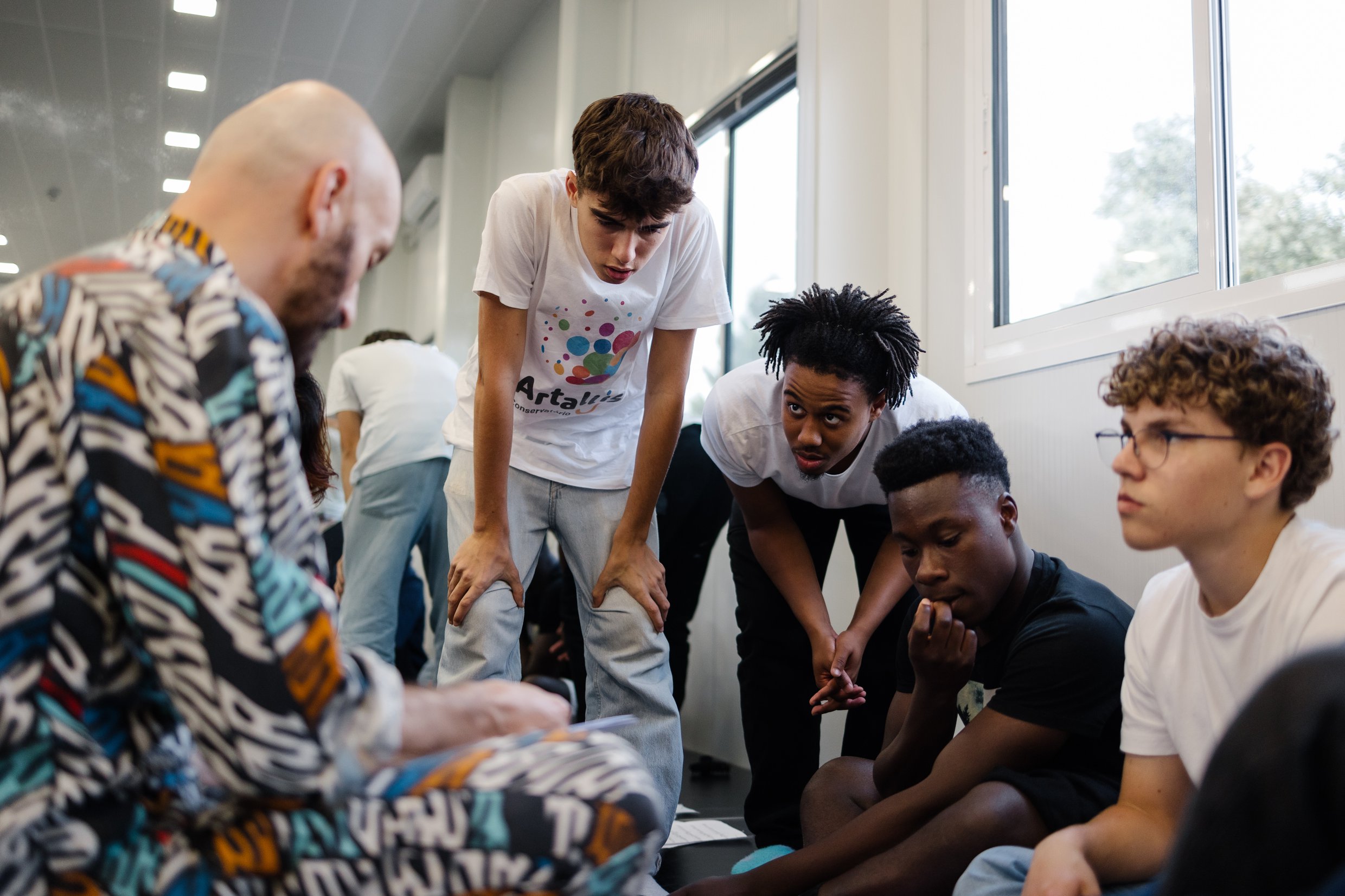
Sounds of a Revolution is an arts education participatory project. Involving 50 young students from a peripheral music school of Lisbon, in a socially and climate vulnerable area, led by the artist Mikhail Karikis and involving 3 composers and 1 choreographer, resulted in both a concert in which the young people performed as a choir and body percussion orchestra with the Gulbenkian Orchestra, and an exhibition.
It was a transformative journey as the young participants shared their stories, rehearsed with professionals, learned to claim space, to empower themselves through art, and to transform the stage into a place for belonging and amplification of their voices for a better future. ‘We are together because we want to create something greater,’ they affirm. The process reflected on the challenges of today's reality and the revolutions to be done. The concert’s libretto was entirely created from their words.
An intersection of education, art, and citizenship, it became an emotional and collective legacy that changed institutions, people, and perspectives, showing that together, we can all reimagine and reshape the future with young voices. The innovation relies not only in the participatory strategies, but specially in the fact that the resulting artworks inscribe themselves in the institutional field of art validation, reinforcing the value of collaboration (artist and non artist) as a creative statement. The work “We are together because…”, currently on display at the Modern Art Centre (CAM), and later to be incorporated into the collection, as the performance and concert before it (presented at the Main Concert Hall of Gulbenkian) assumes a level of recognition as both a process and a work of art that amplifies and dignifies the voices of the young people, artists and musicians involved, transforming the institution as well. Core museum activities: education, accessibility, collection, exhibition programs and sustainability.
Explain in one sentence why you think the project you nominate is outstanding and could serve as an example for the entire community of modern and contemporary art museums.
This project places participatory art processes at the center of cultural institutions, recognizing that the relationship between art, citizenship and the ability to create together can have the same spaces for public recognition as works of art resulting from more conventional processes.
Explain why this practice or program is relevant and sustainable in creating meaningful and lasting connections with people, communities, and the museum context with a medium to long-term vision.
Sounds of a Revolution has established a longterm relationship (2 years) with 50 youngsters from a socially vulnerable area, listening and amplifying their voices. Because it lasts in time, it enhances both the collaboration process and the outcomes. It was a partnership between different Gulbenkian departments (Music and Modern Arte Center - CAM), revealing that internal partnerships can enhance results and strengthen partnerships also with external actors.
It also constituted an official commitment of CAM with participatory projects as art formats validated and recognized as artworks inscribed in the main exhibitions program (in fact, the exhibition is also programmed for the fall at Foundling Museum, London). For the participants, play in the Concert Hall of Gulbenkian, usually reserved for the best world known musicians, reinforced the idea that cultural institutions can be for all. Moreover the project opened the doors to different audiences that usually don’t feel they belong here.
What are the outcomes of the practice you are most proud of?
Two formal outcomes - a concert and an exhibition - and several informal outcomes: young people who changed their academic orientation in result, prevented early school drop out, participants who affirm that was their first experience on feeling that their opinion mattered.
It also stressed the civic role of art institutions in a troubled world, making space for hope and care and reinforcing the belief that we all are part of the change we want to see. The importance of listening young people -14 to 19 – as they have a say about the present and the future. The audiovisual artwork reaches a wider audience and disseminates. It also allowed the young participants to "see themselves" as crucial change makers. At the same time, the exhibition is also the most affirmative outcome to show that participatory art projects can take place in the main spaces of contemporary art circuits.
How has the nominated practice changed your methods and ways of working?
It was a huge opportunity to learn and test different approaches in our participatory practices. It involved a large number of young people, several artists from different artistic areas, different departments within the institution, was long term, generated community and put the voice of the young people at the core.
As an institution, after Sounds of a Revolution, we seek to design participatory processes that can trully become transformative experiences for the participants, the public and the institution. That can promote organizational change by sharing “the stage” and the power structures, that can be real loudspeakers for the voices of the participants and for que questions of the contemporary world. We are more and more committed to participatory projects that encompass either the involvement of the partners (communities, artists, institutions), but also produce art outcomes that break the prejudices around the value and the place of true collaborative artwork.
Official Website: https://gulbenkian.pt/cam/en/read-watch-listen/sounds-of-a-revolution-art-freedom-andcollective-transformation/